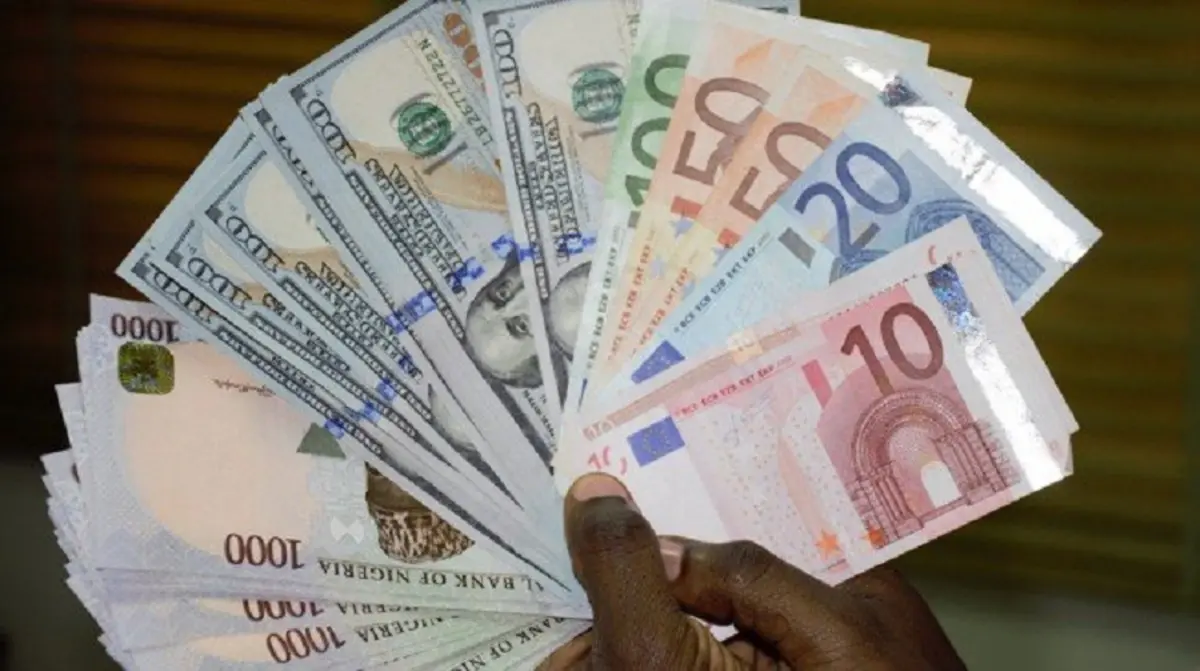
The Alliance for Economic Research and Ethics (AERE) has warned that Nigeria’s reported $4.38 billion foreign exchange turnover may be masking underlying liquidity risks, cautioning that the record trading volume should not be interpreted as evidence of a deeper or more resilient FX market.
- +Nigeria’s record $4.38 billion FX turnover may mask liquidity risks, AERE warns
The think tank made this known in an editorial brief released on Monday.
The think tank made this known in an editorial brief released on Monday.
The think tank argued that the surge in turnover may have been driven by a handful of large transactions rather than broad-based market liquidity.
It said the key question is not the size of the turnover itself, but whether it reflects durable liquidity or instead exposes the foreign exchange market’s vulnerability to large demand shocks.
AERE said high turnover alone does not necessarily indicate a stronger or more diversified foreign exchange market.
According to the group, unusually large trading volumes can result from temporary demand by a handful of major market participants rather than improvements in underlying market depth.
The group argued that the latest figures should be interpreted cautiously until more detailed transaction data are available.
The report noted that the record turnover followed several weeks of sharp fluctuations, highlighting the market’s continued volatility.
Although forwards accounted for just 1.44% of total turnover, analysts said the increase suggests some market participants sought both immediate dollar liquidity and protection against future exchange-rate movements.
The think tank also referenced Nairametrics’ earlier report linking the surge partly to Dangote Petroleum Refinery’s temporary decision to price petrol, diesel and aviation fuel in U.S. dollars before reversing the policy about a week later.
While AERE said the timing made a contribution to the turnover surge plausible, it cautioned against attributing the entire increase to a single event, noting that available market data do not disclose counterparties or transaction purposes.
The think tank said Nigeria should strengthen the structural foundations of its FX market rather than relying on record trading volumes or short-term capital inflows.
AERE further noted that policymakers should discourage domestic dollarisation and preserve the naira as the primary currency for domestic pricing and settlement.
According to AERE, Nigeria’s ability to process record trading volumes is a positive development, but a truly mature foreign exchange market will be measured by its transparency, resilience and ability to absorb large shocks without disrupting the broader economy.
Nairametrics previously reported that Nigeria’s foreign exchange market witnessed a significant improvement in liquidity during the first half of 2026, with daily turnover regularly exceeding $500 million, several trading sessions crossing the $900 million mark, and a record $1.82 billion changing hands in a single day.
Available NFEM data show that more than $31 billion worth of foreign exchange was traded in the official market between March and June 2026.
The improvement in liquidity coincided with a moderation in exchange-rate volatility.