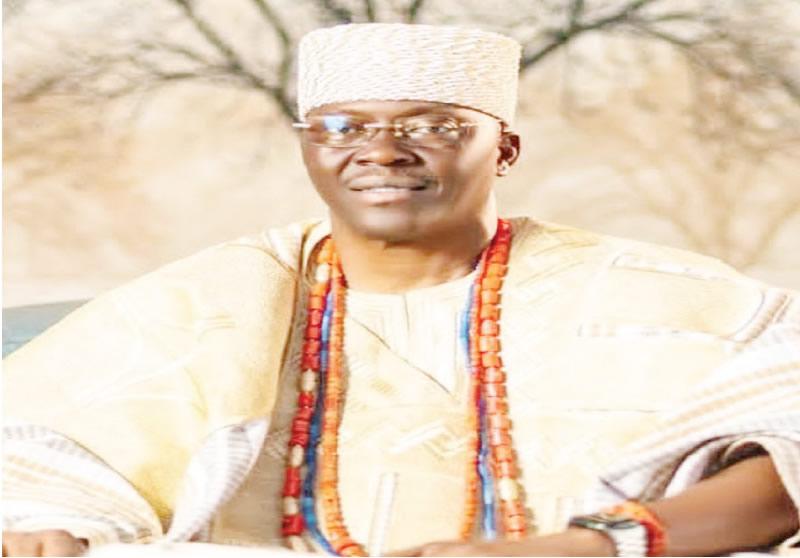
The Oluoke of Okeigbo Kingdom, Ondo State, and President of the Real Estate Developers Association of Nigeria, Oba Akintoye Adeoye, in this interview with JOHNSON IDOWU, calls for the urgent adoption of state policing as a critical step toward tackling insecurity at the grassroots, speaks on reforms in land administration, among others
- +Nigeria needs state police now to fight insecurity – Ondo monarch
How should traditional institutions be integrated into governance, development planning and security management?
How should traditional institutions be integrated into governance, development planning and security management?
I am still very new to the traditional institution setting. But let me acknowledge that, within this short period that I find myself in that space, the current government of President Bola Tinubu is actually trying to integrate traditional institutions into governance. For the first time, I learnt that we now have the office of the traditional institution within the Presidency. Also, there is a clear message to the governors on traditional institutional engagement in governance. Traditional institutions must be involved in governance because most traditional rulers are no longer illiterate as they used to be in the past. Many communities now have professionals with the capacity and sound intellectual depth to render service to both the community and the government. They can connect with the day-to-day workings of effective administration. The government is now trying to connect with traditional institutions, and I believe it can do better. Efforts are ongoing to ensure improvement.
What specific reforms are needed to deepen collaboration between government and traditional institutions for grassroots development?
The local government system is closest to the people, even before the state and federal governments. When local governments receive allocations, these should be made public. For instance, if it is announced that a local government receives N200 million in a given month, residents can demand accountability on how the funds are utilised. The major challenge is a lack of awareness and transparency. People often do not know how much their local governments receive or how the funds are spent. Greater transparency will enable citizens to ask the right questions and hold leaders accountable.
Representatives at the state and national assemblies also have a role in ensuring that local communities benefit from governance. If transparency improves, accountability will trickle down to the grassroots. Another reform is strengthening the connection between traditional institutions and government structures. Existing policies are already making progress in this regard, but there is always room for improvement. As I gain more experience within the system, I may have additional insights to contribute.
What practical programmes can traditional institutions implement to promote skills acquisition and job creation among youths in rural communities?
Youth empowerment begins with a mindset. Young people must understand the dignity of labour and the value of being gainfully employed. There is a growing culture of dependency, where some prefer to rely on handouts rather than work. This needs to change through education and reorientation. Youths should embrace skill acquisition as the future of work increasingly depends on specialised skills. With advancements in artificial intelligence and technology, many traditional jobs may disappear, but skilled professionals will remain relevant. In my community, I intend to maximise the use of existing technical institutions to promote skills development.
There are calls for the establishment of state police to address the security crisis rocking the country. What do you make of this argument in favour of state police?
The issue of state police is one I will support at any time. When you bring somebody from Zamfara to my community, it will take him many years to understand the terrain. But in the case of state police, when you recruit someone from my domain, from my local government—someone who speaks the local dialect and grew up there—it is better for that person to police the community than bring in a stranger. So, state police is what we need now to curtail insecurity. A community-based officer will feel a sense of responsibility when his brother is killed or when someone is kidnapped. He may even contribute personally to resolving such issues. But if someone is posted from Ondo State to Sokoto and an incident occurs, there may be less emotional connection. State policing brings human empathy into security operations, and it is the right step the government should take.
Based on our vast experience, how should the issue of land-related disputes, which contribute to insecurity, be addressed?
From a broader perspective, land has remained a contentious issue in Nigeria, and arguably, a large proportion of court cases relate to land disputes. When such disputes dominate court proceedings, it indicates that something is fundamentally wrong with our land administration system. For instance, the Land Use Act was promulgated in 1978 and has not been reviewed since then. I believe it is long overdue for reform. Stakeholders have been calling for a review for years, yet the legislature has not acted. That law must be revisited, and various interests must be consulted. Also, the rule of law must prevail in land administration; otherwise, disputes will persist, especially where proper documentation is lacking. With technology, land records can be digitised to clearly establish ownership. Government investment in this area is essential and worthwhile.
At the community level, elders can still play a role in resolving land disputes. Historical knowledge and boundary relationships among families can help clarify ownership. Practically, communities are aware of family land holdings, and such knowledge should be utilised where appropriate.
How can customary institutions be better integrated into Nigeria’s formal legal system, particularly in land dispute resolution?
Our legal system has already recognised traditional institutions. We have native law, native courts, and customary courts. The traditional institution has never been completely separated from the formal legal system. At the grassroots, chiefs-in-council often handle disputes first. Where they are unable to resolve them, such cases proceed to customary courts before the magistrates or high courts. There is already a connection between customary institutions and the legal system, but it can be strengthened through awareness and public orientation. People should be encouraged to appreciate and utilise traditional dispute resolution mechanisms, as they often provide the most effective solutions at the community level.
Nigeria continues to face a significant housing deficit. What practical steps can the government and traditional institutions take to address Nigeria’s housing deficit and reduce housing costs?