Expert’s perspective on climate change, heating, ventilation, air conditioning, and refrigeration systems
Air conditioners (ACs) account for over 40 percent of household electricity in use, much of which is wasted due to outdated technology.
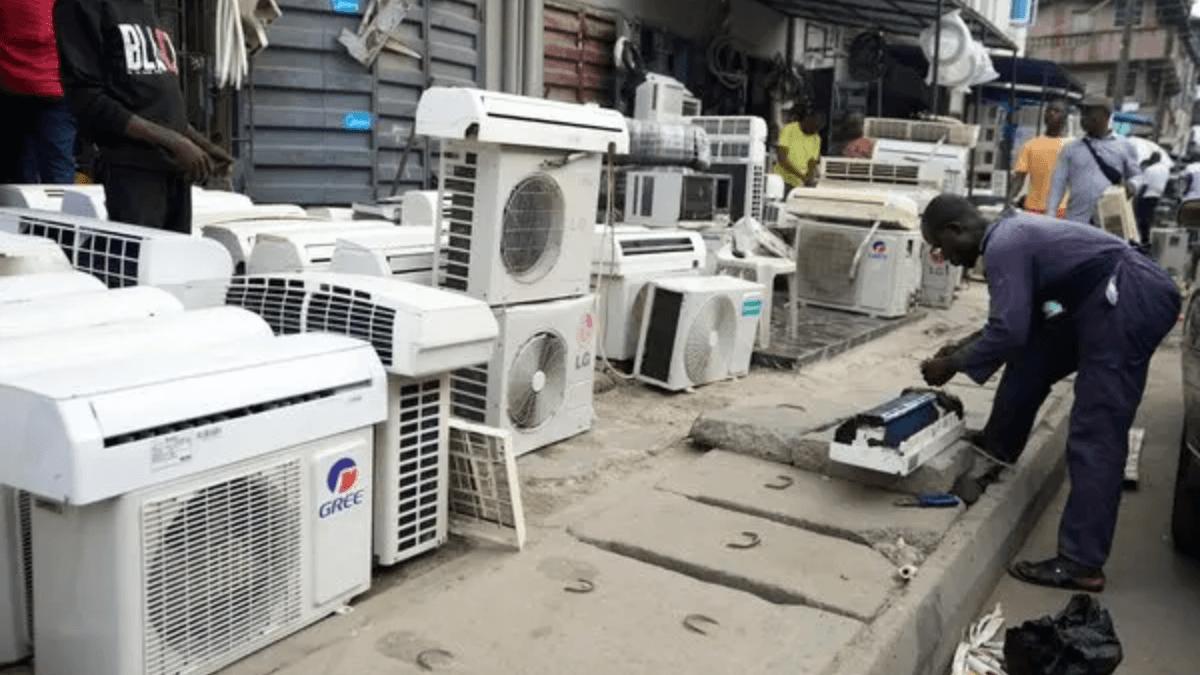
Air conditioners (ACs) account for over 40 percent of household electricity in use, much of which is wasted due to outdated technology. Given Nigeria’s tropical climate, there is a strong relationship between the country’s climate conditions and the demand for Heating, Ventilation, Air Conditioning, and Refrigeration (HVACR) systems.
These conditions position Nigeria as the largest cooling market in Africa and a rapidly growing global cooling market. Because of this, Nigeria’s air conditioning market is projected to be a major consumer of electricity, the government, in March 2025, recognised the importance of reducing energy demand from these systems and implemented the Minimum Energy Performance Standards (MEPS) for air conditioners.
The MEPS are expected to deliver multiple benefits, including energy savings, reduced environmental impact, and economic growth. These standards are projected to save approximately 11.5 terawatt-hours (TWh) of electricity annually by 2040.
To understand the concept of air conditioning and HVAC energy management at large, the expertise of Nurayn Tiamiyu, an engineer was sought.
He is a mechanical engineer and researcher, specialising in energy-efficient HVAC systems and sustainability. His current research focuses on developing energy-efficient HVAC technologies for commercial buildings, with an emphasis on intelligent control systems, grid-interactive building operation, and high-efficiency cooling solutions.
He has authored over 12 scholarly publications in the field and was trained in mechanical engineering at the University of Lagos, Nigeria (BSc), where he graduated top of his class with First Class honors; Stellenbosch University, South Africa (MSc); and the University of Oklahoma, United States, where he is currently pursuing his PhD and serves as a graduate research assistant.
Tiamiyu began his intervention on this issue by referencing a report titled Nigeria Air Conditioners Market Assessment published in November 2023 by the Energy Commission of Nigeria, with technical support from the United Nations Environment Programme.
The report highlights that Nigeria has witnessed a surge in the demand for AC systems due to its expanding population and robust economic growth, a trend that Nurayn noted has a significant impact on national electricity consumption.
He explained that the energy consumption of HVAC systems varies depending on their design, operation, and the climate in which they are installed. While HVAC systems are integral to modern buildings and industrial spaces, he emphasised that understanding their relationship with energy consumption has become critical for building owners, facility managers, and policymakers.
Building on this context, Nurayn referenced his co-authored study titled Evaluating the performance of ground source heat pumps under different vertical borehole ground heat exchanger design methods using modelica-based dynamic modelling and simulation, published in December 2025 in Science and Technology for the Built Environment.
In this work, he addressed a major technological barrier to the adoption of geothermal heat pumps: the inaccurate sizing of ground heat exchangers. The study emphasises that accurate HVAC system design is critical to avoiding operational inefficiencies and ensuring economic feasibility. It provides guidance on selecting appropriate design methods for vertical borehole ground heat exchanger systems, demonstrating an inverse relationship between borehole length and heat-pump electricity consumption. Additionally, the study recommends that future research incorporate comprehensive economic analyses beyond long-term performance evaluation to assess the feasibility of different design methods across varying climatic conditions, including installation, operational, and lifecycle costs.
Expanding his focus to HVAC operational strategies, Nurayn also explored methods for improving energy efficiency. He referenced a published study titled Occupancy sensor-enabled demand control ventilation using virtual outdoor air flow meters in air handling units without an outdoor air flow meter, published in June 2024 in Building and Environment, where he and a team of US-based HVAC researchers developed an innovative approach to reducing HVAC energy use in commercial buildings, which account for a significant share of global energy demand.
The study introduces a novel, low-cost method for estimating outdoor airflow rates in air handling units (AHUs) without relying on dedicated outdoor air or supply airflow meters. This approach enables more efficient control of ventilation based on occupancy sensor data, thereby improving energy efficiency while maintaining indoor air quality.
On September 25, 2024, The New York Times published an article titled As global temperatures rise, Nigeria faces a cooling crisis. The article, part of a special section on the Climate Forward Conference hosted by The New York Times, noted that, amid electricity scarcity, Africa’s most populous country struggles to provide lifesaving cooling without worsening the very crisis driving the heat.
Commenting on the implications of the report, Nurayn explained that meteorological parameters play a critical role in estimating the cooling and heating loads to be handled by HVAC systems to achieve thermal comfort during both the design and operational stages. He emphasised that, in varying climates, the importance of HVAC systems cannot be overstated. He added that climatic design values are crucial in determining the efficiency and performance of HVAC systems, as they directly influence energy consumption, operational costs, and environmental sustainability.
This perspective aligns with his 2023 ASHRAE study, Development and investigation of advanced HVAC demand control. In this research, Nurayn and his team demonstrated that building thermal mass can effectively stabilise zone temperatures during load shifts. Furthermore, the study revealed that an advanced HVAC load management approach can successfully control cooling loads, reducing peak air handling unit (AHU) demand by 20 per cent while maintaining consistent indoor comfort.
Beyond his scholarly work at the University of Oklahoma, Nurayns professional experience includes roles at major international firms, such as serving as an advanced technology engineer at Lennox and a sustainability engineer at Skidmore, Owings & Merrill (SOM).
His career trajectory reflects a proven record of international impact, with projects spanning the United States, South Africa, and Nigeria.