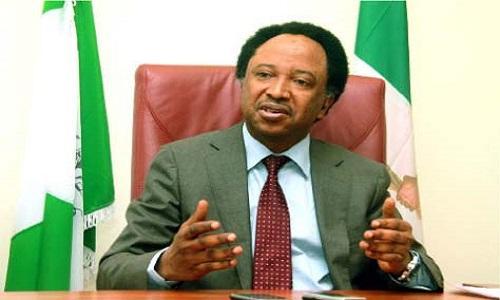
‘Hypersonic missiles’ vs. ‘devastating bombs’: Shehu Sani says Obasanjo-Atiku feud ends only in death
The bitter political rivalry between former Nigerian President Olusegun Obasanjo and his former Vice President, Atiku Abubakar, will persist until one of them dies, Shehu Sani, a former Kaduna Central Senator, declared on Sunday.
The bitter political rivalry between former Nigerian President Olusegun Obasanjo and his former Vice President, Atiku Abubakar, will persist until one of them dies, Shehu Sani, a former Kaduna Central Senator, declared on Sunday.
Sani made the assertion in a social media post reacting to the latest public fallout between the two political heavyweights, describing their decades-old hostility as a relentless crossfire where Atiku’s “devastating bombs” are continuously met by Obasanjo’s “hypersonic missiles.”
The former lawmaker highlighted the extraordinary longevity of the feud by framing it through a generational lens. He noted that the political warfare began when members of Generation Z were still attending nursery and primary schools, yet the conflict continues unabated today even as that same generation has graduated from universities, entered the workforce, married, and started families of their own.
Sani predicted that the hostility would only conclude when one of the men passes away, adding with characteristic irony that the surviving political giant will ultimately deliver a glowing funeral tribute to the other.
The latest escalation in the two-decade feud was triggered by Obasanjo’s recent public statement asserting that selecting Atiku as his running mate ahead of the 1999 presidential election was the single largest mistake of his administration. Atiku quickly fired back with sharp criticisms of his former principal, reviving long-simmering grievances and personal animosities that have repeatedly disrupted the Nigerian political landscape since the turn of the century.
The rift between Obasanjo and Atiku first burst into public view during their second term in office between 2003 and 2007, stemming from intense constitutional battles over presidential term limits and control of the ruling party structure. What began as a strategic power struggle within the presidency quickly evolved into an enduring personal vendetta that has repeatedly reshaped party alliances, electoral contestations, and national political narratives over the last two decades.
Sani’s vivid military metaphors and generational commentary have once again brought national attention to the entrenched battle between the two elder statesmen. As both political figures remain influential voices within Nigeria’s opposition structures and broader political space, their refusal to reconcile guarantees that their fallout will continue to shape national political discourse for the foreseeable future.