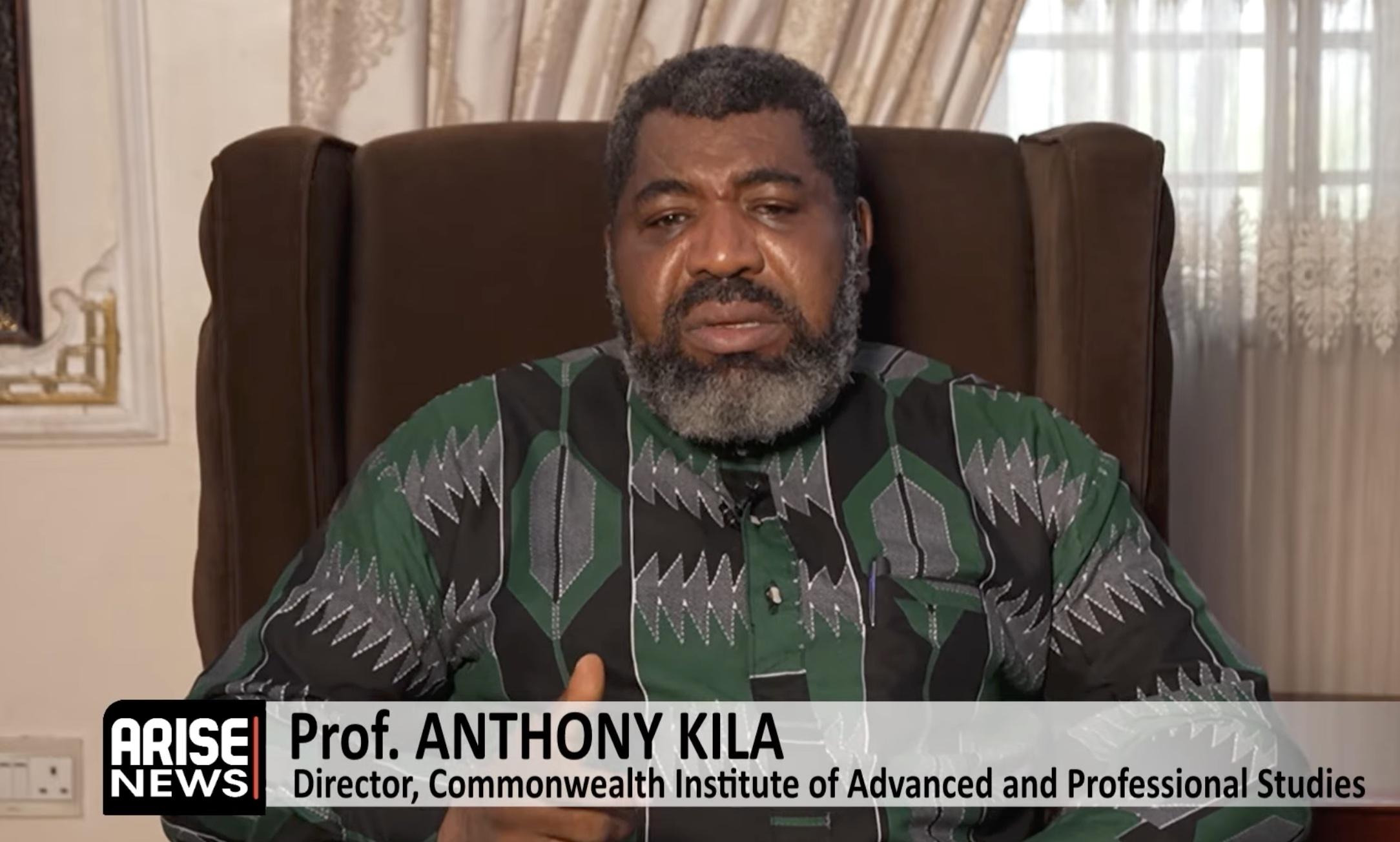
Anthony Kila: You Shouldn’t Deregister A Major Opposition Party, Judiciary Is Being Weaponised
Professor Kila warns deregistering a major opposition party threatens democratic stability and undermines confidence in Nigeria’s political process.
Professor Kila warns deregistering a major opposition party threatens democratic stability and undermines confidence in Nigeria’s political process.
Director, Commonwealth Institute of Advanced and Professional Studies (CIAPS), Prof. Anthony Kila, has criticised the deregistration of the Nigeria Democratic Congress (NDC), warning that removing a major opposition party carries grave consequences for Nigeria’s democracy and reinforces concerns that the judiciary is being weaponised for political purposes.
Speaking in an interview with ARISE NEWS on Monday, on the Federal High Court judgment deregistering the NDC, Kila said although there was no evidence directly linking the ruling to the presidency or the ruling All Progressives Congress (APC), the optics surrounding the development were damaging and risked deepening public distrust in the country’s democratic institutions.
“The common thinking is that a party like NDC is a major party in Nigeria and you can’t just go ahead, deregister the NDC as if there’s no consequence. You can’t say I’m following the law. You live in space. You have to live in Nigeria if you want to give rulings about Nigeria.”
Kila said the judiciary was becoming excessively involved in politics, warning that the growing trend was undermining public confidence in democratic governance. “It is true that the judiciary has been weaponised. You know, you have to be intellectually blind or morally mischievous not to see that in this country, or just totally naive.”
While acknowledging that there was no proof that the federal government orchestrated the court decision. He said “There is no proof to say somebody in Aso Rock, somebody in APC is sitting down to manipulate this. But the optics are bad. The optics are bad, it must be said.”
Kila appealed to judges to exercise greater restraint in politically sensitive matters, arguing that excessive judicial intervention was creating what he described as “government by judges. “The judiciary is getting too much involved in politics, and they’re not doing well. They appear too many times to be lacking common sense.”
According to him,political competition should be based on ideas, policies and candidates rather than efforts to eliminate rivals through the courts. “There should be political parties to conduct, they should have equal footing, and the winner should emerge based on the ability to persuade using their programmes, their policy, and the characters of who they present.”
Kila also urged President Bola Tinubu and leaders of the APC to publicly distance themselves from any perception that opposition parties were being deliberately weakened. “I think it’s the duty of anybody who truly loves democracy to ensure that nobody suspects that democracy is being stifled.”
He also argued that while political parties must be held accountable for complying with regulations. “The mindset of a judge, of a regulator that deals with big matters of national issues, should be, how do we keep them alive and make corrections.”
Kila emphasised that Nigeria’s political parties required stronger internal governance, including transparent primaries and internal democracy. “Yes, we need to look at the fabric of the political parties, but above all, we need to keep them alive.”
He further criticised politicians for relying excessively on the courts to settle political disputes instead of resolving disagreements internally. “Shame on the politicians who weaponise the judiciary. They are the corruptors of democracy. Shame on them because they corrupt democracy.”
He also argued that judicial independence remained weak because of the executive’s influence over appointments and funding. “We need to imagine a Nigeria where it is not the president that nominates INEC, not nominates the head of the judiciary, even the IG.”
To strengthen democratic institutions, Kila advocated reforms that would guarantee financial and administrative independence for key state institutions. “One arm cannot be nominating another arm and expect that arm to be independent of it. One arm of government cannot be financing another arm of government and expect that arm to be free of it.”