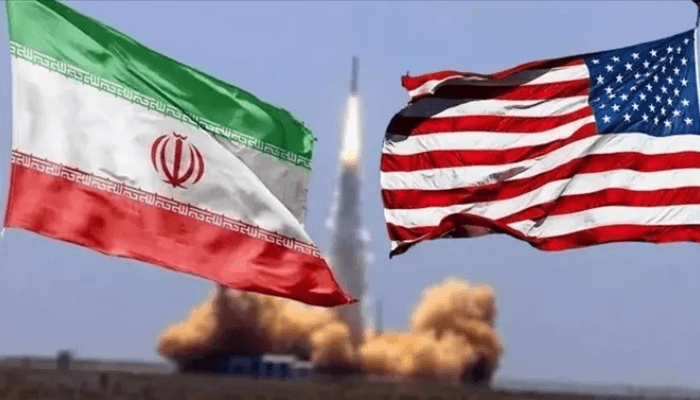
Donald Trump, United States President has announced that a peace agreement aimed at ending months of fighting between Washington and Tehran is expected to be signed on Sunday, although Iran has signalled that the timeline may not yet be final.
- +Trump says US-Iran peace deal set for Sunday signing as Tehran urges caution
In a statement on his Truth Social platform, Trump said the agreement would immediately lead to the reopening of the Strait of Hormuz, one of the world’s most important shipping routes for oil and liquefied natural gas.
In a statement on his Truth Social platform, Trump said the agreement would immediately lead to the reopening of the Strait of Hormuz, one of the world’s most important shipping routes for oil and liquefied natural gas.
“The Deal is scheduled to get signed tomorrow, and immediately after it is signed, the Hormuz Strait is OPEN TO ALL,” Trump wrote.
The US president also made an apparent reference to Iran’s stockpile of enriched uranium, saying that “at the appropriate time, when all is calm, we will go in and get the Nuclear Dust,” adding that it would later be destroyed.
However, Tehran struck a more cautious tone. Esmaeil Baghaei, Iranian foreign ministry spokesman said officials were still waiting for clarity on the exact date of the signing.
“We will have to wait and see about the exact date of the signing of the memorandum of understanding, although it will not be tomorrow,” Baghaei said.
According to BBC, Pakistan has played a major role in mediating the talks. Shehbaz Sharif, Pakistani Prime Minister, said both sides were closer than ever to reaching an agreement, adding that the deal was expected to be finalised within 24 hours.
“Pakistan is preparing for the electronic signing of the peace deal immediately after, followed by technical level talks next week,” Sharif said.
The proposed agreement is expected to end the wider conflict involving the United States, Iran, Israel and Hezbollah in Lebanon. Seyed Abbas Araghchi, Iran’s Foreign Minister said the deal would include reopening the Strait of Hormuz and lifting the US blockade of Iranian ports, while negotiations over Tehran’s nuclear programme would be addressed at a later stage.
For years, Western countries have accused Iran of seeking to develop nuclear weapons, a claim Tehran has repeatedly denied, insisting that its nuclear activities are intended for peaceful purposes such as electricity generation and scientific research.
According to BBC, previous attempts to finalise an agreement have collapsed at the final stages, raising uncertainty over whether the latest breakthrough will hold.
The conflict began after US and Israeli strikes on Iran on February 28, triggering Iranian attacks on Israel and US allied states in the Gulf and leading to the effective closure of the Strait of Hormuz. Although a ceasefire was reached in April, tensions continued, with both sides exchanging fresh rounds of strikes in recent days.