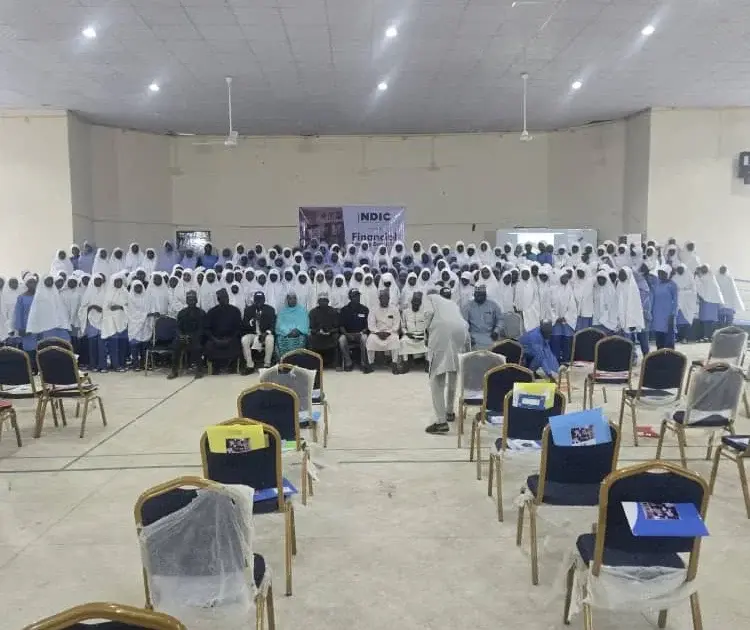
The Nigeria Deposit Insurance Corporation has trained 200 students of Government Girls Unity College, Damaturu, Yobe State, on financial literacy, stressing the importance of savings, financial discipline and prudent money management among young people.
- +NDIC trains 200 Yobe students in financial literacy
The training, held on Wednesday at the school premises, was organised as part of activities marking the 2026 World Financial Literacy Day with the theme, “Smart Money Talks.”
The training, held on Wednesday at the school premises, was organised as part of activities marking the 2026 World Financial Literacy Day with the theme, “Smart Money Talks.”
Speaking during the programme, the Senior Manager of NDIC, Musa Rasheed, said the initiative was part of the corporation’s efforts to equip young people with the knowledge and skills needed to make informed financial decisions and become financially responsible citizens.
He explained that financial literacy remained an essential life skill that could help students develop healthy financial habits from an early age and prepare them for future responsibilities.
Rasheed urged the students to cultivate discipline in handling money and to learn the difference between needs and wants.
He said, “One of the most important lessons you should take away from this programme is the need to be financially disciplined.
“You must learn to differentiate between your needs and your wants because many people encounter financial difficulties when they focus more on things they desire rather than things they truly need.
“As students, developing this understanding early in life will help you make better financial decisions and prepare you for a more secure future.”
The NDIC official also encouraged the students to embrace a savings culture, noting that consistent savings, regardless of the amount, could provide financial security and help them prepare for unforeseen circumstances.
He added, “Saving money is very important. You should cultivate the habit of saving even when the amount is small. Do not wait until you have a large sum of money before you begin to save because the habit itself is more important than the amount. When you save regularly, you build discipline, prepare yourself for emergencies and develop a foundation for future financial stability.”
He further stressed that prudence and self-discipline were critical values for students seeking success in life, adding that the habit of saving helped to instil patience and self-control.
Also speaking was a Senior Manager with NDIC, Mahmud Dahiru, who enlightened the students on the functions and mandates of the corporation, as well as its role in protecting depositors and promoting confidence in the banking sector.
Dahiru said Financial Literacy Day remained an important platform for promoting financial education among young people and deepening financial inclusion.
He said, “Financial Literacy Day is a key event anchored by the Central Bank of Nigeria during the annual Global Money Week to enhance youth financial inclusion. The objective is to expose young people to the knowledge and skills required to manage money responsibly, understand financial services and make informed decisions that will positively impact their future.”
He added that financial education was necessary to help young people understand savings, budgeting, responsible spending and other key financial concepts required for personal and economic development.
Earlier, the Commissioner for Basic and Secondary Education, Prof. Abba Adam, commended the NDIC for organising the training and described the programme as a valuable initiative for students.
Represented by the Director of Quality Assurance in the ministry, Adamu Garba, the commissioner urged the participants to apply the lessons learnt during the training in their daily lives.
He said, “The knowledge you have gained today should not remain within the walls of this hall. You need to put these lessons into practice by cultivating the habit of saving, spending responsibly and making wise financial choices. These are values that will benefit you not only as students but throughout your lives.”
He also assured the organisers of the state government’s commitment to collaborating with financial institutions and other stakeholders to promote financial knowledge among learners across the state.
Meanwhile, the Acting Secretary to the Yobe State Government, Mohammed Goje, praised the NDIC for investing in the financial education of young people and encouraged the students to make practical use of the knowledge gained from the programme.
Goje said, “Financial literacy is a vital tool for personal development and future success. I commend the NDIC for bringing this important programme to our students, and I encourage all participants to take the lessons seriously. Developing a culture of saving, planning and financial discipline at a young age will help you avoid many challenges and position you for greater opportunities in the future.”
The event featured interactive sessions on budgeting, savings culture, financial planning and responsible money management, aimed at equipping students with the knowledge required to make sound financial decisions and build a secure financial future.