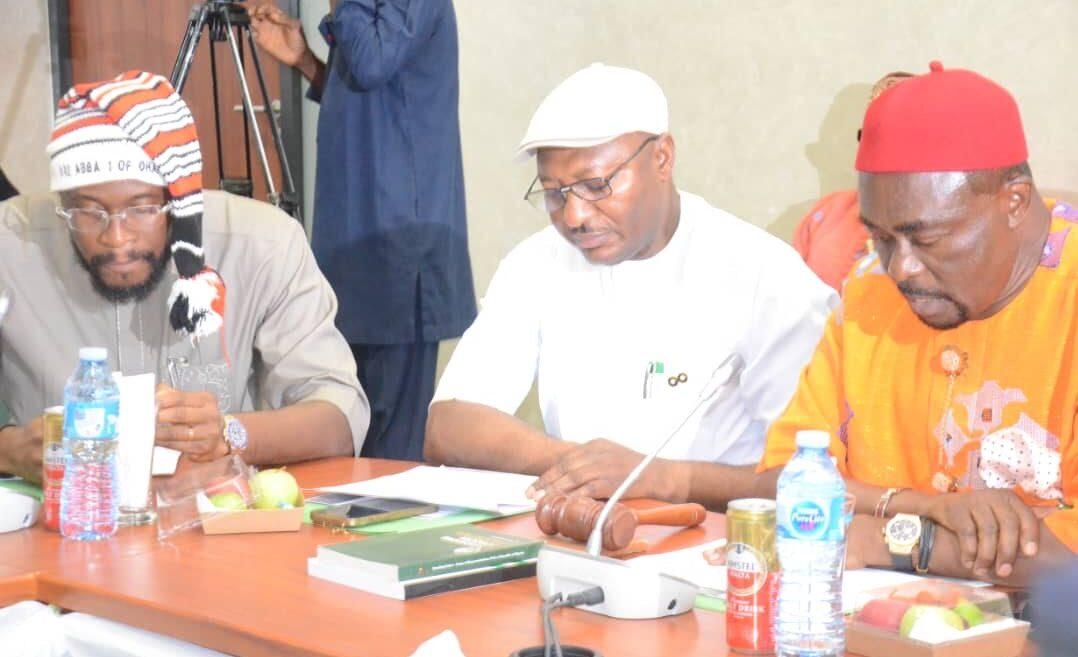
The House of Representatives Committee on the South East Development Commission (SEDC) has given a thumbs-up to the commission's proposed N140 billion budget for the 2026 fiscal year. The approval was announced after a budget defence session held by the committee on Thursday, where the SEDC Managing Director and Chief Executive Officer, Mark Okoye, made a presentation to the committee.
- +Reps Approve N140bn Budget for South East Development Commission
According to Okoye, the budget will be used to drive economic growth, infrastructure development, and industrialisation across Nigeria's five South-East states.
According to Okoye, the budget will be used to drive economic growth, infrastructure development, and industrialisation across Nigeria's five South-East states. The commission aims to coordinate regional development projects and attract both public and private investments to enhance the region's socio-economic profile. The long-term plan is to grow the South-East economy from approximately $40 billion to $200 billion over the next decade, focusing on industrialisation, agriculture, technology, and the creative economy.
Okoye noted that achieving these targets would require close collaboration with state governments, the National Assembly, the private sector, and the diaspora community. He highlighted the need for innovative and sustainable solutions to address environmental degradation, particularly erosion, which is a major challenge confronting the region. The South-East currently has over 2,700 erosion sites, and fixing a single site would cost between N10 billion and N20 billion.
The SEDC plans to capitalise the South-East Investment Company Limited, an investment subsidiary that will mobilise private sector funding for major infrastructure projects, including railways, power plants, ports, and gas pipelines. The company will conduct feasibility studies and develop bankable projects to attract funding from investors and development partners. In the agricultural sector, the commission intends to promote mechanised farming by creating demonstration farms ranging from 200 to 300 hectares across rural communities.
Other programmes highlighted in the budget include the South-East Industrialisation Programme, which aims to develop special economic zones to attract manufacturing investments, and the Youth Entrepreneurship and Innovation Programme, designed to provide funding support for technology startups and young entrepreneurs. The commission also plans to invest in grassroots sports infrastructure to nurture talent and promote national unity.
Okoye provided a breakdown of key budget provisions, including N10.5 billion for the South-east Regional Intervention Projects and Programmes, N24.5 billion for the South-east Regional Economic and Industrial Development Programme, and N10.25 billion for the South-east Zonal Allocation to States Project, a matching grant designed to encourage co-investment by state governments.
The committee chairman, Chris Nkwonta (APC, Abia), commended Okoye and the SEDC board for their work, describing the MD as "a round peg in a round hole" whose vision and development plans for the South-east are commendable. "Anyone who listens to you, or who has listened to you, will agree that bringing you as a member of this commission was the right decision," Nkwonta said.
The approval of the proposed budget as a working document is a significant step towards the implementation of the SEDC's development plans. However, the commission still needs to secure funding from government allocations, private sector contributions, and support from external investors and development partners to achieve its targets. The SEDC has already incorporated provisions from last year's capital expenditure and accounted for inherited debts as part of its budget adjustments for 2026.
As the commission moves forward with its development plans, it will be interesting to see how it addresses the challenges of environmental degradation and how it will mobilise private sector funding for major infrastructure projects. The SEDC's plans to construct railways across the five South-east states to enhance trade, improve regional connectivity, and unify the states economically are ambitious, but they will require significant funding and coordination with state governments and other stakeholders.
The next step for the SEDC will be to present its budget to the House of Representatives for final approval. If the budget is passed, the commission will be able to implement its development plans and start making progress towards its long-term goals. The success of the SEDC's plans will depend on its ability to mobilise funding and coordinate its efforts with state governments and other stakeholders.