NIGERIA is under siege from relentless waves of terrorism marked by gruesome killings, kidnappings and other acts of savage brutality against innocent citizens. The bloodletting has become so frequent that the country now appears numbed to the horror. Communities are sacked, families are shattered, and lives are destroyed almost daily.
- +Rehabilitation of terrorists counterproductive
Yet, amid this unending carnage, the government continues to rehabilitate and reintegrate arrested terrorists into society.
Yet, amid this unending carnage, the government continues to rehabilitate and reintegrate arrested terrorists into society. It is a patently counterproductive policy.
The programme officially commenced in 2016 with the launch of Operation Safe Corridor, a non-kinetic government initiative aimed at deradicalising and reintegrating low-risk, repentant insurgents into society.
Since then, about 5,000 former Boko Haram insurgents have reportedly been reintegrated into communities across the country.
Alongside this is a parallel initiative known as the Borno Model, under which about 8,000 former fighters and their families have been reabsorbed into their hometowns.
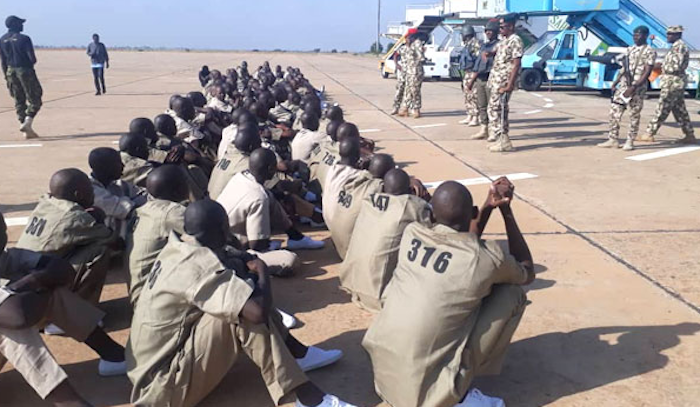
Most recently, 744 former terrorists and victims of violent extremism graduated from the Federal Government’s De-radicalisation, Rehabilitation and Reintegration Camp under Operation Safe Corridor.
A breakdown shows that two are from Abia State, 10 from Adamawa, one from Akwa Ibom, two from Anambra, 12 from Bauchi, 597 from Borno, three from Ebonyi, one from Enugu, 15 from Kano, three from Katsina, one from Kebbi, five from Kogi, four from Nasarawa, two from Niger, two from Plateau, two from Sokoto, and 58 from Yobe.
There are also foreign nationals among them: one from Burkina Faso, one from Cameroon, two from Chad, and four from the Niger Republic.
Additionally, 733 of the graduates are Muslims, while 11 are Christians.
What remains unclear, however, is how many among the 744 are actual former terrorists and how many are victims, because the report failed to make that distinction.
It is instructive that the Coordinator of OSC, Yusuf Ali (a brigadier general), stated that many of the participants were victims of coercion and manipulation.
“Some were abducted, others were forced, and many were drawn into the conflict due to circumstances beyond their control. But today marks a turning point,” he said.
That explanation, however, raises even more troubling questions about transparency and accountability. The government’s standard justification is that those benefiting from this extraordinary leniency have “repented,” a convenient euphemism for abandoning violent and lawless conduct.
Yet, the identities of these so-called repentant terrorists remain hidden from the public. Nigerians are simply expected to trust a secretive process involving people accused of mass murder, arson and terrorism.
More disturbing still is the complete exclusion of victims from the process. Those who lost loved ones, homes and livelihoods are denied any meaningful input in decisions that directly affect their safety and psychological healing.
Nigerians are left in the dark about the criteria for selecting beneficiaries and the officials responsible for determining who deserves rehabilitation and reintegration.
In communities devastated by terrorism, persuading locals to accept former terrorists back into their midst is naturally difficult. Fear, trauma and distrust cannot be wished away simply because the government has declared an insurgent “rehabilitated.”
The United Nations Office on Drugs and Crime argues that focusing solely on prosecuting and imprisoning terrorists may not be sufficient to stop them from reoffending.
It explains: “Where there are large numbers of terrorism suspects, there is a risk that criminal justice systems can become overwhelmed.” It therefore advocates the involvement of civil society groups and various government agencies in rehabilitation efforts.
While these arguments may appear plausible in theory, Nigeria’s grim socio-economic realities tell a different story. Crushing poverty, unemployment and social dislocation can easily drive supposedly rehabilitated terrorists back into violence and criminality.
It is the view of the PUNCH Editorial Board that giving what effectively amounts to a free pass to individuals responsible for death, misery and destruction sends a dangerous signal.
It risks normalising terrorism as a viable career path for violent criminals who may calculate that, at worst, they will eventually be rehabilitated, rebranded and returned to society.
The late retired Justice of the Supreme Court, Justice Chukwudifu Oputa, once described justice as a three-way traffic: justice for the victim, justice for the offender and justice for society.
Where terrorists are reintegrated into the communities they once terrorised, their victims can never truly heal.