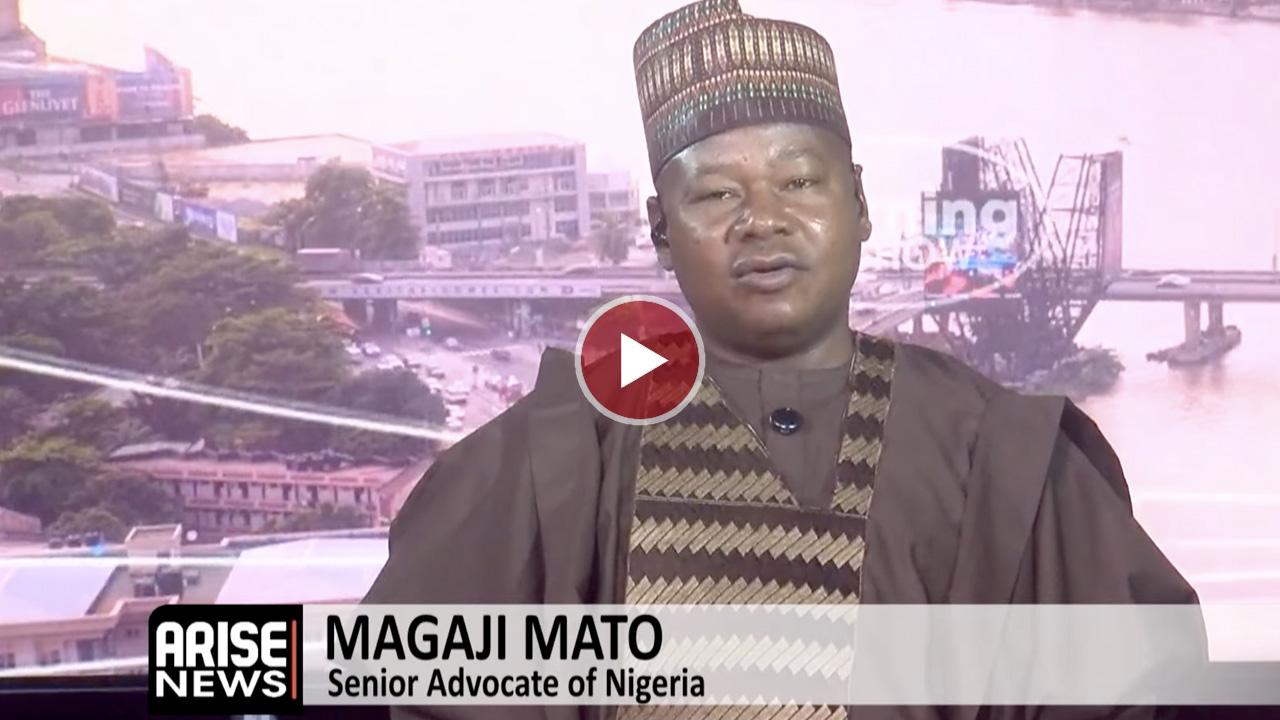
Senior lawyer, Magaji Mato says electoral disputes inevitable as candidates may reject results despite INEC’s efforts to ensure credible elections nationwide.
- +Magaji Mato: INEC Cannot Stop Aggrieved Candidates From Challenging Elections
- +“Every expenses of the government must go through appropriation process.”
Senior Advocate of Nigeria, Magaji Mato, has said Nigeria’s electoral umpire, the Independent National Electoral Commission (INEC), cannot prevent dissatisfied candidates from challenging election outcomes in court, even if elections are conducted credibly.
Senior Advocate of Nigeria, Magaji Mato, has said Nigeria’s electoral umpire, the Independent National Electoral Commission (INEC), cannot prevent dissatisfied candidates from challenging election outcomes in court, even if elections are conducted credibly.
Speaking in an interview on ARISE News on Wednesday, Mato stressed that the inevitability of electoral litigation lies not only in the conduct of elections but also in the reactions of political actors and the public.
“If those who contested the elections are not comfortable, even though INEC in its own understanding has conducted free and fair elections, the INEC cannot stop them from going to court to challenge the election.”
Mato explained that the issue of post-election disputes goes beyond institutional performance and is largely shaped by perception and acceptance of results by contestants.
“What determines a free and fair election is what Nigerians themselves perceive.”
He noted that even when INEC fulfils its mandate to conduct credible polls, aggrieved candidates may still reject outcomes and pursue legal redress.
“We also have a situation where, you see, Nigerians are not always willing and ready to accept defeats in electoral processes.”
The senior lawyer made the remarks while reacting to the federal government’s proposed ₦135.22 billion allocation in the 2026 budget for electoral adjudication and post-election expenses, which has drawn criticism from opposition parties and civil society groups.
Mato, however, cautioned against interpreting the allocation as funds earmarked solely for legal fees, stating that the budget likely covers a wide range of election-related expenses.
“I do not want to take the position that that amount of money was set aside to pay lawyers by the federal government.”
He added that election-related spending extends beyond litigation to include logistics, security, and the participation of both local and international observers.
“There are civic societies that will come to observe elections. There are foreign bodies that will come to observe elections. There are also security personnel that will be given allowances for special duties here and there. And there are other logistics that will be provided.”
On the role of INEC in electoral disputes, Mato noted that the commission is almost always a party in election litigation, making it difficult to predict or limit the volume of cases.
“You cannot count the number of lawsuits that will be filed that INEC will be making, because there is virtually no action that goes to court without joining INEC.”
He described the proposed budget as a “workable” provision, given the scale and complexity of Nigeria’s electoral system.
“So these actions are multidimensional. And if they have this money, it’s probably not for them to spend all the money. I’m not their spokesman. But I feel this is a budget, a workable budget.”
Mato also addressed concerns about transparency, particularly the placement of the funds under service-wide votes rather than being directly allocated to INEC. He emphasised the importance of due process in government spending.
“Every expenses of the government must go through appropriation process.”
He warned that any deviation from established appropriation procedures raises accountability questions for the National Assembly.
“If it is not done so, then it is left for the National Assembly to explain within the capacities they have as to where they got the power to appropriate or to allocate this amount of money.”
On reducing post-election disputes, Mato acknowledged that while INEC must strive for transparency, litigation may persist due to broader legal and political factors.
“Let the public see that you have done all in the bit to ensure… that it is also transparently shown that it is free and fair.”
He noted that courts ultimately play a decisive role in determining election outcomes, sometimes on technical grounds beyond the initial conduct of polls.
“You have the courts who also look at other aspects, maybe technical aspects, maybe some other legal issues that probably the winner will otherwise become the loser.”