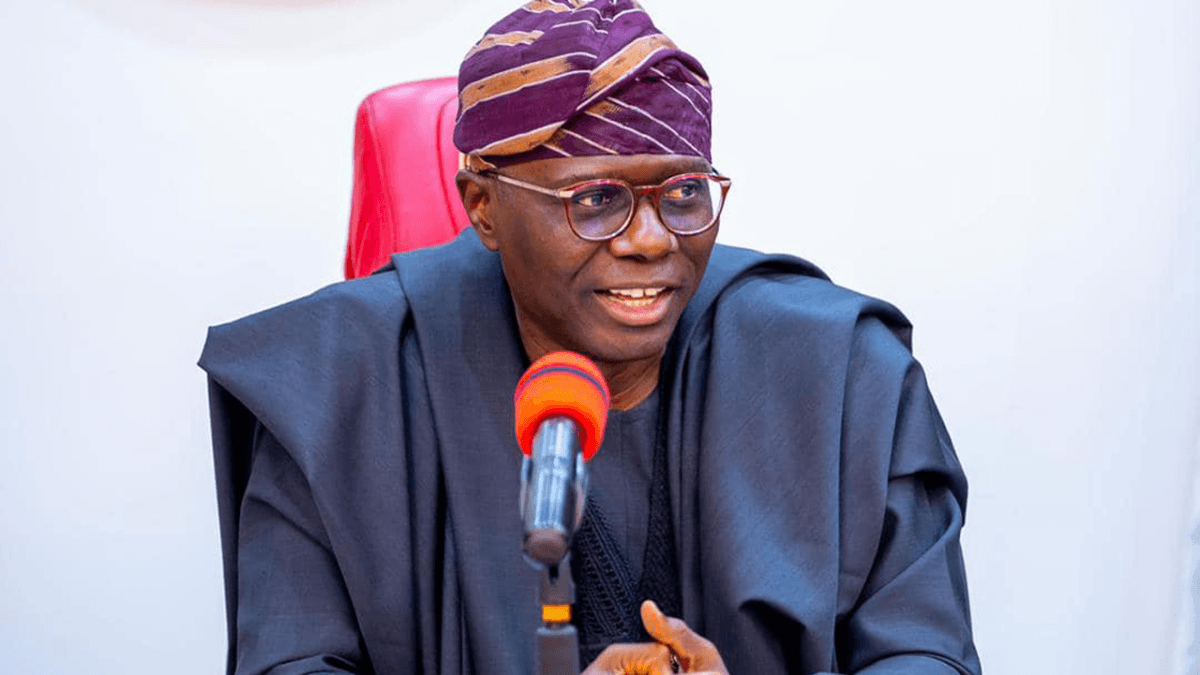
Lagos 2027: No clear successor as APC power brokers, aspirants battle for control
The race for who succeeds the incumbent Governor of Lagos State, Babajide Sanwo-Olu is hotting up, as gladiators and gubernatorial aspirants in the ruling All Progressives Congress (APC) intensify moves that would put them ahead of others in the race.
The race for who succeeds the incumbent Governor of Lagos State, Babajide Sanwo-Olu is hotting up, as gladiators and gubernatorial aspirants in the ruling All Progressives Congress (APC) intensify moves that would put them ahead of others in the race.
This is with the primary window set by the Independent National Electoral Commission (INEC) fast approaching. But unlike in neighbouring state of Ogun, where a consensus arrangement has already been agreed and decided among stakeholders on who would picks the ticket.
The situation is different in Lagos State, where there is no clear frontrunner yet.
Few of the governorship aspirants are still optimistic of their chances and forging ahead with consultations with stakeholders across the state ahead of the party’s primary.
But behind the flurry of consultations, endorsements and quiet alignments lies a familiar reality in Lagos politics: uncertainty often defines the early stages of succession battles.
Political analyst Timi Balogun captures this ambiguity succinctly, noting that as it stands, the gubernatorial race in Lagos is still unclear.
“The situation is still hazy on who would emerge, the early aspirants frequently serve as ‘smokescreens’ rather than eventual candidates,” the analyst said.
Drawing parallels with the emergence of former governors Babatunde Fashola, Akinwunmi Ambode and incumbent Babajide Sanwo-Olu, Balogun argued that the eventual flagbearer is often not the most visible at the outset. That pattern appears to be repeating itself.
In the last two weeks, there has been speculation that Obafemi Hamzat, current deputy governor of Lagos has been picked as the APC’s consensus candidate for the forthcoming gubernatorial primary next month.
Credence was given to this speculation last week, when the chairman of the influential Lagos Governance Advisory Council (GAC), Tajudeen Olusi, a close ally of President Bola Ahmed Tinubu, at a public function in the state revealed a possible successor to incumbent Governor Sanwo-Olu. At the event Olusi repeatedly referred to Hamzat, as the “incoming governor of Lagos.”
The comment by the GAC leader has elicited curiosity among stakeholders and even other aspirants.
Furthermore, in a post on Facebook last week, the deputy governor revealed that he has been holding meetings with stakeholders and members of GAC, in a bid to rally support for his ambition.
The post reads: “Today, I began consultations with respected members of the Governance Advisory Council, GAC.
“We had honest, thoughtful conversations about the future of Lagos and the kind of leadership it requires.”
His supporters point to his administrative experience and backing within influential groups like the Justice Forum.
Seun Okeowo, political pundit, argues that his track record positions him as a strong candidate with institutional support.
Yet, within party circles, there is caution against reading too much meaning into early moves.
There are party leaders who insist that there is no consensus candidate and no formal endorsement yet, this underscores the fluid nature of the race.
A chieftain of the APC in Lagos who spoke on the condition of anonymity told BusinessDay that Hamzat was an acceptable “insider” option that would be welcomed, stressing that his father had also made significant contributions to Lagos politics.
“Hazmat candidacy would be acceptable and would be a popular one within the party, because he is considered an ‘insider’,” the chieftain told BusinessDay.
However, other sources in the party told the media that the meetings should not be mistaken for any settled arrangement.
“The reported endorsement of Hamzat as the preferred consensus candidate is still a rumour. What Obafemi Hamzat is doing is just consultation, and if anyone is telling you he has been ordained as the consensus candidate, just take it as a rumour,” a party leader said.
“In fact, it was even alleged that Asiwaju picked Ambode while GAC picked Hamzat. It is still all rumour. What is important is that the party has made it clear that the race is still open for contest.”
The re-emergence of Akinwunmi Ambode has added a new layer of complexity. His quiet consultations have reignited debate within the APC, with supporters framing his return as an opportunity to “complete the job” after his abrupt exit in 2019 where he was refused a ticket for second term.
Ambode’s residual popularity, particularly tied to infrastructure development during his tenure, has kept him relevant among sections of the electorate.
The former governor has large support among Lagosians, many credit him for massive infrastructure upgrades in inner parts of the state during his four years in power between 2015- 2019.
In the last few months, his supporters say he is the best person to take Lagos to where it belongs.
The former governor’s consultations are already stirring conversations within APC circles.
But observers say his strained history with party leaders and the GAC remains a key hurdle for him to overcome.
“Unlike what we had in the past, Ambode opened up many areas that were considered not for the elite. Inner or rural parts of Lagos saw life; that is why many Lagosians would never forget him”, Tolu Ogundipe, a public affairs commentator, said.
Ogundipe further stated that he was unsure if the ruling party will give him a ticket to return, because of the fall-out with party leaders then.
For all the permutations, the structure built by Bola Tinubu continues to define the race.
Observers say that Tinubu’s influence lies less in personality and more in deeply entrenched political machinery spanning wards, local governments and party organs.
Within this system, loyalty and alignment often outweigh independent political structures. Ironically, aspirants with strong personal bases may find themselves disadvantaged if perceived as operating outside the established order.
“The deciding factor is still intact,” Balogun observed, suggesting that candidates with visible independent structures are sometimes sidelined by the “kingmaker” dynamic that shapes Lagos politics.
“So, till close to or after the primaries the radar might remain unclear,” he added.
Beyond Hamzat and Ambode, several heavyweights are in contention. These include Femi Gbajabiamila, Mudashiru Obasa, Hakeem Muri-Okunola and Abdul-Azeez Adediran.
Jandor, who commands a statewide network through the Lagos4Lagos Movement, has publicly downplayed speculation about an anointed candidate, insisting the process should be allowed to run its course, even as he signals willingness to align with party leadership.
Outside the APC, the opposition remains fragmented. The People’s Democratic Party (PDP) continues to grapple with internal divisions and weak grassroots coordination in Lagos, with limited aspirant visibility ahead of 2027.