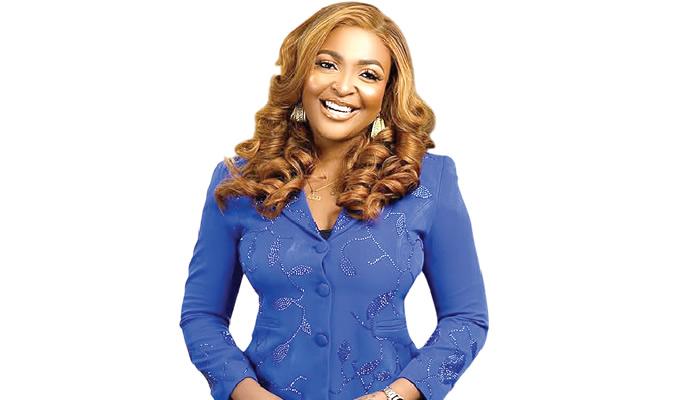
CONTROVERSIAL social media influencer, Blessing Okoro, popularly known as Blessing CEO, has plunged herself into yet another storm, this time over a deeply troubling claim that she was battling Stage Four cancer.
- +The stormy case of Blessing CEO
It was a claim calculated to evoke sympathy, and it worked.
It was a claim calculated to evoke sympathy, and it worked. Thousands of her followers responded with emotion and generosity, some donating at least N13 million to support her treatment.
But the story began to unravel almost as quickly as it spread.
Her appearance on a television programme raised more questions than answers. The details of her condition did not add up. Soon after, a more damaging allegation that she had doctored a breast cancer report belonging to one Deborah Mbara surfaced.
That claim gained credibility when the Nigerian Medical Association, Delta State chapter, publicly disowned the histology report linked to Okoro. The document, it said, had originally been issued on May 9, 2025, by Xinus Medical Diagnostics in Asaba to Mbara, following a referral for a confirmatory breast cancer test.
According to The PUNCH, Mbara went further, accusing the influencer of manipulating her medical report to solicit donations from the public.
In a video posted on Instagram, Mbara, who runs a beauty business in Asaba, explained that she met Okoro in 2025 while working as her make-up artist. Out of concern after seeing Okoro’s public claims, she reached out to support her and, at Okoro’s request, shared her medical report for comparison.
That gesture of goodwill may have been weaponised.
In a stunning reversal, Okoro later admitted in an interview with social media personality Egungun of Lagos that she did not have cancer after all. Yet even in retracting the claim, she doubled down on defiance, acknowledging that she raised N13 million but insisting she owed no one an apology and would not return the money.
If confirmed, that stance is not just brazen; it is an affront.
The matter has since escalated. Mbara’s lawyer, Sunny Anyanwu, petitioned the EFCC, alleging that the influencer may have raked in over N300 million from the alleged scheme. The Nigeria Police Force in Delta State has also received a petition.
The Nigerian Cancer Society has joined the fray, formally petitioning the EFCC, the self-styled Department of State Services, and the police to investigate the case. It described the alleged conduct as unethical, disturbing, and harmful to genuine cancer advocacy.
Yet, despite the gravity of the allegations, action appears slow. Nigerians are left asking: What exactly are the authorities waiting for?
In the meantime, Okoro has deactivated her Instagram account, dismissing the scandal as a “miscommunication.” That explanation strains credulity.
Beyond the individual, this episode strikes at something far more fragile: the public trust.
In a country where the healthcare system is weak, hospitals are overstretched, and the cost of treatment is often prohibitive, Nigerians routinely turn to public fundraising to survive. Time and again, ordinary citizens have relied on the goodwill of strangers to pay medical bills and stay alive.
That fragile ecosystem depends entirely on trust.
To exploit it, if that is what has happened, is not just dishonest; it is dangerous. It risks poisoning public compassion and casting doubt on every genuine cry for help. If swift and decisive action is not taken, copycat schemes will inevitably follow.
The media, too, must reflect. Claims of Stage Four cancer from a high-profile figure should have triggered rigorous scrutiny, not uncritical amplification. Sensational stories demand verification, especially when they involve life-and-death issues and public donations.
The public must also learn to be more cautious. Emotion is not a substitute for due diligence. Before parting with money, even for seemingly urgent causes, claims must be verified.
It is particularly troubling that some individuals reportedly donated millions to this campaign. That level of trust and sacrifice cannot be dismissed lightly.
If wrongdoing is established, security agencies must ensure that every kobo obtained under false pretences is recovered and returned. The fact that donations were voluntary does not place them beyond the reach of the law.
There are also lingering questions. How did Mbara’s medical report end up in Okoro’s possession? Were there lapses in handling sensitive medical information? These issues must be fully investigated. Nothing should be swept aside or left to speculation.
Influencers wield enormous power in today’s digital ecosystem. With that power comes responsibility. Their words shape opinions, influence decisions, and, as this case shows, can move money at scale. That trust must not be abused.
For many followers, influencers are not just entertainers; they are validators of reality. When that trust is broken, the damage extends far beyond a single scandal.
This is why the Blessing CEO affair cannot be treated as just another social media controversy. It is a test of accountability.