Bayelsa shows BRACED states how to close ‘value-capture gap’, escape investors’ tricks
- +…Urges member-states to present common front to escape investors’ arm-twisting
The BRACED Commission, comprising states of Bayelsa, Rivers, Akwa Ibom, Cross River, Edo, and Delta, met recently in Port Harcourt, Rivers State capital, to plot economic integration of the states.
The BRACED Commission, comprising states of Bayelsa, Rivers, Akwa Ibom, Cross River, Edo, and Delta, met recently in Port Harcourt, Rivers State capital, to plot economic integration of the states.
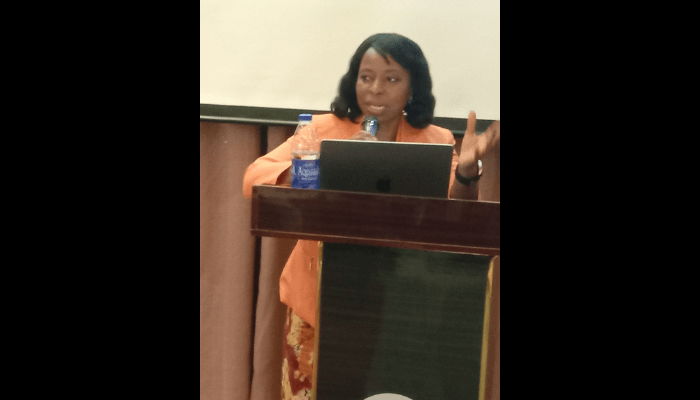
The Bayelsa State team lead, Patience Ranami Abah, Director-General of the Bayelsa State Investment Promotion Agency (BIPA), made strong case for the member-states to form a common economic front so as to offer economy of scale.
Abah also preached a message of closing ‘value-capture gap’ saying most of the values created in the BRACED states or oil states do not return full cost. ‘Value-capture gap’ refers to the disparity between actual value and recovered value.
Abah acted as both Bayelsa team lead and BRACED resource expert, and was thus nominated to lead some teams and groups for better outcomes for the Commission.
Official records indicate that Abah has a strong background in investment promotion, legal services, and economic development, with extensive experience in facilitating investments within Nigeria beyond Bayelsa State.
Since April 2025, she has served as the Director General of BIPA where she is responsible for investment generation, investor facilitation, policy advocacy, and showcasing investment projects in Bayelsa State. Her previous role as Permanent Secretary for the Ministry of Trade, Industry and Investment in Bayelsa State has been of huge impact, just like Chamberlain Peterside, who was commissioner of finance and economic planning in Rivers State now taking up the task of DG of the Rivers State Investment Promotion Agency.
Abah is respected by her colleagues as a lawyer and investment expert with significant experience in creating investment-friendly environments and bridging the value capture gap. She is said to have worked on strengthening the partnership between government and the private sector, specifically in areas such as oil & gas, agriculture, and infrastructure, supported by her education/training as a Juris Doctor (JD) from Queen’s University and a B.Sc in Biological Sciences from the University of Toronto.
The lawyer-trade promotion expert thus took time to present her perspective on essence of the gathering, regional economic integration, as well as what Bayelsa State is bringing to the table. She insisted that closing the value-capture gap would only be through synchronized investment frontiers.
She showed the Bayelsa advantage or profile mainly of access to the Atlantic Ocean that supports a deep seaport at a place called Agge, a state with the third largest wetland in the world of almost 11,000 square kilometers. Bayelsa with a population of almost three million is a gateway into the Gulf of Guinea and West Africa especially in the era of the Africa Continental Free Trade Agreement (AfCFTA).
Showing Bayelsa’s contribution to Nigeria’s oil wealth, she mentioned Brass with LNG facility valued at $4bn, saying gas gathered in the area per day is as huge as 1.2bn scuffs. She mentioned the $3.5 billion Brass Fertilizer & Petrochemical Company Limited.
Abah talked about the importance of risk mitigation approach by the various investment promotion agencies in the member-states, and why they must focus on ‘Ease of Doing Business’ (EoDB), noting that Bayelsa ranked number one in the south-south and number three nationally in the last (2018) World Bank ‘EoDB’.
She went on: “Bayelsa does run a transparent and accountable government backed by laws, including the Bayelsa State Income and Expenditure Transparency Law. The reports are easily accessible to anyone online, and you can also apply if you wish to receive a summary of these financial documents.”
Apart from LGA inclusion system in the state, she said Bayelsa plays strong on procurement law, state audit law, and that the state is participating fully in the World Bank SABER programme, which is the State Action on Business Enabling Reforms.
Presenting Bayelsa as a top tourism destination, she talked about low crime rates. “Bayelsa is one of the safest states in the entire country, accounting for only 1.14% of total reported crime cases from the crime statistics reports of 2018.”
She asked the partner-states to look at the agenda of the present state government led by Douye Diri called ASSURED Prosperity Agenda in considering what Bayelsa State brings to the table for BRACED states economic integration.
She mentioned an Agricultural Revolution and Blue Economy leveraging on Bayelsa’s over 200 km coastline and freshwater rivers. “This means large-scale aquaculture, large-scale marine deep-sea fishing, trawling, and special agro-processing zones. So what we’re doing is we’re moving from subsistence farming to commercial agro-export.”
She said the state is focusing on sustainable infrastructure including roads to the Atlantic Ocean. “That is where the wealth is, access to the Ocean. Then ‘Urban Renewal and Housing’, transforming Yenagoa into a modern, functional city.”
She harped on work on ‘Rural Development and Resource Monetization’, an economic activity from the grassroots. This helps to decentralize governance to the grassroots. She talked of ‘Educational Advancement and Value Chain’ with ‘Health Delivery’. “Our focus is to build the human capital required for a 21st-century economy. The state government has placed priority on technical and vocational education (TVET).”
A highpoint of the education prong is the Oil & Gas Museum at Oloibiri (actually Otuabagi) which she says is a N120bn contract.
She pointed to what she termed ‘mismatch’ between what the BRACED states contribute to Nigeria (N34 trillion) and the gross domestic product (GDP) of the region 21.25%. She laments that the region contributes at least 70% of the nation’s wealth but gets a bit above 20% of it. She called it the 80/20 trap. She blamed this on lack of production.
“We have economic leakage. This happens because our high-value raw materials, oil and gas, are leaving, but we are not retaining the wealth which should be created during the processing, refining, and distribution of those materials.”
“So, the logic: if we are providing about 80% of the value leaving the country, why are we only contributing 21% of the wealth staying in our local areas? So I’ll just run through three possible solutions to close this gap.
“One, there’s a processing leak, ‘crude-to-chemicals’ gap. We export crude oil at a raw price but import the refined products (plastic, fertilizers) at a premium price, mind you, there’s a disparity.