Nigeria is stepping up efforts to adopt global sustainability reporting rules, betting that stronger transparency will attract foreign investment and help close its $31.5 billion annual funding gap for development goals.
- +Nigeria bets on global sustainability standards to unlock $31.5bn gap
At the center of this push is the adoption of the International Sustainability Standards Board (ISSB) framework, a global benchmark for Environmental, Social, and Governance (ESG) disclosures.
At the center of this push is the adoption of the International Sustainability Standards Board (ISSB) framework, a global benchmark for Environmental, Social, and Governance (ESG) disclosures. Policymakers and market operators say aligning with these standards could improve investor confidence and reposition Nigeria in global capital markets.
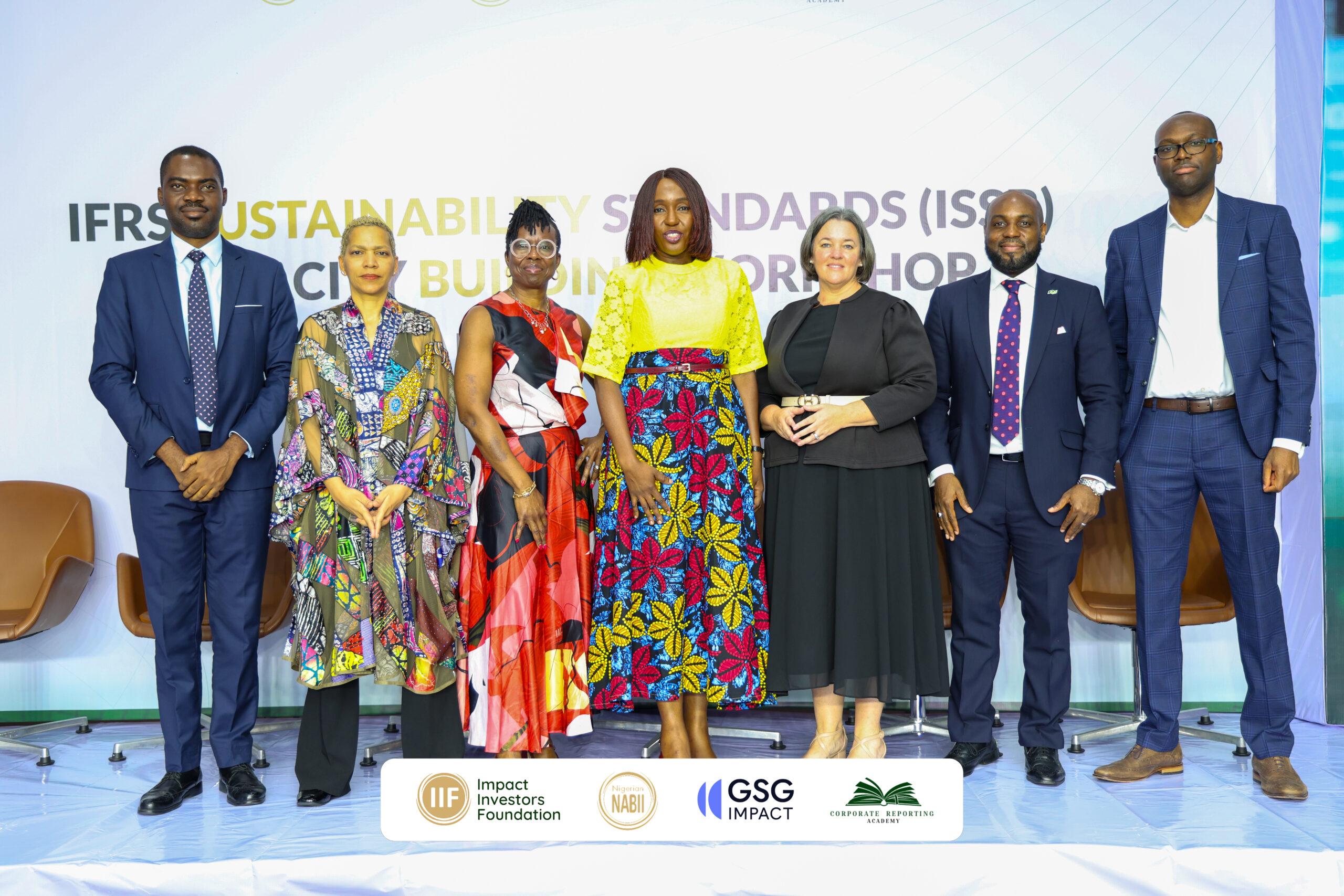
The move gained momentum at a three-day sustainability reporting workshop in Lagos, organised by the Impact Investors Foundation (IIF) and the Corporate Reporting Academy (CRA). The event brought together regulators, corporate leaders, and sustainability experts to focus on practical implementation of the ISSB framework.
Etemore Glover, chief executive officer of IIF, said Nigeria’s SDG financing gap highlights the need for robust sustainability disclosures to attract international investment and build market trust.
The workshop aims to move the conversation beyond awareness to practical implementation, helping institutions prepare for the mandatory sustainability reporting. By fostering collaboration among key stakeholders, IIF and CRA are laying the groundwork for Nigeria to lead in sustainability readiness and corporate transparency.
Glover emphasized that the adoption of the ISSB framework is critical for attracting global capital and strengthening market confidence. Transparent sustainability-related financial disclosures are rapidly becoming essential in global markets, providing investors and regulators with the information needed to evaluate corporate resilience and risk.
“These standards are rapidly becoming indispensable for global markets. As sustainability-related financial disclosures gain prominence, investors and regulators increasingly rely on them to assess corporate resilience, market risk, and attract international capital.
“By standardising how we communicate environmental and social impacts, we take meaningful steps towards closing the $1 trillion annual financing gap required for developing countries to achieve the Sustainable Development Goals. In Nigeria, it’s valued at about $31.5 billion, and that is whopping,” the chief executive noted.
Iheanyi Anyahara, the CEO of Corporate Reporting Academy, emphasized the need for a strategic shift for Nigeria, from raising awareness to empowering stakeholders with the skills and frameworks necessary for effective sustainability reporting.
As sustainability-related disclosures take center stage, Nigeria is poised to become a regional leader, setting standards that will drive accountability, transparency, and sustainable growth across Africa and beyond.
“Nigeria is not merely participating in global sustainability conversations; we are actively helping to shape it,” the CEO said, noting that extensive consultations and a dedicated working group have laid the groundwork for adoption.
Adewale Ajayi, a member of the Board of Trustees at IIF, underscored the growing urgency for businesses to embrace global sustainability reporting standards, describing the country as being at a critical junction in its sustainability journey. Ajayi said the conversation around sustainability has shifted from questioning its relevance to focusing on measurement, disclosure and accountability.
“It is very important for us to note that when we talk about sustainability, especially in this country now, we are at a critical junction on a sustainability journey. Some years back, we used to wonder about sustainability; we used to talk about why it may be important and relevant to us. But the talk is no longer about relevance. We’re talking about how we measure, how we discuss, and how we report,” he added.
Ajayi emphasised that the adoption of IFRS S1 and S2 standards would significantly strengthen corporate transparency and investor confidence in Nigeria. According to him, the frameworks require companies to disclose sustainability-related risks and opportunities, alongside climate-related information, thereby aligning corporate reporting with global best practices.
Emomotimi Agama, the director-general, Securities and Exchange Commission (SEC), reaffirmed the federal government’s commitment to adopting global sustainability reporting standards, while pledging a phased and capacity-driven implementation to reflect the realities of the domestic market.
Speaking through the SEC’s divisional head, legal (REMI), Tony Iloka, Agama acknowledged that sustainability disclosure requirements, particularly emissions accounting and value chain assessments—are “technically complex” and demand robust data infrastructure and expertise that cannot be developed overnight. He assured stakeholders that the Commission would not impose impractical mandates.
“We are not in the business of mandating standards that our market cannot wisely implement. Proportionality, phasing, and capacity support are essential features of any credible implementation roadmap, and they are features that the Commission intends to bring explicitly into its revised sustainability reporting framework,” Agama said.
Despite concerns about readiness, the SEC boss pushed back against narratives suggesting Nigeria lacks the capacity to adopt such frameworks. He pointed to the country’s successful transition to International Financial Reporting Standards (IFRS), adoption of international auditing standards, and the implementation of the Companies and Allied Matters Act 2020 as evidence of resilience within the corporate and regulatory ecosystem.
“The Nigerian corporate sector has demonstrated repeatedly its capacity to absorb and implement complex regulatory reporting frameworks. What is required is not a lowering of standards, but a structured, well-supported, adequately resourced implementation programme,” he said.
Other experts who spoke during the event included Femi Shobanjo, the chief executive officer, NGX Limited; Iheanyi Anyahara, chief executive/founder, Corporate Reporting Academy; Ms. Rukaiya El-Rufai, special adviser (SA) to the president on NEC & Climate Change and Ndidi Nnoli, director, ISSB, among others.