Bukola Idowu: INEC’s ‘No External Breach’ Claim Not Reassuring Given Past Failures
Bukola Idowu expresses scepticism over INEC’s assertion of no external breach, saying it is not reassuring given past inconclusive investigations.
Bukola Idowu expresses scepticism over INEC’s assertion of no external breach, saying it is not reassuring given past inconclusive investigations.
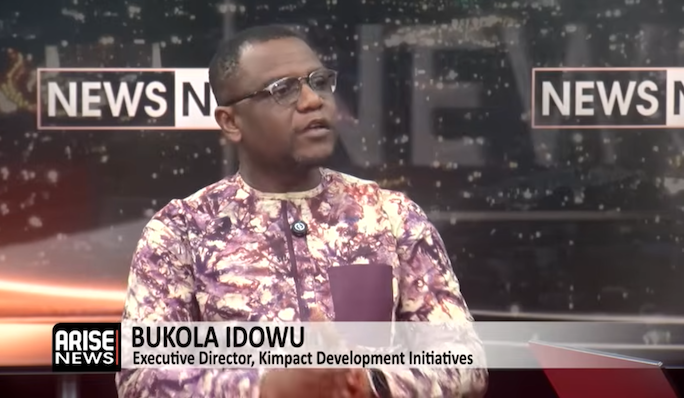
The executive director of Kimpact Development Initiative, Bukola Idowu, has expressed reservations over INEC’s assertion that there was no external breach of its CVR system, arguing that the statement is not reassuring given past inconclusive investigations and unresolved electoral incidents.
This is following a report concerning the unauthorized disclosure of voter information from the Independent National Electoral Commission’s Continuous Voter Registration (CVR) database. INEC has explicitly denied any external breach or hacking of its systems, stating that no cyber attack or unauthorized external access to its ICT infrastructure occurred. The commission explained via their official X handle that the incident was instead linked to an insider leak involving the misuse of valid internal access credentials issued to officials.
Speaking in an interview with ARISE NEWS, Idowu questioned the commission’s conclusion, saying it is not reassuring given INEC’s history of inconclusive investigations and unresolved electoral incidents.
“It’s not reassuring for me when INEC released that statement because, from precedence, INEC investigations have not been thorough and have not been something that they come to a conclusive conclusion and say, ‘This is exactly what happened.'”
He noted, however, that the involvement of the Department of State Services (DSS) could help ensure a more thorough investigation, but maintained that the claim of no external breach is questionable, arguing that the disclosure of sensitive CVR portal data by a non-INEC staff member points to a serious security lapse requiring urgent and transparent investigation.
“However, it’s also reassuring in a way because it looks like the DSS has also stepped in. So, maybe by that, we can now see that, look, the outcome or see that process to the end, and actually, people involved can actually be brought to book.
But having said that, now that statement also says, ‘No, there was no external breach.’ The man that released the information was not an INEC staff, or he is not an INEC staff. So, you cannot say there’s no external breach. Let’s assume—we have to assume as it is now—that that’s an external breach because someone who is not your staff had access and did a screenshot, and we are seeing the INEC CVR admin portal that is passworded, that only select staff—it’s not all, if you are working in INEC, it’s not every member of INEC staff that has access to that portal. Now, only selected few, and that is why it was convenient for them.
“Now that is a breach, and it is even an external breach that a politician can have access to that and post it with impunity on social media. And I think it calls for a thorough investigation because if that is not done, then you are mounting pile upon pile of lack of trust on that institution. And then the assumption will be: this is an institution that has been captured, and they will not be able to conduct credible elections. We don’t need to come to that level,” he said.
Urging INEC to strengthen transparency and rebuild public trust, the executive director called for the inclusion of experienced former officials to guide its leadership, warning that inexperience within the current structure could affect election management.
“I think basically what INEC needs to do now is to get people, you know, who have worked within that Commission in the past that are credible with experience. They need to build on experience. I think what they need to do now: bring people that can advise them,” he stressed.
He also highlighted the need for proactive communication, arguing that most of INEC’s recent statements have been reactive and have fuelled suspicion rather than confidence in the electoral process.
“They need to begin to communicate, not be reactive. Now, what we have seen more now is them being reactive. You need to communicate, be a step ahead, and then begin to communicate. I think strategic communication—some of them are inexperienced, you need to support them with credible people who can actually guide them.”
He underscored that urgent reforms are still needed, noting that INEC remains the only body responsible for elections and must not lose public confidence.
“At the same time, something needs to be done. We can’t lose hope because there is no other—there is no other electoral commission that will conduct this election. It’s still the same INEC. If we are now beginning to build this level of distrust, then it calls for question. So, we need to move in now and then do something about it,” he concluded.