Air transportation has become common as more people fly for business, education, tourism or family commitments. But for many first-time travellers, the experience can seem confusing and overwhelming due to the numerous codes, abbreviations and announcements used by airlines and airports.
- +Important abbreviations to understand before boarding a flight
- +ADDE / POCS (Add-on / Point of Commencement)
Between boarding passes, flight tickets, departure screens, security checks and airport announcements, passengers are often confronted with unfamiliar abbreviations and aviation terms.
Between boarding passes, flight tickets, departure screens, security checks and airport announcements, passengers are often confronted with unfamiliar abbreviations and aviation terms.
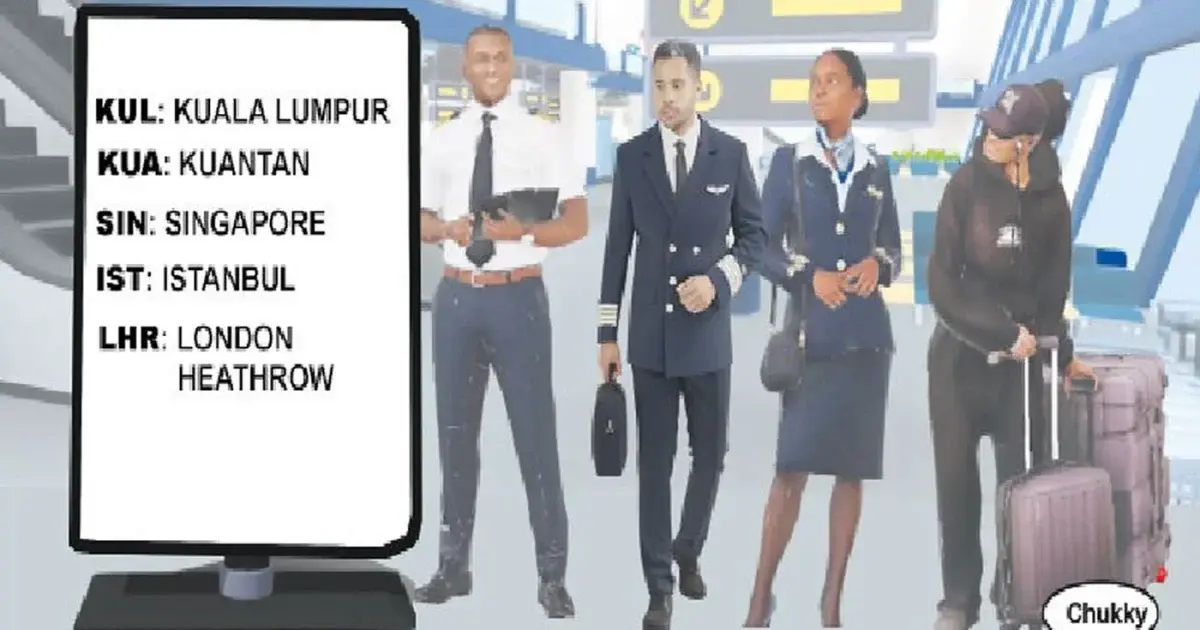
Every airport in the world is assigned a unique three-letter code by the International Air Transport Association. These codes appear on flight tickets, boarding passes and baggage tags.
Experts say failure to read the information provided on tickets and inadequate briefing by travel agents may contribute to frequent disputes between passengers and airline officials at airports. They encouraged passengers to familiarise themselves with the information on their tickets before arriving at the airport.
An aviation analyst and General Secretary of the Aviation Safety Round Table Initiative, Olumide Ohunayo, said passengers should carefully read and understand the terms and conditions attached to their tickets before travelling.
The development comes amid growing concerns over repeated confrontations at airports involving passengers and airline personnel.
Stakeholders attributed many of these occurrences to poor passenger awareness of aviation procedures and ticket conditions, while travellers are urged to read the terms attached to their bookings, arrive at airports early, understand their baggage entitlements and seek clarification from airlines or travel agents whenever they encounter unfamiliar information on their tickets.
However, understanding some of the commonly used terms can help passengers navigate airports more confidently, from booking a ticket to collecting their luggage at their various destinations. Here are some of the relevant abbreviations passengers should take note of while boarding a flight.
A former pilot with Nigerian Airways, Captain Muhammed Badamosi, explained that airlines clearly state baggage allowances, restrictions on dangerous goods and other important travel conditions either during the booking process or on the ticket itself.
He added that some of the codes are ticketing abbreviations and should be clearly explained, translated and written out for passengers, stating that some of the abbreviations relate to security, seat status and operational rules.
SSSS (Secondary Security Screening Selection):
Badamosi explained that when the abbreviation SSSS appears on a passenger’s boarding pass, it means that the individual has been randomly or strategically selected for additional security screening.
According to him, a passenger with this code cannot print his or her boarding pass at home and should expect a thorough pat-down, detailed luggage inspection and explosive trace swabs before boarding the flight.
STBY / WIL / GTE (Standby / Will Take Off / Gate):
The former pilot noted that abbreviations such as STBY, WIL and GTE, which stand for Standby, Will Take Off and Gate respectively, could mean that a passenger is on the standby list and does not have a confirmed seat when the boarding pass carries STBY. This, he said, means the individual can board only if another passenger misses the flight.
While WIL or WILCO stands for Will Comply, Badamosi said it typically indicates an automated system message meaning a request or seat change is pending or has been acknowledged.
GTE (Gate assignment pending):
“This usually appears when the flight is oversold, meaning your actual seat will be assigned directly by the agent at the boarding gate,” he added.
DOCS-REQ (Documents Required):
According to him, when this appears on the boarding pass, it means that the passenger’s physical travel documents, such as a passport, visa or destination health forms, must be verified by an agent before boarding the aircraft.
ADDE / POCS (Add-on / Point of Commencement)
He further explained that an ADDE code indicates an additional collection or add-on charge, such as when extra baggage fees or seat upgrades have been attached to the booking, while POCS, on the other hand, flags pricing rules based on where the journey physically starts. POCS, he added, is typically used by airlines to prevent sequencing violations.
An aviation analyst, Olumide Ohunayo, explained that SEQ000 represents the sequence number, indicating the check-in order for the flight. For example, a boarding pass carrying SEQ 001 means that the passenger was the first person to check in.
According to him, a lower sequence number acts as a safeguard, and if a flight is heavily overbooked, the last people to check in (those with the highest SEQ numbers) are usually the first to get bumped.
Ohunayo added that INVOL means an airline changed a passenger’s flight itinerary against his or her original choice due to a cancellation, severe delay or overbooking. This tag, he noted, is vital because it protects the passenger from paying change fees or fare differences.
“The PNR is your booking reference code (a unique six-character alphanumeric string). It acts as your digital certificate to retrieve your reservation, change your seat or check in online,” he said.