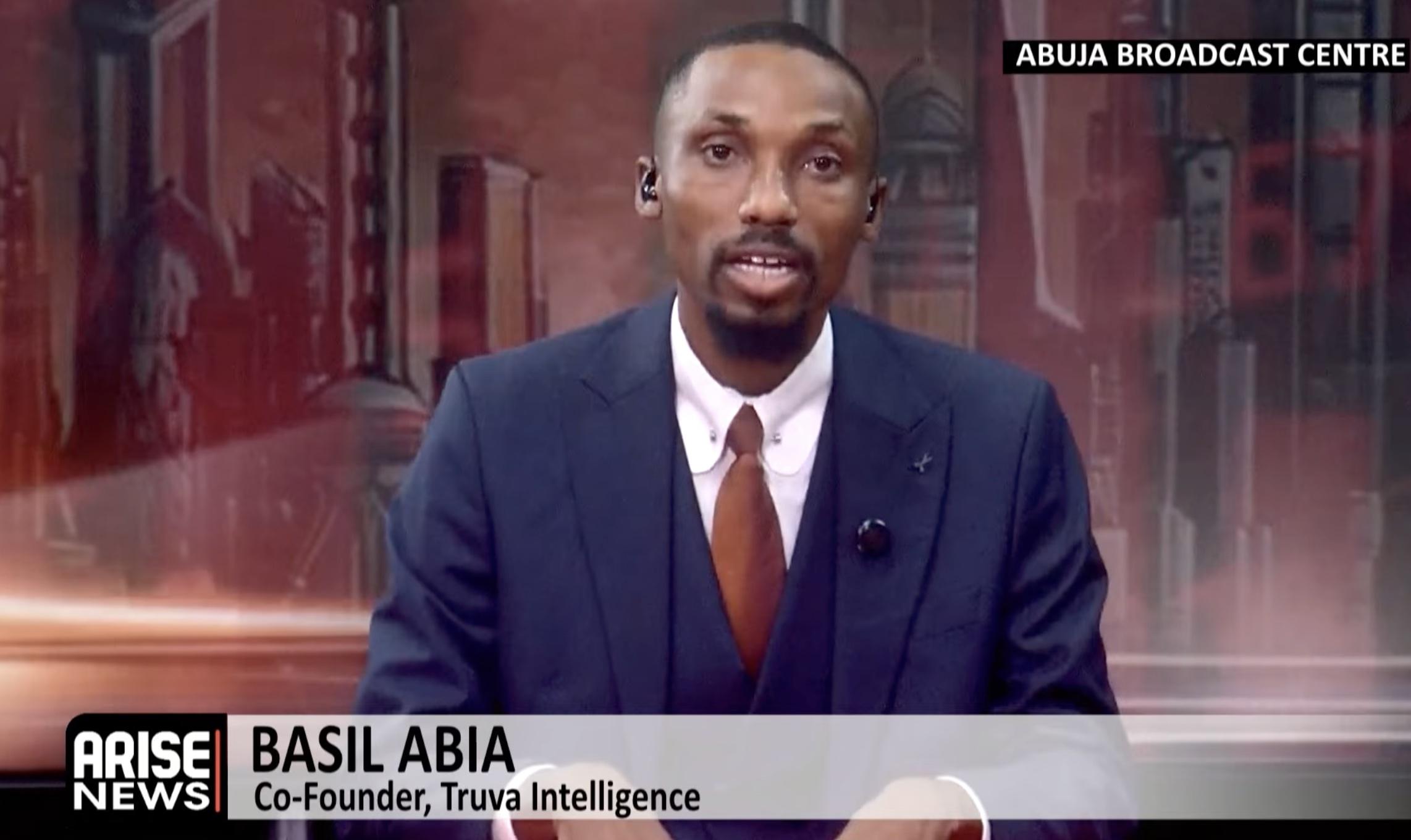
Economic analyst says rising living costs have made the current minimum wage inadequate for workers.
- +Basil Abia: ₦70,000 Minimum Wage Is No Longer Sustainable
Co-founder of Truva Intelligence, Basil Abia, has stated that Nigeria’s ₦70,000 minimum wage is no longer sufficient to meet the basic needs of workers amid rising food, energy, and transportation costs.
Co-founder of Truva Intelligence, Basil Abia, has stated that Nigeria’s ₦70,000 minimum wage is no longer sufficient to meet the basic needs of workers amid rising food, energy, and transportation costs.
Speaking during an interview on ARISE News while discussing the rising cost of living in Nigeria, Abia said current wage levels have failed to keep pace with inflation and increasing household expenses.
“₦70,000 minimum wage is no longer sustainable,” he said.
According to Abia, the cost of basic necessities has risen sharply in recent years, placing significant pressure on Nigerian households.
“There is no way a ₦70,000 minimum wage can take care of any Nigerian household,” he stated.
He stated that food prices have become a major contributor to the cost-of-living crisis.
“The average food basket is now between ₦140,000 and ₦150,000,” he said.
Abia explained that rising energy costs have played a significant role in driving food inflation and transportation expenses.
“Most of these elevated costs are due to energy price transmission,” he stated.
According to him, households are facing increasing expenses not only for food but also for electricity, cooking gas, transportation, and other essential services.
“Transportation costs are now elevated due to energy price increases,” he said.
Abia emphasized that minimum wage adjustments should be linked to inflation and income trends to protect workers from declining purchasing power.
“Minimum wage adjustments should be carried out based on inflation change and income change,” he stated.
He maintain that income growth has remained stagnant despite the sharp rise in living costs.
“Income has not increased,” he said.
According to Abia, a more realistic minimum wage would be around ₦145,000 to ₦150,000.
“I think ₦150,000 should be the ballpark target,” he stated.
He also urged labour unions and policymakers to adopt realistic positions during wage negotiations.
“The unions should be a little more realistic,” he said.
Abia maintained that raising the minimum wage would help ease pressure on workers and stimulate economic activity across the broader economy.
“It is imperative that we increase the minimum wage,” he stated.
Abia concluded that the current ₦70,000 minimum wage no longer reflects economic realities, arguing that a significant upward review is necessary to help workers cope with rising living costs and restore purchasing power.