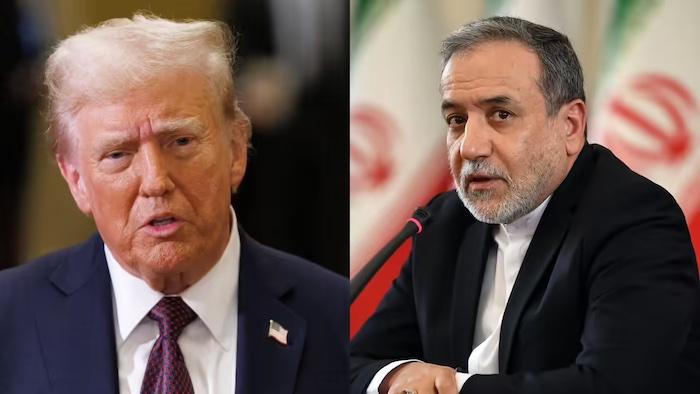
Trump says US-Iran peace deal will be signed Sunday, while Tehran questions the timing of agreement.
- +Trump Says US-Iran Peace Deal Set For Sunday Signing Despite Tehran’s Doubts
President Donald Trump has said a deal to end fighting between the US and Iran is scheduled to be signed on Sunday, despite Iran casting doubt on when the agreement will be finalised.
President Donald Trump has said a deal to end fighting between the US and Iran is scheduled to be signed on Sunday, despite Iran casting doubt on when the agreement will be finalised.
In a post on Truth Social, Trump said the Strait of Hormuz would be reopened once the deal is signed.
“The Deal is scheduled to get signed tomorrow, and immediately after it is signed, the Hormuz Strait is OPEN TO ALL,” Trump wrote.
In an apparent reference to Iran’s enriched uranium stockpiles, Trump added: “at the appropriate time, when all is calm, we will go in and get the Nuclear Dust”, saying it would later be destroyed.
He also warned that if negotiations did not “work out quickly, easily and smoothly”, Washington had “the ultimate alternative, hopefully never to be used again!”
Trump’s comments came after Iranian Foreign Ministry spokesman Esmaeil Baghaei urged caution over reports that an agreement was imminent.
“We will have to wait and see about the exact date of the signing of the memorandum of understanding, although it will not be tomorrow,” Baghaei said.
Pakistan, which has played a key mediating role in the talks, also indicated that an agreement could be close.
Prime Minister Shehbaz Sharif wrote on X that “we are closer to a peace deal than ever before”.
“With finalisation likely expected in the next 24 hours, Pakistan is preparing for the electronic signing of the peace deal immediately after, followed by technical level talks next week,” Sharif said.
On Friday, Iranian Foreign Minister Seyed Abbas Araghchi said a deal with the US was within reach. He told Iranian state television that the proposed agreement envisaged an end to the conflict involving Israel and Hezbollah in Lebanon, as well as the reopening of the Strait of Hormuz and the lifting of a US blockade on Iranian ports.
Araghchi said discussions on Iran’s nuclear programme would begin at a later stage.
US officials have confirmed some elements of the proposed agreement, while stressing that economic benefits for Iran would depend on Tehran meeting its commitments.
Previous reports suggested Lebanon’s role in the agreement remained a point of disagreement, with Iran reportedly insisting it be included.
Several versions of a potential deal have been discussed in recent months but failed to reach completion.
The conflict began on 28 February following US and Israeli strikes across Iran. Tehran responded with attacks on Israel and US-allied Gulf states and effectively closed the Strait of Hormuz, a vital route for global oil and liquefied natural gas shipments.
Although both sides agreed to a ceasefire in April, intermittent exchanges of fire have continued, including two rounds of retaliatory strikes this week.