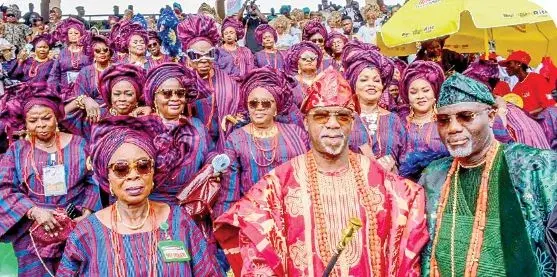
The ancient town of Ijebu-Ode in Ogun State pulsed with vibrant energy on May 29, 2026 (the third day after Eid al-Kabir), as the Ojude Oba Festival unfolded in grand style. This annual celebration, which can be loosely translated to mean “the King’s Forecourt,” drew thousands of participants, dignitaries, celebrities, tourists, and cultural enthusiasts. It showcased the rich Yoruba heritage through coordinated regberegbe (age-grade) processions, majestic horse parades, and opulent traditional fashion. TOFARATI IGE writes on the different dimensions of the festival, highlighting its economic impact as well as areas for improvement
- +Ojude Oba 2026: Tradition, tourism and the changing face of Yoruba heritage
- +Glamour, glitz and “steeze” on full display
- +The economic engine behind the celebration
- +Balancing popularity with proper planning
This edition was particularly significant because it was the first since the passing of the revered Awujale of Ijebuland, Oba Sikiru Adetona, in July 2025 after a 65-year reign.
This edition was particularly significant because it was the first since the passing of the revered Awujale of Ijebuland, Oba Sikiru Adetona, in July 2025 after a 65-year reign. A regent council, headed by medical doctor and socialite, Sonny Kuku, received tributes in his stead, adding an emotional layer to the proceedings while honouring his lifelong commitment to Ijebu culture.
Glamour, glitz and “steeze” on full display
The festival epitomised glamour through synchronised regberegbe groups parading in coordinated luxury attire, which consisted of richly woven aso-oke, embroidered agbadas, brocade, ankara, coral beads, and elaborate headpieces (geles). Horse riders from prominent families thundered through the arena, accompanied by talking drums and cheers.
As expected, fashion dominated social media and news coverage. Age-grade groups competed through organisation, music, and style.
Notable personalities whose appearance stood out include the Managing Director and Chief Executive Officer of NG Clearing Limited, Farooq Oreagba, popularly called “King of Steeze, who commanded attention on horseback in a crisp white agbada with green embroidery, blending tradition and modern flair. He also had on a black glove and a cigar straddled between his lips. In another outfit, he looked regal in a white and purple agbada, with a cap to match.
Actor, Rotimi Salami, who channelled a “Yoruba prince” in a blue regal agbada combining traditional craftsmanship with panache, was also a sight for sore eyes. Riding majestically on horseback, he stole the spotlight in his elegant traditional outfit and a staff that blended rich culture with an urbane look. Though his dad is a Lagosian, the actor noted that his mother is from a horse-riding family in Ijebu-Ode.
Posting pictures on his Instagram page, he added the caption, “Dress like the drums will stop when you enter. Like the entire parade knows your name already. Carry yourself like the outfit is older than you. Like it belonged to men before you and will belong to men after you. Walk slowly. Let the embroidery speak first. Let the silence do the rest. #towoboladynasty”
Actress and politician, Eniola Badmus, was also not left out. She made a striking entrance in a vibrant blue traditional ensemble.
Veteran actor, Ibrahim Chatta, who rode with the Balogun Adesoye family, delivered a majestic, spotlight-stealing performance alongside another actor, Taiwo Hassan, aka Ogogo. Their coordinated display of horses and costumes was one of the highlights of the event, especially for the family they represented.
Other notable personalities whose outfits caught attention included actor, Jide Awobona, Femi Branch, Iya Rainbow, Dayo Amusa, Samuel Banks, and Akin Faminu.
The economic engine behind the celebration
Beyond the rich cultural displays and breathtaking glamour that defined every moment of the festival, one of its most significant highlights was the vibrant economic climate it engendered. The annual event transformed the host community into a bustling hub of commerce, attracting traders, artisans, hospitality operators, transport providers, and entrepreneurs who benefited from the influx of visitors. From increased patronage of local businesses to the creation of temporary jobs and new commercial opportunities, the festival underscored its growing role not only as a celebration of heritage but also as a powerful driver of economic growth and community development.
Indeed, there is no gainsaying the fact that the festival generated significant economic activity, stimulating tourism, hospitality, and local enterprise. Hotels were fully occupied, businesses flourished, and artisans gained patronage.
One of the attendees at the event, Tunde Faboro, stated that many of the hotels in the vicinity were fully occupied, with some of them booked months prior to the festival.
Acknowledging the festival’s role in empowering youths and positioning it as a flagship for Ogun State’s tourism agenda, the governor, Dapo Abiodun, said, “We are building a state that honours its heritage because culture is not only our identity, but also a source of social cohesion and economic opportunity.
“This is why we have positioned Ojude-Oba as a flagship within our tourism development agenda. Today, the economic impact of the festival is visible everywhere as hotels are fully occupied, businesses are flourishing, artisans are engaged, and our youths are being productively empowered.”
Top telecommunications company, Globacom, marked 21 years of sponsorship, providing cash prizes, such as N750,000 for top regberegbe groups, among other gifts. On his part, the Chairman of the company, Mike Adenuga, praised the festival’s promotion of unity and tourism.
Other brands that sponsored the globally acclaimed festival include Cornerstone Insurance, Eagle Aromatic Schnapps, Rite Foods, Guinness Nigeria, FCMB, Maltina, and Goldberg.
Saturday Beats further gathered that direct employment benefited food and drinks vendors, souvenir sellers, horse renters, and transport operators. In a similar vein, indirect employment supported fashion designers, make-up artists, photographers, videographers, and content creators who documented the event for social media and global reach.
While speaking during a recent interview, actor, Rotimi Salami, claimed that he spent over N3m on clothes and other things in preparation for the event.
Reports indicate that billions of naira is usually injected into the local economy through increased patronage and creative entrepreneurship. The Federal Government noted its stimulus to local businesses and push for UNESCO recognition.2585
Balancing popularity with proper planning
Even though the festival has increasingly attracted global attention, one of the major criticisms that has trailed it is the level of preparation by the organisers, particularly the state government.
At the 2025 edition, many attendees knocked the state government over poor crowd control and the untarred roads leading to the venue, arguing that these issues detracted from the overall experience.