The missing middle of industrial power: Why African manufacturers are becoming their own utilities
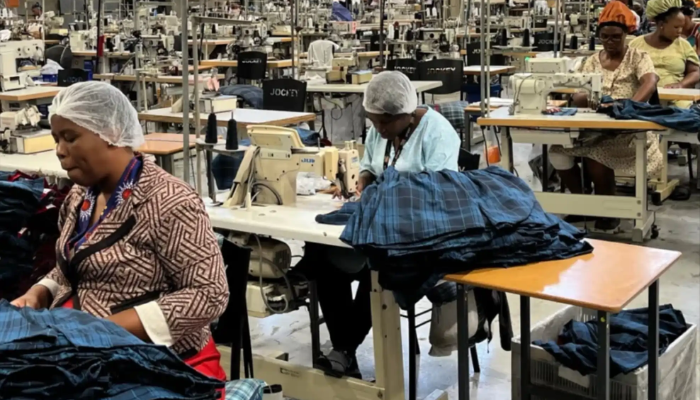
Inside a textile plant on the outskirts of Kano, the day begins the way it always does: with a switch.
Inside a textile plant on the outskirts of Kano, the day begins the way it always does: with a switch. At 6am, grid power is live, and the looms run on it. By mid-morning, voltage has sagged below the threshold the dyeing machines can tolerate, and the plant manager, watching a bank of monitors that would not look out of place in a control room, switches to the gas-fired generator bank out back. By early afternoon, gas supply to the generators is interrupted upstream, and the plant switches again, this time to a battery bank sized to carry the most sensitive equipment through the gap. By evening, grid power has stabilised enough to take over once more. This sequence repeats, with minor variations, nearly every working day. The plant has three qualified engineers whose full-time job is not making textiles. It is making electricity.
The instinctive reading of this scene is resilience: an enterprising manufacturer building redundancy into an unreliable environment. The more accurate reading is stranger and more consequential. This factory has not built a backup system. It has built a small utility, complete with generation assets, dispatch decisions, and a control room, and it now runs that utility as a permanent, unglamorous, capital-intensive second business alongside the one it actually intended to run. Multiply this pattern across the industrial estates of Lagos, Nairobi, Accra, Johannesburg, and a dozen other manufacturing hubs, and a continent’s export sector starts to look less like a collection of factories and more like a diffuse, badly coordinated, spectacularly inefficient parallel power industry that nobody designed and nobody wanted.
The conventional explanation for this is supply: there simply is not enough electricity, so firms generate their own. This explanation is comforting for the same reason it is incomplete. It suggests the fix is more megawatts, and more megawatts are, at least, a legible and fundable thing to build. But the evidence does not support the supply story on its own terms. Several of the manufacturing hubs with the heaviest reliance on captive generation sit within a short distance of grid infrastructure with meaningfully unused capacity. The constraint is not the volume of electricity available in the country. It is the absence of a reliable path connecting that electricity, specifically and consistently, to the factories that need it at industrial-grade quality. There is a critical difference between available power, the megawatts that exist somewhere on a national system, and usable industrial power, electricity that arrives at a factory gate with the voltage stability, frequency consistency, and contractual predictability that precision manufacturing equipment requires. Africa, and much of the emerging manufacturing world alongside it, has far more of the former than the latter.
This gap is the sixth manifestation of the pattern this series has tracked from the outset. Nigeria’s grid crisis showed that capacity does not equal delivery. The gas flaring paradox showed that resource abundance does not equal commercial conversion. Off-grid solar showed that hardware does not equal access without financing and distribution systems around it. Storage showed that batteries do not equal reliability without market design and dispatch intelligence. Mini-grids showed that individual project success does not equal national transformation without aggregation and institutional coordination. Industrial power extends this logic into the sector where its costs are most economically visible and most consequential: manufacturers are not choosing self-generation because it is smart business. They are being pushed into it because the institutional architecture that should connect productive industry to reliable electricity, dedicated industrial feeders, wheeling arrangements, bankable industrial power purchase agreements, tariff structures that reward reliability rather than merely metering consumption, simply does not exist in most of the markets where manufacturing capacity is trying to grow.
The cost of this gap is routinely misdiagnosed. Executives and policymakers alike tend to frame the problem as the price of diesel or the capital cost of solar and battery installations, both of which are visible, measurable, and comparatively small next to what is actually being lost. The real cost sits in the capital that manufacturers are forced to divert away from their core competitive advantage. A textile firm that spends a meaningful share of its available investment capital on generation and distribution infrastructure is capital it cannot spend on the equipment, automation, or working capital that would make it more competitive against manufacturers in Vietnam, Bangladesh, or Mexico, none of whom carry anything close to the same energy infrastructure burden on their balance sheets. Add to this the less visible costs: equipment degraded by repeated power quality excursions, production runs lost to unplanned switching events, export contracts jeopardised by delivery delays that trace back not to labour or logistics but to an afternoon without stable voltage, and financing costs that rise because lenders price in the operational unpredictability that self-generated power inevitably carries. The hidden cost of unreliable industrial power is not the fuel bill. It is a permanent, compounding tax on competitiveness that most balance sheets never explicitly itemise.