Lagos orders demolition of structures blocking drainage channels in Agungi, Ajiran
The Lagos State Government has ordered the immediate demolition of illegal structures obstructing drainage channels and canal rights of way in Agungi, Ajiran and Ikota as part of efforts to tackle persistent flooding in the affected communities.
The Lagos State Government has ordered the immediate demolition of illegal structures obstructing drainage channels and canal rights of way in Agungi, Ajiran and Ikota as part of efforts to tackle persistent flooding in the affected communities.
The disclosure was contained in a statement issued by the Lagos State Government via its official Facebook page on Monday.
According to the government, the enforcement exercise will involve reopening blocked drainage channels and removing developments found to have encroached on drainage alignments and waterways.
The announcement comes as several parts of Lagos have experienced flooding in recent days following persistent rainfall across the state.
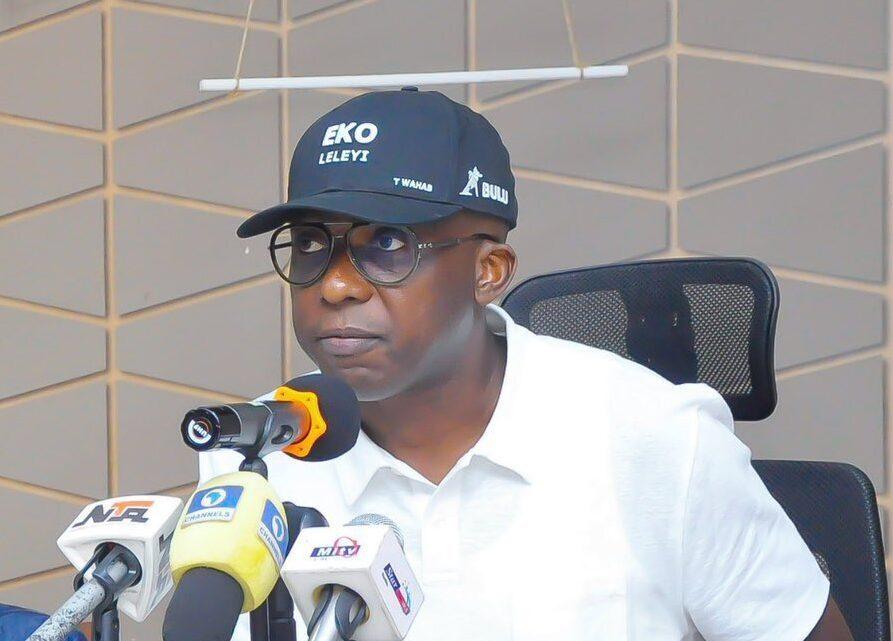
The Commissioner for the Environment and Water Resources, Tokunbo Wahab, made the announcement after inspecting critical drainage infrastructure and flood mitigation projects in Lekki, Agungi, Ikota and Ajiran.
The inspection, which followed repeated reports of flooding in Agungi despite the completion of major drainage infrastructure more than two years ago, uncovered what the government described as a major obstruction at the Ajiran outfall channel.
According to Wahab, a land-owning family had illegally blocked the outlet of a primary drainage channel leading into the Lagos Lagoon, preventing stormwater from flowing freely out of the community.
He explained that the drainage system was designed to discharge floodwater by gravity into the lagoon, adding that blocking the outlet had significantly reduced its effectiveness.
Wahab said the government had directed that the blocked channel be reopened immediately in the overriding public interest.
He said enforcement and abatement notices had previously been served on the developers but were ignored, adding that illegal structures erected on reclaimed drainage alignments would be removed.
The commissioner reiterated that developers undertaking projects on wetlands or water-related sites must obtain an Environmental Impact Assessment (EIA) and, where applicable, Wetland Clearance from the Ministry of the Environment and Water Resources before commencing construction.
He warned that the state government would continue removing illegal reclamations and developments that violate environmental laws while urging residents to report blocked drainage channels and other environmental infractions.
In July 2025, Wahab attributed flash flooding across parts of Lagos to a natural phenomenon known as tidal lock-up, caused by high tide levels from the Atlantic Ocean and the Lagos Lagoon.
He also cautioned residents against dumping waste into gutters and drainage channels, stressing that such practices obstruct water flow and worsen flooding.
The initiative targets areas most vulnerable to tide-locked flooding by creating a Blue-Green Network linking estate lakes, canals and green corridors to temporarily store and gradually release rainwater, preventing drainage systems from being overwhelmed during heavy rainfall.
Earlier in June 2026, the National Economic Council (NEC) approved N83.2 billion to mitigate the impact of anticipated flooding and other climate-related emergencies across the country.
In 2025, President Bola Tinubu approved the release of N16.7 billion for the reconstruction of the Mokwa Bridge in Niger State after it was destroyed by flooding.
He also approved N2 billion in June last year for the reconstruction of homes affected by the Mokwa flood disaster in Niger State.