Three days into the ceasefire declared by the warring parties in the Middle East, the fragile truce appears to be holding, but for Israel’s continuous attacks on Lebanon.
- +Ceasefire: Trump says Iran doing ‘very poor job’ on opening Strait of Hormuz
On Wednesday, the first day of the ceasefire, there were isolated cases of drone and missile attacks in Arab countries with no deaths reported.
On Wednesday, the first day of the ceasefire, there were isolated cases of drone and missile attacks in Arab countries with no deaths reported. Most of the attacks have since ended by Thursday.
However, Israeli attacks on Lebanon on Wednesday caused over 250 deaths, according to official figures.
Direct talks are expected to commence in Pakistan today, with US Vice President JD Vance leading the American team and Iranian Foreign Minister Abbas Araghchi leading the Iranian delegation.
PREMIUM TIMES presents some major developments from the last 24 hours.
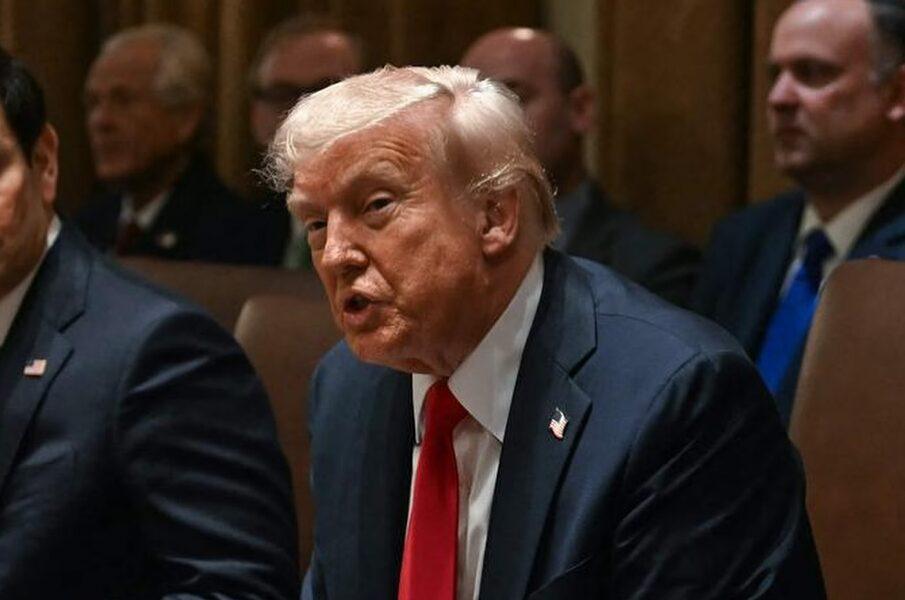
President Donald Trump on Thursday said Iran is “doing a very poor job” at allowing oil vessels to move through the Strait of Hormuz.
He also warned the country against imposing tolls on ships seeking to pass through the strategic waterway.
In a post on Truth Social, Mr Trump wrote, “Iran is doing a very poor job, dishonorable some would say, of allowing Oil to go through the Strait of Hormuz. That is not the agreement we have!”
The Iranian Foreign Minister, Abbas Araghchi, has said that it would be “dumb” for the US to allow Israel to jeopardise the regional ceasefire by its attacks on Lebanon.
Mr Araghchi attributed Israel’s continuous attack on Beirut to Prime Minister Benjamin Netanyahu’s trial coming up Sunday, stating that he might have ulterior motives for continuing the war.
“A region-wide ceasefire, including Lebanon, would hasten his jailing.
“If the US wishes to crater its economy by letting Netanyahu kill diplomacy, that would ultimately be its choice. We think that would be dumb but are prepared for it,” Mr Araghchi wrote.
PREMIUM TIMES earlier reported that Prime Minister Benjamin Netanyahu’s office had insisted that the ceasefire does not apply to Lebanon.
But the statement contradicted Pakistan’s earlier comment that the agreement included a cessation of Israel’s campaign in Lebanon.
Preparations have continued for Pakistan-mediated peace talks expected to begin in Islamabad this weekend.
The Deputy Prime Minister, Ishaq Dar, announced in a post on X that the country will issue visas on arrival to all delegates and journalists from participating nations visiting in relation to the Islamabad Talk 2026.
He said all airlines have been asked to permit boarding for such individuals without a visa.
He also stated that immigration authorities in Pakistan would issue the visas on arrival.
“Pakistan welcomes all delegates, including journalists from participating nations, travelling in relation to the Islamabad Talks 2026.
“To this end, all airlines are requested to permit boarding to all such individuals without a visa. Immigration authorities in Pakistan will issue them a Visa on Arrival,” he said.
The United Nations Development Programme (UNDP) has said the economies of Gulf States will be contracted by 7 per cent due to the war.
Al Jazeera reports that UN officials had disclosed that Arab economies contracted by 7 per cent, with the Gulf being the most affected due to the war.
The body estimated last month that the states are likely to lose $194 billion due to the war.
“An estimated rise in unemployment of up to 4 percentage points or 3.6 million jobs lost. This more than the total jobs created in the region in 2025, these reversals will push up to 4 million people into poverty,” UNDP wrote in an analysis.
It also cautioned that even minor military escalation or unintended incidents in the Strait could quickly unsettle global energy markets and provoke sharp price fluctuations.
The International Monetary Fund has indicated that two countries have approached the institution for urgent financial support due to the economic and trade impacts of the war.
The current head of the IMF, Kristalina Georgieva, also stated that the organisation had examined “two requests for emergency financing.
She, however, did not disclose the countries involved.
The IMF regularly provides financial assistance to nations facing debt difficulties, though its support programmes have sometimes been criticised for the conditions attached to them.