Nigeria’s ability to unlock a new era of economic growth will depend on how effectively it mobilises private capital into energy and infrastructure projects, as the country grapples with a multibillion-dollar financing gap that continues to constrain productivity and investment, according to business leaders.
- +Why Nigeria must mobilise capital into power, infrastructure for new growth
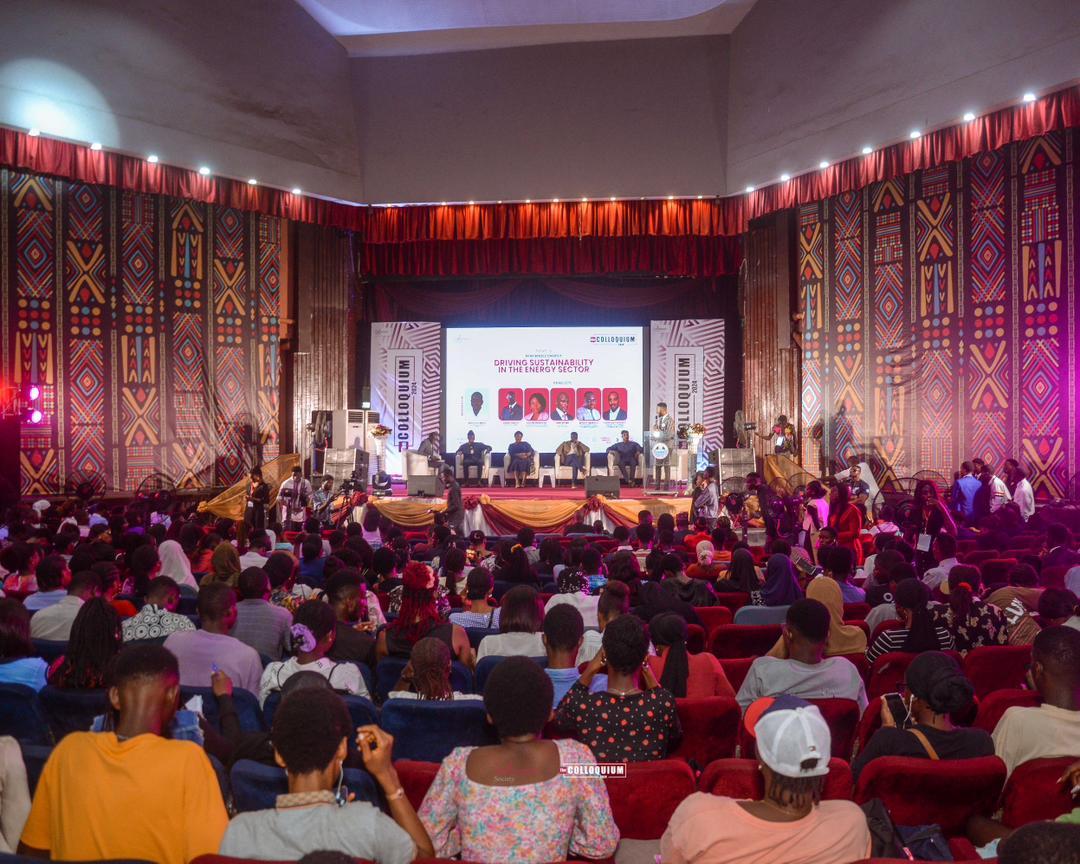
Speaking at the 10th anniversary colloquium of the Investment Society, University of Lagos, senior executives from the banking, energy, and capital market sectors said recent economic reforms have created a rare opportunity to channel investment into sectors critical to long-term growth.
Speaking at the 10th anniversary colloquium of the Investment Society, University of Lagos, senior executives from the banking, energy, and capital market sectors said recent economic reforms have created a rare opportunity to channel investment into sectors critical to long-term growth.
Their comments come as Nigeria seeks to attract more private capital to bridge an infrastructure financing gap estimated by the African Development Bank (AfDB) at about $100 billion annually. The country’s infrastructure stock is estimated at roughly 30–35 percent of GDP, far below the 70 percent benchmark associated with more developed economies.
The challenge is particularly acute in the power sector. According to the Nigerian Electricity Regulatory Commission (NERC), installed generation capacity stands at 13,625 megawatts, but average available generation was only about 5,151MW in December 2025. The Nigerian Independent System Operator estimates actual generation averages closer to 4,300MW, well below the level required to support a modern economy.
“Nigeria has the largest population without reliable electricity of any country on earth,” said Nneka Enwereji, managing director and chief executive officer of Citibank Nigeria, during her keynote address.
Rather than viewing the deficit solely as a development challenge, Enwereji described it as one of the world’s largest untapped investment opportunities.
“The largest collection of companies, careers, and fortunes this country will create has not even been founded yet,” she told the participants.
According to Enwereji, reforms across financial markets, energy and infrastructure are beginning to create opportunities that did not previously exist.
“Three major doors are opening in this country that have never opened before in our history: our financial markets, our energy sector, and infrastructure,” she said.
Her comments come as Nigeria pushes through reforms aimed at restoring investor confidence, attracting foreign capital and expanding private-sector participation in key sectors of the economy.
Recent market data suggest investors are responding. According to the Nigerian Exchange, the NGX All-Share Index gained 51.2 percent in 2025, making it one of the world’s strongest-performing equity markets.
Enwereji said policy changes, including foreign exchange market reforms, the introduction of the Electronic Foreign Exchange Matching System (EFEMS), and new regulations governing digital assets, are helping to improve transparency and deepen investor participation.
“The financial market is not the building on Broad Street. It is the trust of millions of ordinary people organised into a machine that takes savings and turns them into factories, solar farms, and bridges,” she said.
She added that Nigeria’s youthful population, expanding digital economy and entrepreneurial ecosystem continue to strengthen the country’s long-term investment case.
“We are the largest gathering of young, ambitious, and connected people anywhere on earth,” she said.
Umaru Kwairanga, group chairman of Nigerian Exchange Group (NGX Group), in his own address, said government resources alone would not be sufficient to finance Nigeria’s infrastructure ambitions, making private capital increasingly important.
“Potential alone does not create prosperity. Potential must be translated into productivity. Ambition must be converted into investment,” Kwairanga said.
According to him, infrastructure should be viewed not only as a development challenge but also as an investable asset class capable of attracting domestic and international capital.
“The bridge between aspiration and progress is capital,” he said.
Kwairanga added that stronger institutions, improved governance and greater investor confidence would be essential to attracting long-term financing into infrastructure and energy projects.
Jerome Abudah, group head of information technology at Sahara Group, who delivered a keynote address on behalf of Kola Adesina, group managing director of Sahara Power Group, said finance, energy and infrastructure can no longer be treated as separate sectors because each depends on the other for growth.
“Finance provides capital, energy powers the economy, infrastructure enables productivity, and technology connects everything,” Abudah said.
According to him, the next phase of economic growth will increasingly be driven by the convergence of capital, renewable energy, digital infrastructure, and artificial intelligence.
“The next era of growth will be unlocked when capital is guided by data, powered by energy, enabled by infrastructure, protected by governance, and accelerated by technology,” he said.
As competition for global investment intensifies, speakers agreed that Nigeria’s future growth will depend on its ability to connect capital, technology, energy, and infrastructure into a self-reinforcing cycle of investment and productivity.
“The money builds the grid. The grid powers the factory. The factory makes the country investable. The investment deepens the market,” Enwereji said.
For students and young professionals, the speakers urged a shift from merely seeking employment to developing skills that solve real economic problems.
“Nigeria does not need people who can simply describe the future,” Abudah said. “It needs people who can help build it.”