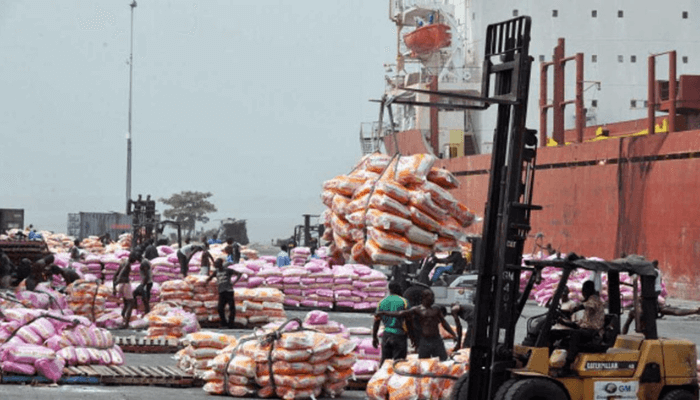
Nigeria’s food and beverage imports declined to N1.39 trillion in the first quarter of 2026, reflecting a moderation in the country’s spending on imported food products compared to the same period last year.
- +Nigeria’s food and beverage imports decline to N1.39 trillion in Q1 2026
Latest trade data released by the National Bureau of Statistics show that food and beverage imports stood at N1.393 trillion between January and March 2026, down from N1.671 trillion recorded in the corresponding period of 2025, representing a year-on-year decline of about 16.7%.
Latest trade data released by the National Bureau of Statistics show that food and beverage imports stood at N1.393 trillion between January and March 2026, down from N1.671 trillion recorded in the corresponding period of 2025, representing a year-on-year decline of about 16.7%.
The decline was driven by lower imports of primary food products, industrial food inputs, and household consumption items, although food imports remain a significant component of Nigeria’s import bill amid persistent demand for raw materials and processed food products.
According to the data, imports of primary food products declined from N730.01 billion to N634.05 billion, while food and beverage imports intended mainly for industrial use dropped from N425.62 billion to N353.24 billion.
A comparison with the first quarter of 2024 also shows changing import patterns. While total food imports were lower than the N1.592 trillion recorded in Q1 2024, imports of household consumption products increased significantly from N186.65 billion, suggesting stronger demand for consumer food items despite broader import moderation.
For the whole of 2025, Nigeria imported food and beverage products worth N7.65 trillion, underlining the country’s continued reliance on external sources to meet domestic food and industrial demand.
The moderation in food and beverage imports comes amid Nigeria’s ongoing economic reforms, exchange rate adjustments, and efforts to boost domestic agricultural production and local manufacturing.
In June 2024, President Bola Tinubu ordered a six-month suspension of import duties on staple food items, drugs, and other essential items as a measure to curb inflation.
Higher import costs resulting from naira depreciation and tighter foreign exchange conditions have encouraged businesses to seek local alternatives where possible, while government policies have continued to promote backward integration in sectors such as sugar, rice, dairy, and food processing.
However, Nigeria remains heavily dependent on imports for several agricultural commodities and industrial food inputs, including wheat, malt, fish, milk preparations, and raw materials used by manufacturers.
The decline in industrial food imports could reflect weaker manufacturing demand, increased local sourcing, or businesses adjusting inventories in response to higher operating costs. At the same time, sustained household food imports indicate that domestic production has yet to fully satisfy consumer demand.
The Central Bank of Nigeria earlier reported that Nigeria spent $2.34 billion on food imports in 2025.
In an interview with Nairametrics, Opeoluwa Runsewe, CEO of Terroso Group, a diversified company spanning agriculture, manufacturing, energy, and resources, warned that Nigeria is “exporting jobs and importing inflation.”