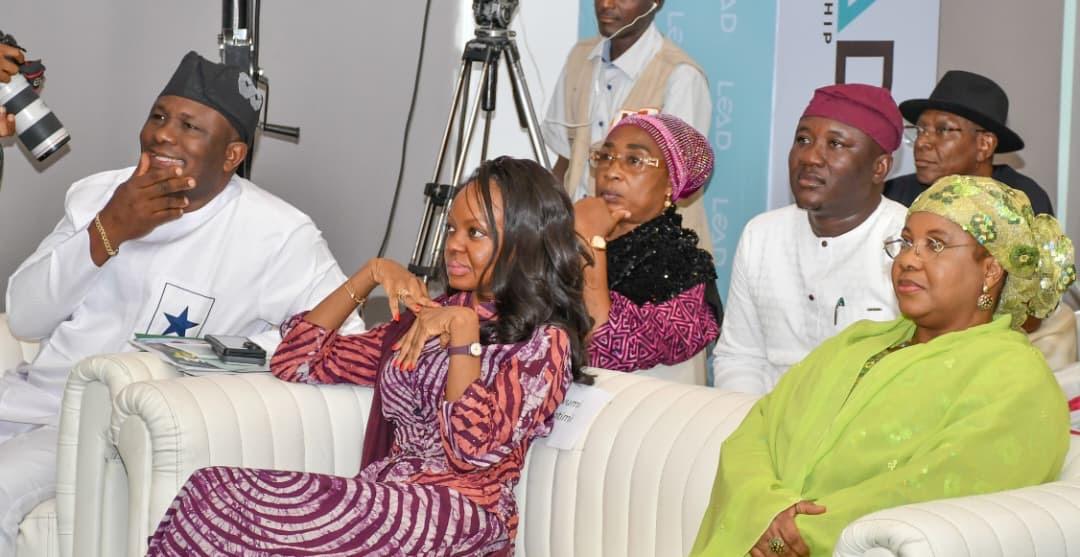
The Speaker of the House of Representatives, Abbas Tajudeen, has called for deliberate efforts to prepare young Nigerians for leadership, saying they should no longer be regarded merely as “leaders of tomorrow.”
- +Abbas canvasses deliberate preparation of youth for leadership
Mr Tajudeen made the call on Tuesday in Abuja at the launch of the Leadership for Equity, Advocacy and Development (LEAD) Fellowship, organised by the Gender Mobile Initiative (GMI).
Mr Tajudeen made the call on Tuesday in Abuja at the launch of the Leadership for Equity, Advocacy and Development (LEAD) Fellowship, organised by the Gender Mobile Initiative (GMI).
Represented by the Chairperson of the House Committee on Women Affairs and Social Development, Kafilat Ogbara (APC, Lagos), the Speaker said young Nigerians must be equipped with the knowledge, ethical values, institutional exposure and leadership skills needed for effective public service.
“It is high time we prepared young people for power. As the trustees of our tomorrow, they must understand how government works and how to use political office to change society for the better,” he said.
Mr Tajudeen described the fellowship as an investment in Nigeria’s democratic future, noting that young people already participate in governance as voters, innovators, entrepreneurs and community leaders.
“The youth are no longer merely the leaders of tomorrow; their time has come,” he said.
He also backed greater inclusion of women and persons with disabilities in governance, describing their participation as essential to democratic legitimacy.
The Speaker reiterated the House’s commitment to the proposed constitutional amendment seeking special seats for women in the National Assembly and State Houses of Assembly.
He identified inadequate campaign finance, exclusion from party structures, cultural stereotypes and electoral violence as major barriers to women’s political participation.
Mr Tajudeen urged the fellows to focus on solving societal problems rather than merely seeking political office.
“Nigeria does not need a generation that is simply more ambitious than the one before it. Our nation needs a generation that is wiser, more ethical, more inclusive, more technologically advanced and more institutionally minded,” he said.
The Executive Lead of GMI, Omowumi Ogunrotimi, said the 18-month LEAD Fellowship was established to address gaps in leadership development and the transition of student leaders into public service.
She said the programme would train 1,000 student leaders across 10 tertiary institutions and expose them to leadership training, mentoring, policymaking and democratic institutions.
Mrs Ogunrotimi described the initiative as a response to what she called a “democratic formation deficit,” where young leaders are often exposed to patronage, exclusion and transactional politics.
She also identified a “transition deficit,” saying many capable student leaders leave school without structured pathways into governance and policymaking.
“We are intentionally incubating 1,000 student leaders across 10 pilot institutions. Our ambition is to cultivate women and men whose exercise of leadership will be defined by ethics, constitutionalism, evidence, inclusion and an unwavering commitment to service,” she said.
The Spokesperson of the House, Akin Rotimi (APC, Ekiti), urged the fellows to prioritise character, competence and service over political power.
“Strong institutions require capable leaders. Leadership must therefore be identified, nurtured and developed,” he said.
Mr Rotimi said young people must not remain spectators in governance, noting that the House had continued to engage youths through policy dialogues and its National Assembly Youth Engagement Strategy.
He urged the fellows to embrace apprenticeship, develop competence and serve before seeking recognition.
“Leadership demands character, competence, discipline, empathy and commitment to the common good,” he said.
The Director-General of the National Institute for Legislative and Democratic Studies (NILDS), Abubakar Sulaiman, represented by Shuaibu Danwanka, described LEAD as an investment in ethical leadership, democratic resilience and inclusive governance.
Mr Sulaiman said Nigeria needed leaders whose competence was matched by integrity and whose authority was exercised with accountability.
He warned that without deliberate efforts to nurture ethical leadership at the formative stage, young people could reproduce negative practices in public institutions rather than reform them.
“Unless we intentionally nurture ethical leadership, democratic values and a culture of service at this formative stage, we risk producing future leaders who replicate these negative practices in our public institutions rather than reforming them,” he said.
He pledged NILDS’ support for the fellowship through research, democratic education, legislative capacity development and strategic partnerships.