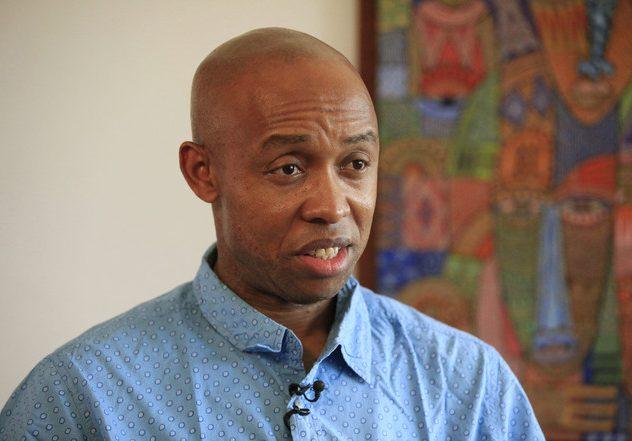
The renewed dystopia of President Bola Ahmed Tinubu (1), By Chidi Anselm Odinkalu
A government that encourages lies against its own citizens in mass graves or under the thrall of atrocity abduction does not need recommendations to reverse its commitment to renewed dystopia.
A government that encourages lies against its own citizens in mass graves or under the thrall of atrocity abduction does not need recommendations to reverse its commitment to renewed dystopia. To the citizens and communities caught in this, however, we owe acknowledgement and solidarity. This is the beginning.
“Our administration will be committed to permanently securing the safety, freedom and prosperity of all Nigerians. We shall adopt a proactive and intelligence driven security approach to sufficiently address the nation’s security threats.” – All Progressives’ Congress, Renewed Hope: Action Plan for a Better Nigeria, p. 6 (2023)
Niger State in Nigeria’s North-Central zone also goes by the moniker of “Power State”. Nigeria’s founding Head of State, Nnamdi Azikiwe, was born in the territory of the state, as was Emeka Odumegwu-Ojukwu, leader of the defunct Biafra. The state has also produced two former military heads of state and a Chief Justice of Nigeria; but these are not the reasons for its moniker.
Niger State is the “power state” because it is host to several sensitive and strategic national energy assets located in Jebba, Kainji, and Shiroro, on the lower course of the River Niger. In addition, the state also hosts a collection of sensitive security installations. In the recent past, however, the state has become the place where the power of the Nigerian state goes to advertise its incapacities.
Shiroro illustrates this problem. At about 5,171 square kilometres, Shiroro Local Government Area of Niger State is approximately the size of Imo State in South-East Nigeria. In May 2025, Humangle reported that insurgents allied with Boko Haram have “formed a parallel government physically stationed on the fringes of the Allawa Forest in Shiroro.” In the past half decade, Shiroro has been the site of the most intense slaughter of uniformed assets of Nigeria’s armed and security services.
On the night of 29-30 June, 2022, for instance, a motorbike gang of over 300 armed terrorists descended on Ajata-Aboki village in the Gurmana Ward of Shiroro. Their destination was an artisanal mine in the village. At the site, they reportedly abducted at least four Chinese and several other workers.
While the attack was ongoing, a company of soldiers stationed in nearby Erena responded to a distress call about the attack. On their way, they encountered an ambush from the insurgents who killed scores, including least 30 soldiers and six civilian volunteers. President Buhari called this tragedy “a direct assault on Nigeria, vowing that the attackers would not go unpunished.”
All this unfolded under a federal government run by the All Progressives Congress (APC) headed by the predecessor of the current incumbent. As presidential candidate of the party, Bola Tinubu promised to solve insecurity. Published under the title “Renewed Hope: Action Plan for a New Nigeria”, his manifesto for the 2023 presidential election began: “The fundamental responsibility of government is to protect the lives and property of its citizens. We will mobilise the totality of our national security, military and law enforcement assets to protect all Nigerians from danger and from the fear of danger.”
He did not mean it. For the people of Shiroro, as with many communities in North-Central Nigeria, the only thing worse than the growing intensification of atrocity and danger is the even more intense indifference of the Tinubu administration to their plight.
In April 2024, one officer of the Nigerian Army (a Captain), six soldiers under his command and a volunteer hunter were killed in separate attacks on Roro, Karaga, and Rumace communities in Bassa Ward of Shiroro.
Shiroro is by no means an outlier its vicinity. Rather, it mirrors the experience of an increasing number of communities in northern Nigeria where the Nigerian State has become complicit in its own retrenchment under the watch of a president who promised different.
Around 11 September 2024, the casualty count in an encounter between the security services and insurgent terrorists in Bassa included at least two officers of the State Security Service (SSS).
In November 2024, insurgents in Shiroro killed four officers of the Nigeria Security and Civil Defence Corps (NSCDC), and disappeared another.
In the wake of these incidents, Shiroro, a source of power to many communities in Northern Nigeria, has “become a slaughterhouse”, where terrorists operate at will and mass atrocities stalk every community.
In June 2024, “witnesses in the town of Bassa said Boko Haram fighters attacked in broad daylight on June 6, shot the victims at close range and beheaded 10 of them.”
In August 2024, the insurgents killed 13 farmers.
As the world prepared for Christmas on 24 December 2025, the terrorists picked upon Karibo community in Shiroro, killing about 15.
The latest attacks on Lanta and Bagna in Shiroro began Easter Monday. It left at least 63 killed, mostly “operatives of the State Security Services (SSS), vigilantes, and local hunters.” No abductions were reported.
Shiroro is by no means an outlier its vicinity. Rather, it mirrors the experience of an increasing number of communities in northern Nigeria where the Nigerian State has become complicit in its own retrenchment under the watch of a president who promised different.
The period since the Easter weekend has witnessed intense and brutal slaughter across the landscape of northern Nigeria, including in Benue, Borno, Kaduna, Katsina, Kebbi, Kwara, Niger, Plateau and Zamfara states.
While the communities in these parts of the country get emptied into mass graves or internal displacement camps, and the uniformed security agents sent to defend them pay with their lives in impermissible numbers, the politicians are busy recruiting political defections or fomenting political disaffection.
Rather than worry about the protection of Nigerians exposed to this pattern of murderous insecurity, Defence Minister, Chris Musa, a recently retired General of the Nigerian Army and an even more recent recruit into the ranks of the ruling party, flamboyantly busied himself with the defence and security of the party political convention of the ruling APC.
Far from making a priority of fulfilling his campaign promise to improve the protection and security of communities across the country, President Bola Tinubu appears more invested in the creature comforts of himself and his most loyal acolytes. In response to the widening field of slaughter in northern Nigeria, the government increasingly defaults to propaganda and falsehood.