There are leaders who govern with their eyes fixed only on visible projects that will give them immediate gratifications such as roads, hospitals, housing schemes, and also go ahead to name some of these projects after themselves because posterity is easy to claim. Then there is another kind entirely. The rare kind who seems to understand that governance is not just administration. It is memory. It is culture. It is the deliberate act of reminding a people who they are, where they came from, and how high they have always been capable of reaching.
- +Otti and the Igbo renaissance, By Emenike Vincent Onyembi
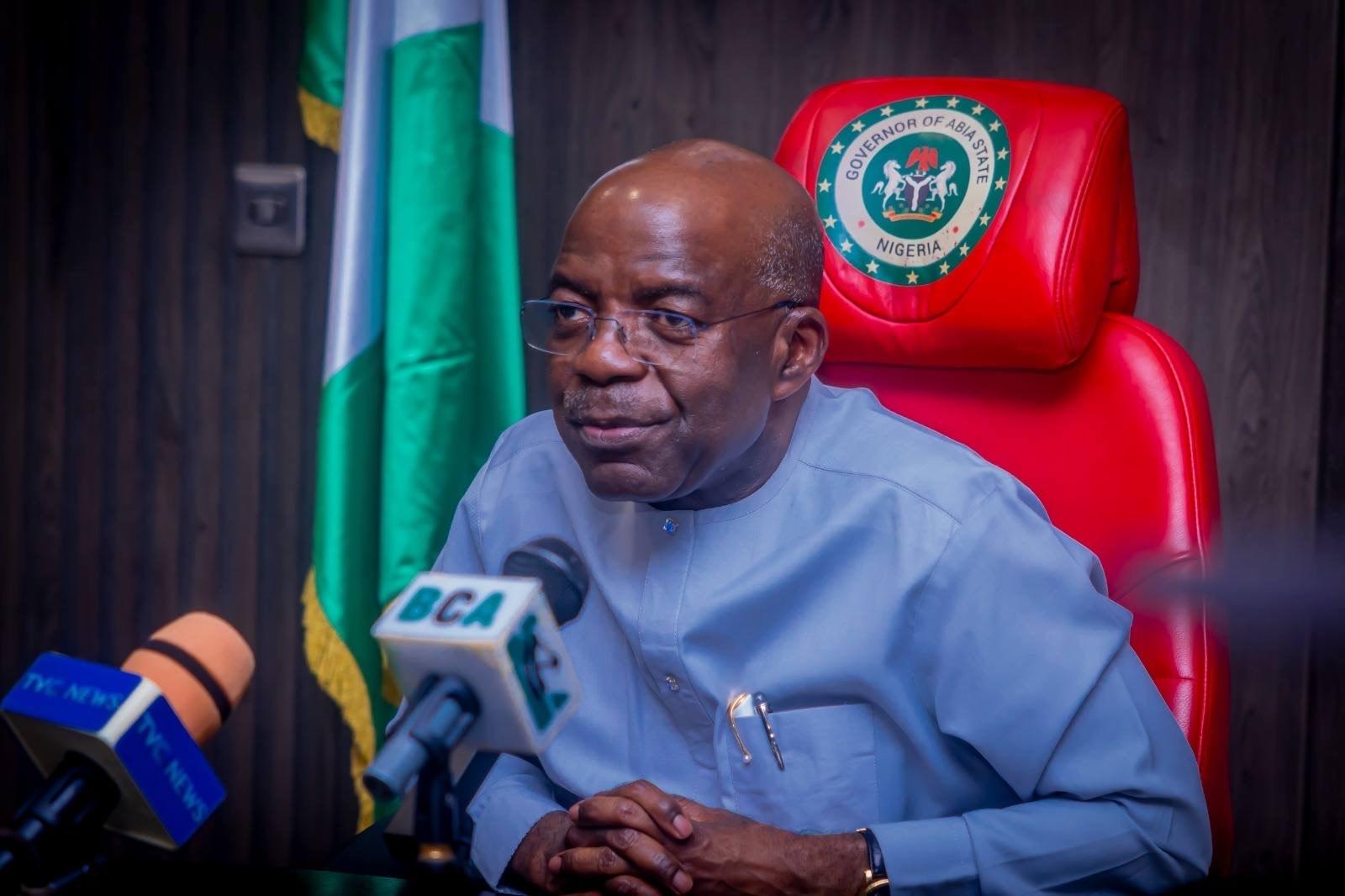
Alex Otti, the governor of Abia State, belongs to this second and far rarer category.
Alex Otti, the governor of Abia State, belongs to this second and far rarer category. And what he is quietly building in Abia, through concrete and culture, through naming and honouring, through inclusion and vision, is nothing short of an Igbo renaissance.
To understand what Otti is doing, you must first understand what was lost. The Igbo people carry one of the most remarkable civilisational stories in African history, a people of extraordinary enterprise, intellectual energy, and democratic tradition long before democracy became fashionable anywhere. Yet in the decades following the Nigeria Biafra Civil War, something slowly dimmed.
Leaders rose and fell without ever truly honouring the giants who came before them. Institutions crumbled. Monuments to Igbo achievement fell into disrepair. The young began to forget. And Abia State, which sits at the very heart of Igboland and should have been the custodian of this proud heritage, became instead a symbol of what can go wrong when governance loses its soul. Otti inherited that broken inheritance in May 2023. What he has done with it since assumption of office is a story worth telling.
Before Alex Otti became governor, he was already a man shaped by a Pan Igbo consciousness that went far beyond where he was born. His career as one of Nigeria’s most respected bankers, rising to become group managing director of Diamond Bank, brought him into close contact with the finest minds across Igboland and Nigeria at large. It was in that boardroom world that he built relationships with people like Igwe Alfred Nnaemeka Achebe, the Obi of Onitsha, who chaired Diamond Bank while Otti led it as CEO.
That relationship was not merely professional. It was the beginning of a deep mutual respect between two men who understood each in their own way and what constitutes Igbo excellence. When Otti eventually won the governorship of Abia State in 2023, he did not leave those relationships behind. He brought them with him into governance, and the results have been quietly breathtaking.
One of the earliest and most telling signals of what kind of governor Otti would be came through his relationship with the Obi of Onitsha, Igwe Nnaemeka Alfred Achebe. In May 2024, barely a year into his administration, Otti invited Igwe Achebe to Aba, not for a political rally, not for a government function, but to commission three newly reconstructed roads. The gesture was elegant in its symbolism. Here was an Abia governor saying, in the most public way possible, that the most revered traditional ruler in Igboland was welcome in his state as a respected elder and partner, not merely as a visiting guest.
Igwe Achebe, deeply moved by what he saw in Aba, responded with the kind of words that carry weight coming from a man of his measured character. He called Otti “God sent” and described him as not just the pride of Abia, but of Nigeria as a whole.
The relationship did not stop there. In March 2026, when South-east and South-south traditional rulers gathered in Abia, Otti publicly acknowledged the Obi of Onitsha as a mentor and father figure, and announced plans to host his 85th birthday celebration in Abia State. That celebration took place on May 15, 2026, at the Michael Okpara Auditorium in Umuahia, organised by the Abia State Government, with ministers, senators, and leading Igbo voices in attendance, including former Minister of Education Dr Oby Ezekwesili, who described Igwe Achebe as having become an institution. I sat in that auditorium that evening as Otti made his speech.
There, Otti said something that captured his worldview perfectly, “We want our young people to know that it pays to be diligent. Honour pays.” A sitting governor of Abia organising a public birthday celebration for the Obi of Onitsha, at state expense, in Umuahia, that is not protocol. That is a philosophy.
No survey of Otti’s Pan Igbo consciousness would be complete without a proper reckoning with his relationship to the legacy of Chief Sam Mbakwe, the revered former governor of old Imo State, whose jurisdiction once included much of what is today Abia. Long before Otti became governor, he spoke of Mbakwe with the kind of reverence you reserve for a man who shaped your entire understanding of what public service should look like. In his first major speech flagging off the reconstruction of Port Harcourt Road in Aba in October 2023, Otti reminded his audience that it was “our revered leader, Dee Sam Mbakwe, Governor of Old Imo State” who originally built that road, and that the commercial energy it once generated was a direct product of Mbakwe’s vision. He did not have to say that. Most politicians would have simply cut the ribbon and moved on. Otti chose instead to situate his own work within a longer story of Igbo achievement, to say, in effect, that what he was doing was a continuation, not a creation.
Mbakwe had also been the man who took the long stalled Enyimba Hotel project in Aba into its most advanced stage before the military terminated his government in 1983. Otti honored that connection too, when he flagged off the reconstruction of the same Enyimba Hotel in February 2026, publicly paying tribute to Mbakwe as one of the original pathfinders of the project. That gesture of attribution, naming the debt, is something rare in Nigerian politics. And it did not go unnoticed.
The story of the Enyimba International Hotel in Aba is, in miniature, the story of the Igbo condition since the civil war, a people full of vision, interrupted repeatedly, never quite allowed to finish what they started. First conceived in 1972 by Ukpabi Asika, administrator of the defunct East Central State, as a symbol of hope and reconstruction after the war, the project moved forward, then stopped. Sam Mbakwe revived it in the early 1980s, taking the seven storey structure to a considerable stage before the military again brought the civilian government to a halt in 1983. After that, for over four decades, the building stood on Ogbor Hill in Aba, visible to everyone but usable by no one—a monument to interrupted ambition.