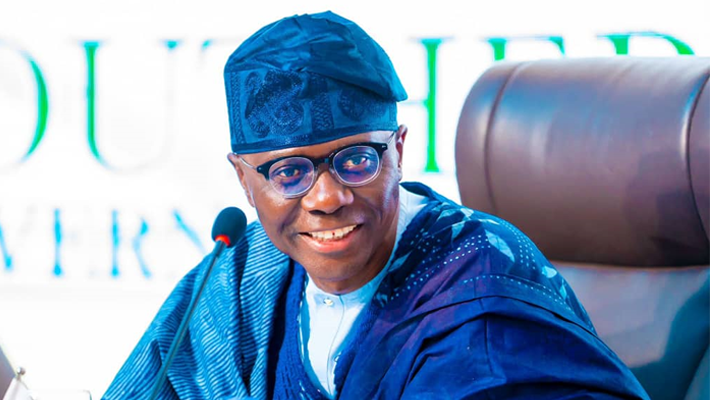
Lagos new industrial blueprint to accelerate economic growth, boost prosperity — Sanwo-Olu
The new industrial blueprint launched by the Lagos State government is aimed at repositioning Lagos as a leading hub for industrialisation and investment in Africa, with a clear pathway to accelerating economic growth.
The new industrial blueprint launched by the Lagos State government is aimed at repositioning Lagos as a leading hub for industrialisation and investment in Africa, with a clear pathway to accelerating economic growth.
The roadmap, which covers 2025–2030, is designed to recalibrate the state’s economic structure by strengthening industrial capacity, improving competitiveness, and unlocking new growth opportunities across key sectors.
Key pillars of the blueprint include infrastructure expansion, regulatory reform, improved access to finance, workforce development, and the promotion of innovation and sustainability. The government also plans to scale up industrial clusters, enhance logistics and port efficiency, and strengthen support for small and medium-sized enterprises (SMEs) to integrate into regional and global value chains.
At the recent unveiling of the policy on Lagos Island, Governor Babajide Sanwo-Olu—represented by Bimbo Salu-Hundehin, the Secretary to the State Government, Bimbola —described the policy as a strategic framework to drive industrial transformation in line with global economic shifts.
Sanwo-Olu noted that the blueprint targets longstanding structural bottlenecks while fostering inclusive growth through innovation, efficiency, and resilience. According to him, Lagos must transition from being an adaptive economy to one that leads industrial development on the continent.
He added that the initiative aligns with the state’s THEMES+ development agenda and the Lagos State Development Plan, while also supporting national objectives such as industrial diversification, export expansion, and job creation.
The governor further highlighted Lagos’ strategic positioning under the African Continental Free Trade Area, noting that the state is poised to serve as a major gateway for intra-African trade and industrial expansion.
In a goodwill message, the Minister of State for Industry, John Owan Enoh, commended Lagos for pioneering a comprehensive sub-national industrial policy. Represented by Tope Osinowo, he emphasised that Lagos accounts for a significant share of Nigeria’s industrial base and urged effective implementation to sustain growth momentum.
Also speaking, Folashade Ambrose-Medebem, the Commissioner for Commerce, Cooperatives, Trade and Investment, , described the blueprint as a binding commitment between government and stakeholders to deepen local production, strengthen value chains, and formalise informal enterprises.
She noted that the policy, developed through extensive stakeholder engagement, is structured to deliver measurable outcomes across sectors—from micro and cooperative enterprises to large-scale industries. Ambrose-Medebem also called on investors and development partners to support the initiative, reaffirming the state government’s commitment to sustaining an enabling environment for industrial growth and private sector participation.