The Federal Executive Council on Thursday approved contracts worth $2.99bn for three rail projects across Lagos, Kano and Kaduna states.
- +Tinubu leads power taskforce as FEC approves rail, road projects
It also approved contracts for road and bridge projects worth over N7tn, comprising 10 major projects spanning all six geopolitical zones.
It also approved contracts for road and bridge projects worth over N7tn, comprising 10 major projects spanning all six geopolitical zones.
This includes a N1.86tn extension of the Lagos-Calabar Coastal Highway through Akwa Ibom State, a N548.98bn contract to demolish and fully rebuild the Carter Bridge in Lagos, and a new N1.79tn section of the Sokoto-Badagry Expressway.
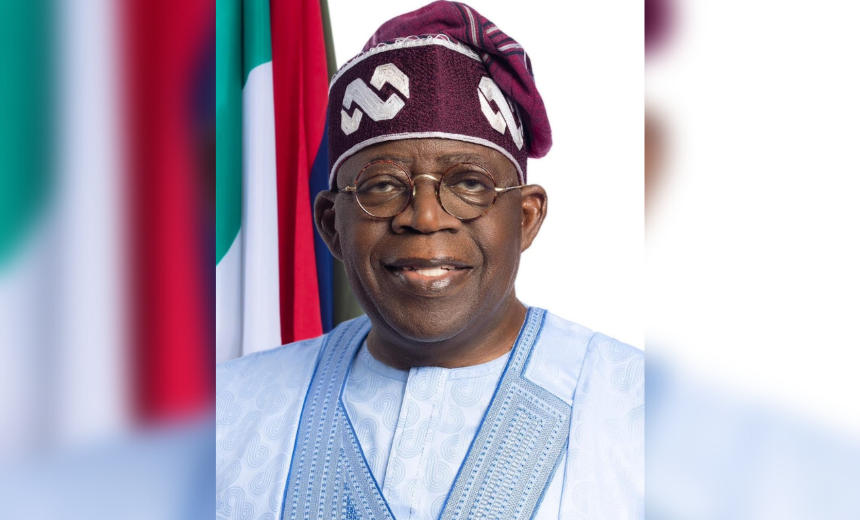
This was as it constituted a presidential power sector taskforce to be chaired by President Bola Tinubu.
The Minister of Information and National Orientation, Mohammed Idris, speaking at a post-council meeting briefing at the State House, Abuja, announced that the council reached a set of “far-reaching decisions” arising from a comprehensive review conducted by a committee chaired by the Chief of Staff to the President.
The committee had been constituted on March 4 to establish and operationalise the Grid Asset Management Company.
Idris explained, “That committee undertook a very comprehensive review of the commercial, investment and institutional framework underpinning GAMCO.
“Based on the report submitted to Council today, arising from that report, I am happy to announce that Council today took very far-reaching decisions,” Idris said.
The first was the appointment of Mr Rilwan Babalola as Special Adviser to the President on Power.
The second decision was the constitution of a Power Sector Reform Taskforce to be personally chaired by the President himself.
Idris said, “Council has taken another far-reaching decision by constituting a task force on power sector reform. All of us know that power is a major issue in this country, and Mr President, consistent with his vision of ensuring economic prosperity for Nigeria, has decided that renewed attention be put on the power sector.
“This power sector taskforce, it is called the Task Force on Power Sector Reform. Mr President himself will be the chairman of that committee, and the newly appointed Special Adviser on Power, Mr Lanre Babalola, will sit in from time to time for Mr President.”
The 10-member committee comprises the Minister of Finance and Coordinating Minister of the Economy, the Minister of State for Gas, the Minister of Industry, Trade and Investment, the Minister of Information and National Orientation, the Attorney General of the Federation and Minister of Justice, the Chairman of the Nigerian Electricity Regulatory Commission, one member representing generating companies and one member representing distribution companies.
Idris said the composition could be expanded at the President’s discretion.
“The goal here is to ensure that there is a total overhaul of the power sector, without which real progress cannot be made in terms of industrialisation, which will ultimately lead to the economic prosperity of Nigeria,” Idris said.
The Minister of Finance and Coordinating Minister of the Economy, Taiwo Oyedele, said, “For economic development, you need infrastructure that works, infrastructure that helps you with productivity and growth, and also improves the quality of life, in line with the development agenda of this government.
“Council today approved the award of contracts for three transformative rail projects. One is the Lagos Green Line Rail Project, Phase One.
“The second is the Kano State Metro City Rail Project. And the third is the Kaduna State Light Rail Project.”
Oyedele explained that the three projects, to be sponsored by the Ministry of Finance Incorporated on behalf of the Federal Government with counterpart funding, will collectively cost $2.99bn.
“These three cities are very important and critical. All cities are important, but this is where you have your 10 per cent effort yielding 90 per cent results,” Oyedele explained.
The Lagos Green Line is arguably one of the most anticipated components of the Lagos metropolitan rail network.
It is designed to run from Marina in the heart of Lagos Island to Lekki and beyond, serving the densely populated Lagos Island and Lekki corridor that is home to some of the highest concentrations of commercial and residential activity in sub-Saharan Africa.
The Kano Metro City Rail and the Kaduna Light Rail are situated in two of the most economically significant cities in the north.
Minister of Works, Dave Umahi, announced the approvals of road projects, as he listed a separate roll of major road projects ready for inauguration ahead of Tinubu’s third anniversary in office on May 29.
Thursday’s approvals are the single largest batch of road project approvals the Tinubu-led FEC has approved in one sitting.
According to Umahi, the first project was the Suleja-Minna and Kaduna roads, which he describes as one of the administration’s most troubled inherited road projects.
The Suleja-Minna corridor, a 71-kilometre stretch previously awarded to Salini under a Nigeria National Petroleum Corporation Limited tax credit scheme, under which, according to Umahi, nothing tangible was achieved in five years, had been rescoped and split into two lots.
“A section of it is 71km, dualised, and was awarded to Salini under NNPCL’s tax credit, and for five years, nothing tangible was achieved. And so the Ministry of Works decided to terminate the project and rescoped it into two lots,” Umahi said.
Lot 1, covering the first 71km, was awarded to CGC at N91bn, and Lot 2, covering the next 71km, was awarded to CCECC at N93bn, both to be executed on reinforced concrete pavement.
The council also approved the reconstruction of the Mando-Birnin Gwari Road in Kaduna State, a 122.8-kilometre project that Umahi described as one of the specific infrastructure commitments Tinubu made during his presidential campaign.
He explained, “The project is very important to the people of Kaduna State. It is 122.8km, and the contract sum is N178.12bn.
“The outer shoulders, which are 2.75 metres each, shall be done on reinforced concrete pavement, and because of the urgency, the carriage way will be done on asphalt. It’s a three-lane road at 11.3 metres’ width.”
Umahi said the council approved the complete demolition and reconstruction of the Carter Bridge.
He said the Council’s decision followed independent investigations to determine the structural fate of one of Lagos’s oldest bridges.
Umahi noted that the independent investigations commissioned at multiple points, in 2013, 2019 and again under the current administration through Julius Berger, had all confirmed that the bridge’s underwater piles and pile caps had deteriorated at a “geometrical progression,” leaving no viable option but complete demolition and reconstruction.