22 Years. Three Near-Misses. One Lesson for Every Investor.
- +Now, about that Champions League final on Saturday…
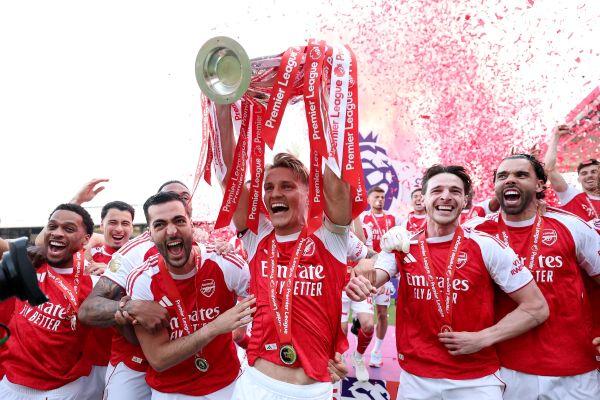
I will be transparent; I am an Arsenal supporter. So yes, Tuesday night was personal. But as the emotion settled on a title won 22 years after the club’s last Premier League triumph, I found myself thinking less about football and more about how enduring success is built.
I will be transparent; I am an Arsenal supporter.
In many ways, Arsenal’s journey mirrors how markets work.
Three times as bridesmaids. Once, losing by just two points. Enough to make even the most disciplined institution question the strategy. Enough to tempt any leadership team into abandoning process for short-term fixes. But they did not flinch.
Mikel Arteta did not tear up the blueprint in search of short-term applause. He doubled down on defensive solidity. He invested in squad depth rather than noise. He refined the system incrementally, season after season, accepting that sustainable success is rarely built dramatically. And eventually, consistency compounded.
As an econometrician, I recognize this pattern precisely. In time series analysis, we call it autocorrelation, the condition where each observation in a sequence is not independent of the one before it but is instead shaped by it. Arsenal’s seasons were not random, isolated events. Each one carried forward the structural gains of the last. The discipline of 2023/24 informed the solidity of 2024/25. The near-misses were not wasted years; they were lagged variables, quietly loading into the model. By the time 2025/26 arrived, the system had accumulated enough signals to overwhelm the noise. That is not luck. That is what positive autocorrelation looks like when it finally clears.
I have sat in enough strategic meetings, engagements, and investor sessions to recognize this pattern. Markets reward conviction differently from how the modern attention economy rewards excitement. The outcomes often appear sudden, but the foundations are usually years in the making.
The capital market version of Arsenal’s story is not unusual. Nigeria’s equity market has experienced its own cycles of skepticism, reform fatigue, FX uncertainty, subdued foreign participation, and questions around long-term depth.
Yet beneath the surface, structural work continued. Demutualization. Technology modernization. Regulatory reform. Market deepening. Stronger domestic participation. Quiet work. Uncelebrated work. But necessary work.
The resurgence of the NGX All-Share Index in 2023 and 2024 reflected years of structural investment finally beginning to compound. In 2025, the market sustained that momentum, reinforcing investor confidence and validating the long-term reform story. The positive trajectory has continued into 2026, highlighting how disciplined institutional progress eventually translates into market performance.
That is why Arsenal’s story resonates beyond football. Markets and elite football clubs share a counterintuitive truth: the years that feel like failure are often the years that make the win possible.
Every setback exposes weaknesses. Every near-miss reveals where discipline must improve. Serious institutions do not respond emotionally to these moments, they respond analytically. They refine systems. They strengthen execution. They stay focused on long-term fundamentals even when external sentiment turns impatient.
That iterative process, evidence-led refinement applied consistently over time, is precisely how enduring market value is built.
There is also something important about how Arsenal won. Not through chaos. Not through a last-minute miracle. Not through luck. They won through sustained consistency so overwhelming that, by the closing stages of the season, the outcome felt almost inevitable. The table eventually reflected what the underlying performance metrics had been signaling for months.
That is how long-term capital behaves. The strongest returns often look sudden from the outside, but internally they were built gradually, quarter by quarter, decision by decision, cycle by cycle. By the time the broader market notices, the real work has already been done.
The investors who benefit most from long-term market growth stories are rarely those who waited for certainty. More often, they are the ones who committed to the thesis when the environment was uncomfortable, imperfect, and unpopular, and had the discipline to hold through uncertainty.
Arsenal’s 22-year wait is now history. But the lesson it leaves for anyone who works in markets, builds institutions, or allocates long-term capital is timeless: Stay disciplined. Protect your downside. Trust the process. Eventually, consistent execution gets rewarded.
Now, about that Champions League final on Saturday…