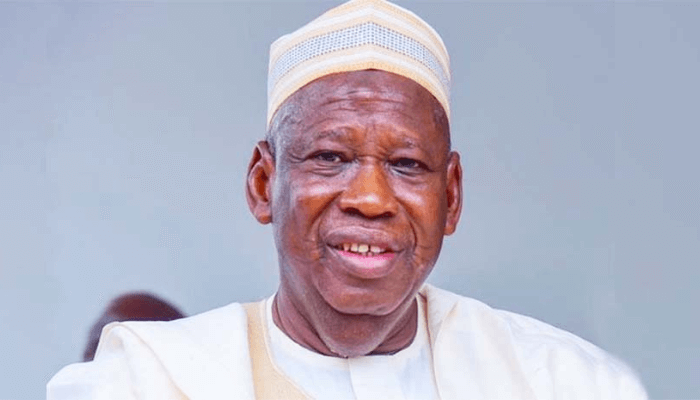
Abdullahi Umar Ganduje, the former Governor of Kano, publicly acknowledged Muhammad Sanusi II as the Emir of Kano and Chairman of the Kano State Council of Emirs on Tuesday. This unexpected recognition occurred during the swearing-in ceremony of Murtala Sule Garo, the newly appointed Deputy Governor, at Government House.
- +Ganduje’s recognition of Sanusi’s emirship signals political shift in Kano
- +Shifting landscapes and elite reconciliation
- +A “twist of fate” for Kano politics
The event, attended by a significant assembly of political and traditional leaders, became a focal point for reconciliation.
The event, attended by a significant assembly of political and traditional leaders, became a focal point for reconciliation. Ganduje, while delivering a goodwill message, used Sanusi’s full royal title, a gesture that immediately commanded the attention of the gathered dignitaries.
The audience responded with sustained applause as Ganduje greeted the Emir and formally recognised his leadership of the Kano Emirate Council. Observers viewed the moment as a major departure from the previous hostility between the two leaders.
The acknowledgment is particularly significant given the fraught history between the figures. Sanusi was removed from the throne in 2018 during Ganduje’s tenure as governor, an action that sparked intense political and legal disputes across Nigeria at the time.
Shifting landscapes and elite reconciliation
The political environment in Kano changed following the election of Abba Kabir Yusuf, whose administration subsequently reinstated Sanusi as Emir. This reinstatement added layers of symbolic weight to Tuesday’s public interaction.
Ganduje’s reference to Sanusi as Emir suggests a notable softening of long-standing political tensions. It may indicate a strategic attempt at reconciliation within the state’s elite political and traditional circles, potentially stabilising the local political climate.
A “twist of fate” for Kano politics
Analysts are already interpreting the exchange as a “twist of fate” in the volatile theatre of Kano politics. It appears that past rivalries are being superseded by cautious gestures of mutual respect and formal recognition.
While the long-term impact on the state’s power dynamics remains to be seen, the public nature of this acknowledgment serves as a clear signal of a tactical truce between two of the most influential actors in Northern Nigeria.