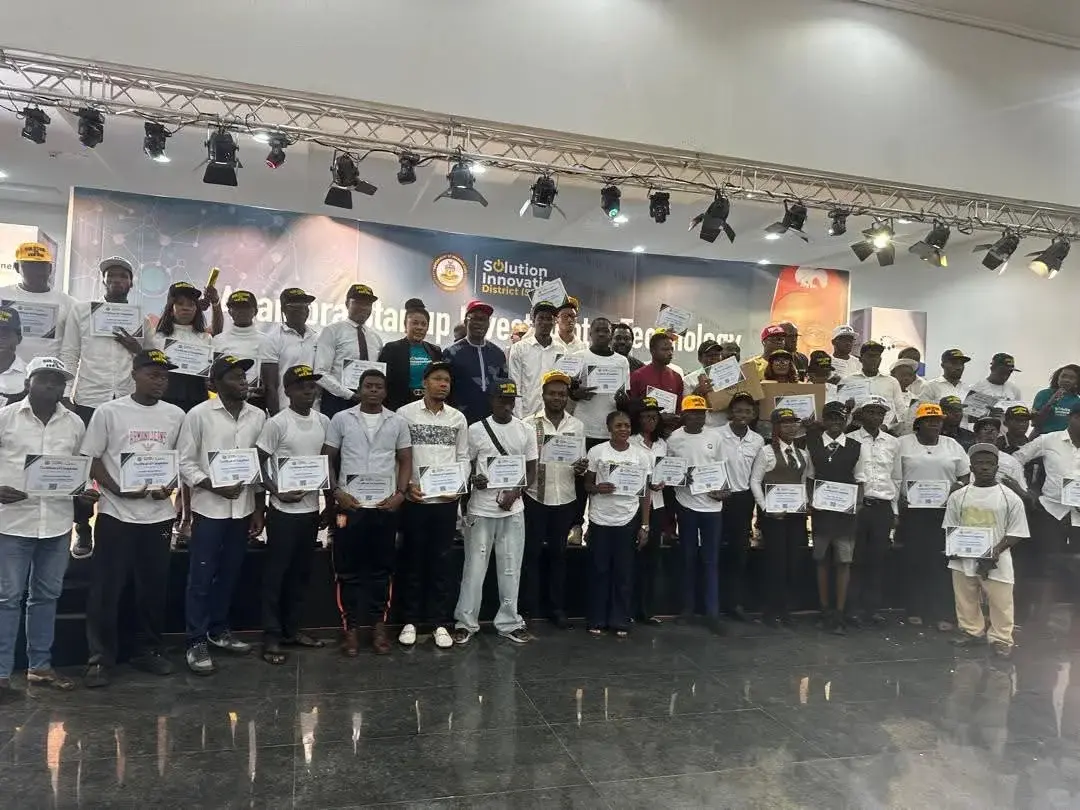
No fewer than 480 interns have received training in three fields of technology under the Anambra State Government’s Tech Skills Scheme of “Everything Technology, Technology Everywhere”.
- +Anambra trains 480 interns with tech skills
The trainees included 300 robotics trainees, 100 internet service provider (ISP) engineers, and 80 startup graduates unveiled at a ceremony at the new Government House in Awka on Wednesday.
The trainees included 300 robotics trainees, 100 internet service provider (ISP) engineers, and 80 startup graduates unveiled at a ceremony at the new Government House in Awka on Wednesday.
Anambra State Governor Charles Soludo, who congratulated the graduates, said digital technology was crucial to today’s society and integral to every field of endeavour.
Mr Soludo said the initiative, driven by the Solution Innovation Districts (SID), aimed to foster a vibrant digital economy for Anambra’s future.
He urged the graduates to harness their skills and conquer the world with technology.
“I want to see more startups and innovative products emerging from our schools, especially secondary schools, because catching them young is crucial.
“We will also encourage primary school pupils to think innovatively, alongside private enterprises,” he said.
Chinwe Okoli, the special adviser to Mr Soludo on Innovation and Business Incubation and the CEO of SID, expressed gratitude to the governor, partners, guests, and graduates for the programme’s success.
Ms Okoli said the government was aware of the importance of investing in talent, adding that the private sector’s active role was needed in the tech revolution effort.
Under Governor Soludo’s leadership, Anambra’s digital transformation is actively underway; it is not just a promise but a reality.
Originally, the governor pledged to train 10,000 people annually, but within the first year, over 30,000 individuals have already been trained.
“I celebrate our three key programmes, which are robotics training, ISP network engineering, and the Anambra startup incubation.
“They are all based on four pillars of practical training, access to infrastructure, mentorship from industry experts, and support for turning ideas into businesses,” she said.