Each year on May 1, Workers’ Day offers a moment to recognise the contributions of people who power the economy. Traditionally, that recognition has centred on formal employment, offices, factories and structured workplaces. But Nigeria’s economic reality tells a broader story.
- +Rethinking Workers’ Day: Recognising Nigeria’s new class of earners
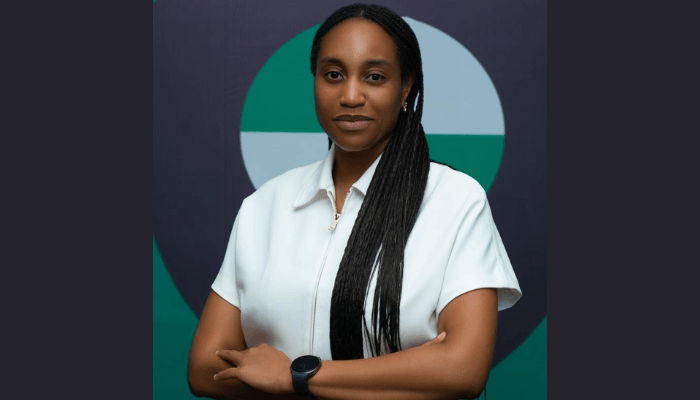
- +Weyinmi Aghadiuno, head of regulatory & policy Africa, Bolt
Today, millions of Nigerians earn outside traditional structures.
Today, millions of Nigerians earn outside traditional structures. From small business owners to freelancers, delivery partners and ride-hailing drivers, a growing share of economic activity is driven by people who are building flexible, independent income streams. As this landscape evolves, so too must how we think about “workers” and how we recognise them.
Recent insights from a nationwide gig economy study commissioned by Bolt highlight the scale of this shift. Nigeria’s gig economy is now estimated at over $5.17 billion, contributing approximately 2.8% of GDP. More importantly, it is creating accessible pathways for income participation in a country where over 92% of working Nigerians operate outside formal wage structures.
In this context, ride-hailing and other platform-enabled opportunities are becoming more than convenience services; they are practical tools for earning, adapting and staying economically active.
Workers’ Day is therefore an opportunity to expand the conversation. Not to replace traditional definitions of work, but to acknowledge that the ways Nigerians earn are changing.
For many participants, flexible platforms offer something increasingly valuable: choice. The ability to decide when to earn, how long to work, and how to combine multiple income sources. In a period of economic uncertainty, this flexibility is not just a preference; it is a strategy.
Bolt’s study shows that ride-hailing is one of the most accessible entry points into Nigeria’s gig economy, accounting for 24 percent of participation. It also reveals that participation is not fleeting. Nearly six in ten participants remain active for more than a year, suggesting that flexible earning is becoming a sustained part of how people support themselves and their families.
Perhaps most telling is the impact on everyday life. According to the report, 64 percent of participants say their standard of living has improved significantly, with another 31 percent reporting slight improvements after joining platform-based work. These are not abstract statistics; they reflect real households navigating real economic pressures.
For younger Nigerians in particular, this shift is even more pronounced. While national unemployment has declined in recent years, youth unemployment remains higher, encouraging more people to explore multiple ways of earning, often combining education, entrepreneurship and platform-based opportunities.
What emerges is not a rejection of traditional pathways, but an evolution of them. A hybrid model where people are not defined by a single role but by their ability to adapt, combine and create income streams that fit their circumstances.
As we reflect on Workers’ Day, it is worth recognising that economic contribution Today looks different than it did a decade ago. The definition of who contributes, and how, has expanded.
This moment calls for a broader, more inclusive perspective. One that recognises not only those in formal structures but also those building livelihoods through flexible platforms. It calls for continued collaboration between platforms, policymakers and stakeholders to ensure these opportunities remain accessible, sustainable and supportive of long-term economic participation.
Ultimately, Workers’ Day is about recognising effort, contribution and resilience. In Today’s Nigeria, those qualities are increasingly found across a diverse and evolving community of earners, many of whom are navigating change with creativity, flexibility and determination. And that, too, deserves recognition.
Weyinmi Aghadiuno, head of regulatory & policy Africa, Bolt