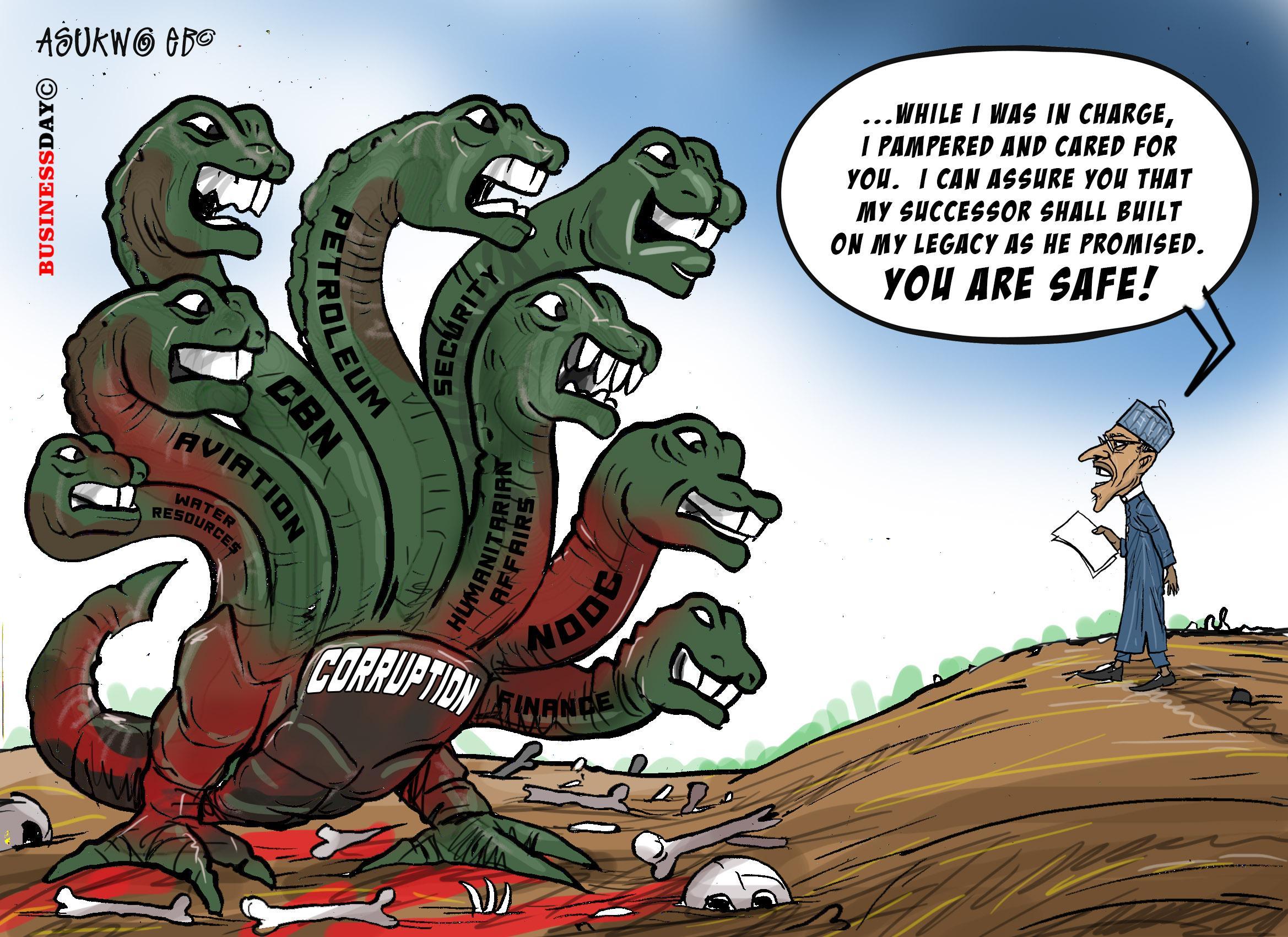
Over $550 billion has been lost to corruption since independence. A sprawling network of anti-corruption agencies. One fundamental problem: the absence of coordination between them.
- +Interoperability is the anti-corruption reform Nigeria continues to overlook
Nigeria does not lack anti-corruption agencies.
Nigeria does not lack anti-corruption agencies. It has the Economic and Financial Crimes Commission (EFCC), Independent Corrupt Practices and Other Related Offences Commission (ICPC), Code of Conduct Bureau (CCB), Nigerian Financial Intelligence Unit (NFIU) and an expanding roster of oversight bodies. What it lacks is something less visible, but more consequential: the ability to make its public data systems talk to each other and critically, to tell the same story. Until it solves this problem, the corruption numbers will not move.
The numbers are troubling. Nigeria scores 26 out of 100 on Transparency International’s 2025 Corruption Perceptions Index, ranking 142nd out of 182 countries, a score barely shifted in a decade. Anti-corruption agencies estimate the country loses $18 billion annually to corruption and financial crimes, roughly 3.8% of GDP. Cumulative losses since independence have exceeded $550 billion. A PwC study warned that if unaddressed, corruption could cost Nigeria up to 37% of GDP by 2030.
These are not simply failures of investigative will. They are, in large part, failures of infrastructure, specifically a fragmented data infrastructure that allows public funds to move across disconnected systems with no unified, verifiable trail. Nigeria operates multiple digital financial governance systems built over the years without a shared architecture.
The Government Integrated Financial Management Information System (GIFMIS) tracks budget execution. The Integrated Payroll and Personnel Information System (IPPIS) manages federal payroll. The Treasury Single Account (TSA) consolidates revenues at the Central Bank of Nigeria.
The Nigeria Open Contracting Portal (NOCOPO) holds procurement records. The Corporate Affairs Commission (CAC)maintains the Beneficial Ownership Register. The Nigeria Extractive Industries Transparency Initiative (NEITI) tracks extractive revenues. The NFIU monitors suspicious financial flows.
Each system does something useful in isolation. But because they do not communicate, a contractor can win a federal procurement contract on NOCOPO while their beneficial ownership stays hidden on an unlinked CAC register. Budget allocations on GIFMIS cannot be reconciled against disbursements on the Open Treasury Portal. Corruption does not happen in single systems. It exploits the gaps between them.
Fragmentation is only half the problem. Even where data is published, it frequently contradicts itself across platforms, and that disparity is its own form of opacity. The World Bank’s April 2026 Nigeria Development Update found that more than 5,000 TSA sub-accounts remain outside the consolidated revenue framework, with reconciliation between GIFMIS and CBN records still incomplete.
The key platforms used by the Office of the Accountant General of the Federation, the Debt Management Office (DMO) and the Budget Office do not connect to each other, producing manual workarounds, reporting delays, and figures that diverge across fiscal documents. Core system modules covering revenue, assets, liabilities, and commitment controls are not fully operational. The federal government has not published audited financial statements since 2021, with its audit framework still anchored in a law from 1956. What exists is not a reporting system. It is a patchwork.
BudgIT flagged a N3.42 trillion discrepancy in the 2024 budget between the headline figure of N27.5 trillion and the itemised sum of N24.08 trillion; a gap from undisclosed agency budgets not captured in the published breakdown. At the subnational level, BudgIT’s “From Access to Accuracy” analysis captures the same pattern.
While nearly all 36 states now publish quarterly Budget Implementation Reports, they apply the National Chart of Accounts (NCoA) classifications inconsistently. States omit geographic segments, delay releases, and sometimes stop reporting midway through a quarter, forcing analysts to wait for Audited Financial Statements released months later.
As BudgIT put it, the difference between “open data” and “usable data” is structure. When states apply budget classifications unevenly, they each “speak a different fiscal dialect,” making cross-state comparisons unreliable and regional accountability questions unanswerable.
Fixing fragmentation and restoring data integrity requires treating data architecture as a governance instrument, not an IT project. Three linkages would immediately reduce the corruption surface area.
Data interoperability is a governance choice before it is a technical one. Even where there is growing recognition of the importance of data-driven anti-corruption efforts, these ambitions are undermined by fragmented systems that do not exchange or reconcile information.
Nigeria’s fragmented systems have not persisted because of an engineering failure. They persist because fragmentation is useful to those who benefit from opacity. Fixing this requires addressing the competing incentives and distributive conflicts at the executive level, adequate resourcing through key institutions such as NITDA and the Budget Office of the Federation (which oversees budget coordination and monitoring) and sustained civic pressure from organisations such as BudgIT, which translates fiscal data into public accountability, one discrepancy at a time.
The institutions exist. The data exists to an extent. What Nigeria needs now is the architecture to connect them, alongside standards to ensure they agree with each other. Corruption does not survive in systems where the money can always be followed, and always tells the same story.
Caroline Anintah is a Program Officer at BudgIT.