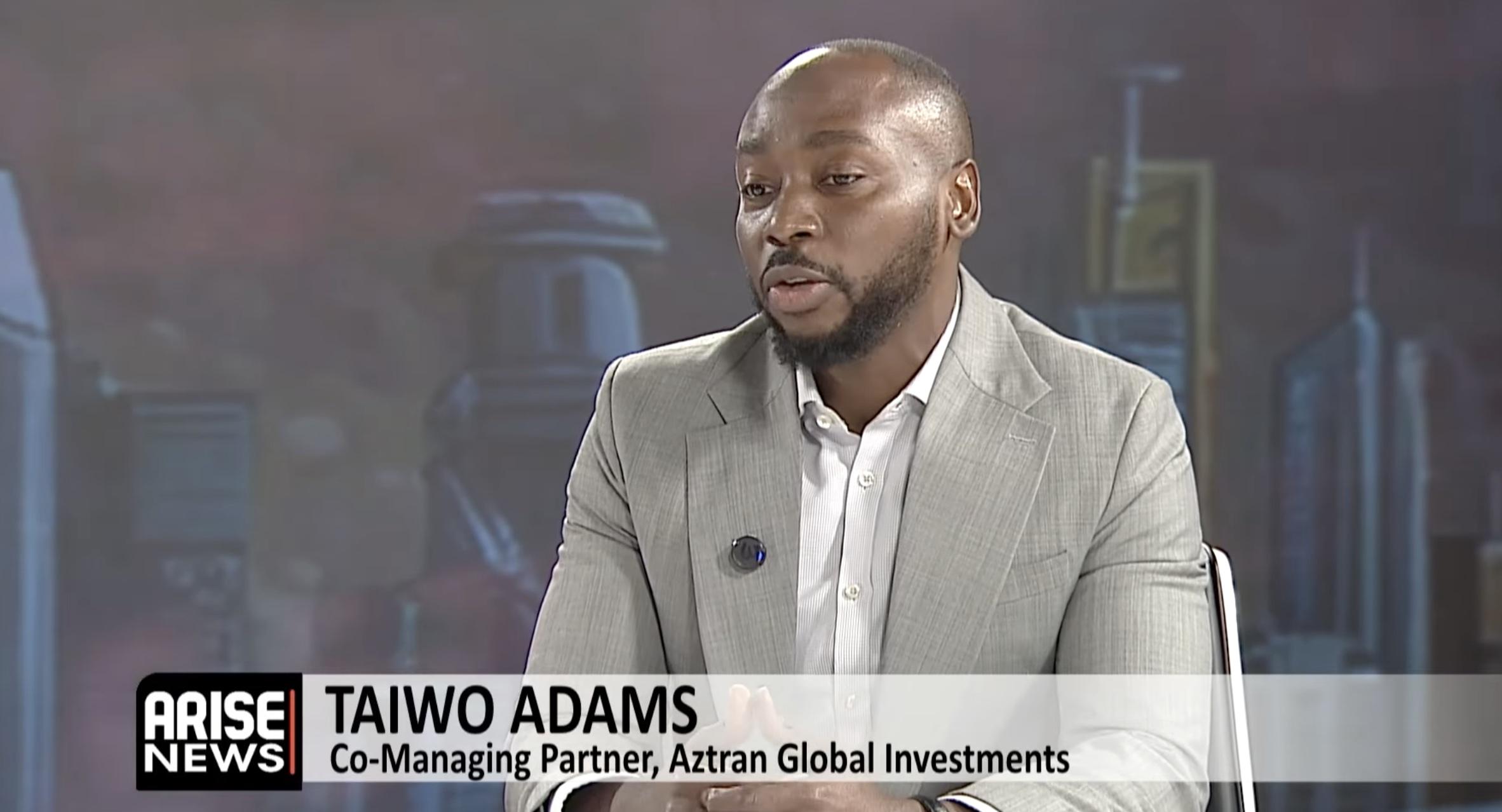
Investment analyst says inflation risks and global uncertainties make near-term interest rate cuts unlikely.
- +Taiwo Adams: CBN Unlikely To Cut Interest Rates Anytime Soon
Co-Managing Partner at Aztran Global Investments, Taiwo Adams, has said the Central Bank of Nigeria (CBN) is unlikely to begin cutting interest rates in the near term despite signs of easing inflationary pressures.
Co-Managing Partner at Aztran Global Investments, Taiwo Adams, has said the Central Bank of Nigeria (CBN) is unlikely to begin cutting interest rates in the near term despite signs of easing inflationary pressures.
Speaking during an interview on ARISE News om Tuesday, while analysing Nigeria’s latest inflation figures and monetary policy outlook, Adams said the apex bank is expected to maintain its tight monetary stance as it continues efforts to tame inflation and stabilise the economy.
“CBN is unlikely to cut interest rates anytime soon,” he said.
According to Adams, recent inflation trends reflect a combination of base effects and global developments, particularly fluctuations in crude oil prices linked to tensions in the Middle East.
“The month-on-month data gives a more accurate picture of current price pressures,” he stated.
He stated that although inflationary pressures have moderated somewhat following developments in the Middle East, the CBN is expected to remain cautious.
“I don’t think we are going to see a rate cut anytime soon,” he said.
Adams explained that the CBN has consistently adopted a data-driven approach to monetary policy and is likely to continue assessing inflation trends before making any major policy adjustments.
“The governor has largely been data-driven,” he stated.
According to him, the apex bank will also be monitoring global monetary policy developments, particularly actions by major central banks.
“He would also be watching what his counterparts globally are doing,” he said.
Adams emphasized that inflation remains significantly above the CBN’s long-term objective.
“The target is still single-digit inflation,” he stated.
He stated that maintaining higher rates has helped attract foreign capital into Nigeria and supported exchange rate stability.
“The rates are still relatively attractive,” he said.
According to Adams, the CBN’s liquidity management measures are also likely to continue as part of efforts to curb inflationary pressures.
“The focus is to try to rein in inflation,” he stated.
He explained that allowing excessive liquidity into the financial system could increase inflation and place additional pressure on the foreign exchange market.
“If the liquidity was allowed to flow freely, it would impact inflation and FX,” he said.
Adams further explained that the current policy stance has helped Nigeria absorb external shocks more effectively than it otherwise might have.
“These measures have helped Nigeria weather some of the shocks,” he stated.
According to him, the CBN is likely to keep monetary conditions tight until inflation shows a more sustained decline.
“We are going to remain on a tightening stance for a bit longer,” he said.
Adams concluded that while inflationary pressures may gradually ease, the CBN is unlikely to cut interest rates in the near term, stressing that policymakers will prioritise inflation control, exchange rate stability, and broader economic resilience before considering monetary easing.