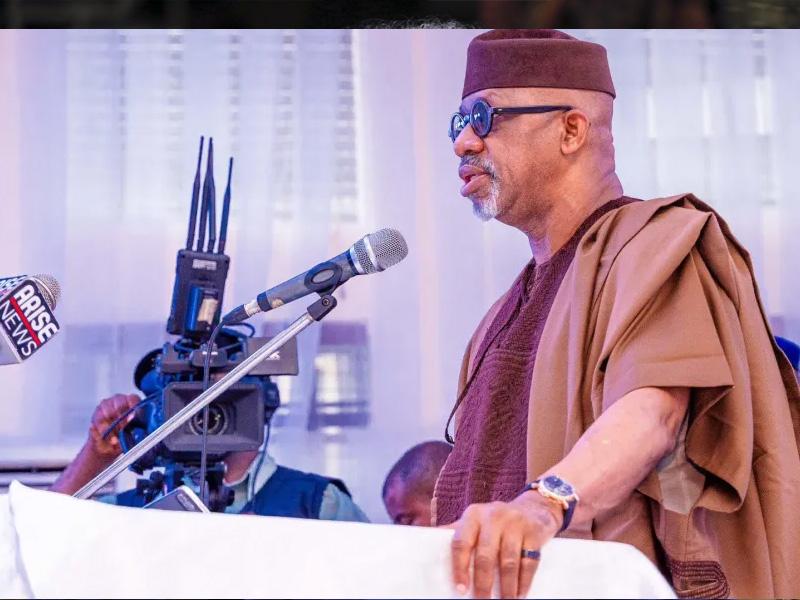
Governors support state police but oppose any framework requiring National Assembly approval for operations.
- +Governors Back State Police, Reject National Assembly Control Over Operations
Nigeria’s 36 governors have called for constitutional safeguards, among other provisos, to guide the proposed establishment of state police, raising concerns over any framework that would require approval from the National Assembly before states can set up their police.
Nigeria’s 36 governors have called for constitutional safeguards, among other provisos, to guide the proposed establishment of state police, raising concerns over any framework that would require approval from the National Assembly before states can set up their police.
Although all the governors agreed that there was a need for state policing and pushing for it in view of the security situation in the country, the framework and detailed parameters, THISDAY gathered, remained hazy, prompting the decision to engage the federal lawmakers and other stakeholders more closely on the matter.
For instance, they want policing transferred from the Exclusive Legislative List to the Concurrent Legislative List to enable states play a more active role in tackling insecurity in their respective jurisdictions.
In the same vein, they argued that such a framework that required the subnational heads to approach the National Assembly individually for approval would undermine the autonomy, responsiveness and effectiveness of subnational policing structures in addressing local security challenges.
Although these were not part of the communiqué by the Nigeria Governors’ Forum (NGF) on Wednesday after a meeting in Abuja, which ran till the morning of on Thursday, it was exclusively learnt from top inside sources that aside from the issues mentioned earlier, another issue of concern was funding.
It was gathered that the framework has proposed three per cent Federation Account allocation, which some governors said would be barely enough to pay the salaries of the recruits into police in their states, talk more of purchase of equipment and training.
But after the meeting, the governors unanimously threw their support behind the immediate establishment of state police in the country, stating that such a structure should be constitutionally guaranteed and aligned with federalism and citizens’ rights.
The Governor AbdulRahman AbdulRazaq-led NGF and the state executives, disclosed that they received a presentation from the Forum’s secretariat and a delegation of the Attorneys-General of the States on efforts to support establishing state police in Nigeria.
According to the governors, there was a dedicated consultation with the attorneys-general to review the proposed constitutional amendments and frameworks.
In the communique read by the Ogun State Governor, Dapo Abiodun, the Forum noted the need for collaborative effort and added that the consultation outcomes would strengthen states’ collective position.
Abiodun said: “We, members of the Nigeria Governors’ Forum (NGF), at our meeting held today, deliberated on issues affecting the country. Following extensive deliberations, the Forum resolved as follows:
‘’The Forum received a presentation from the NGF Secretariat and a delegation of the Honourable Attorneys-General of the States on efforts to support establishing State Police in Nigeria. It noted a dedicated consultation with the attorneys-general to review the proposed constitutional amendments and frameworks.
“Governors emphasised the need for the State Police to be constitutionally sound and aligned with federalism and citizens’ rights. The Forum noted the collaborative effort and added that the consultation outcomes would strengthen the states’ collective position.”
Separately, THISDAY was told by other sources that one of the issues to be ironed out was whether the National Assembly should approve modalities for each individual state, with a number of the governors feeling that this might be politicised.
According to the source, while some governors propose moving policing from the Exclusive to the Concurrent Legislative List, giving State Houses of Assembly the power to legislate on State Police, the National Assembly bill did not incorporate this, meaning that this has to be corrected.
It is understood that the existing bill vests all legislative power over state police in the National Assembly, a framework the source described as defective and constitutionally inoperative at state level.
“Similar to all, there is an important point that is unacceptable, which is the fact the National Assembly will be the one to approve the operations of a state police after the state meets some set criteria. This might be applied subjectively,” a top source within the NGF told THISDAY.
The governors had in April this year backed what they described as the proactive development of a state police framework by the secretariat, the umbrella body of the forum, in preparation for the proposed constitutional amendments.
The framework brought out key readiness requirements, including governance structures, financing models, human capital standards, digital systems and oversight mechanisms.
However, another reliable NGF source stated that there were no serious disagreements per say, pointing out that intense engagements were ongoing to ensure that areas of concern were thrashed out.
“No, we didn’t give any condition (for the operationalisation of state police). We’re just engaging with National Assembly etc. No conditions. We’re just engaging and discussing. So, that’s what the meeting was all about to kind of reach the parameters,” he stated.
On the section that requires the National Assembly to ‘micromanage’ the process by approving details of modalities to be followed, rather than leave the job for State Assemblies, the NGF source explained that it was necessary to carry out an assessment because the policing need of every state is peculiar.
“There are constitutional safeguards already, because it’s going from here (Abuja) to state assemblies. Those are the constitutional safeguards. An assessment has to be made.
“For example, I cannot come out and say we want 20,000 policemen or that Kano with its population will say we think we want 10,000. There’s an anomaly there.
“So, you cannot employ police you can’t pay. It’s to give room for discussions and parameters or yardstick. We can then say this is your population. We want to use a yardstick of 10 policemen per 1,000 people. So, those are the parameters.
“That is something that can be discussed. Like they say, ‘the devil is in the details’. There are other issues like, what are light weapons? What are small weapons?
“If state police can have light weapons, those are very dangerous weapons. So, light weapons is not pistol or AK-47. These are GPMGs that are tripod-mounted,” the source added.
He explained further that the issue of funding and training would have to be sorted out before the take-off of state police.