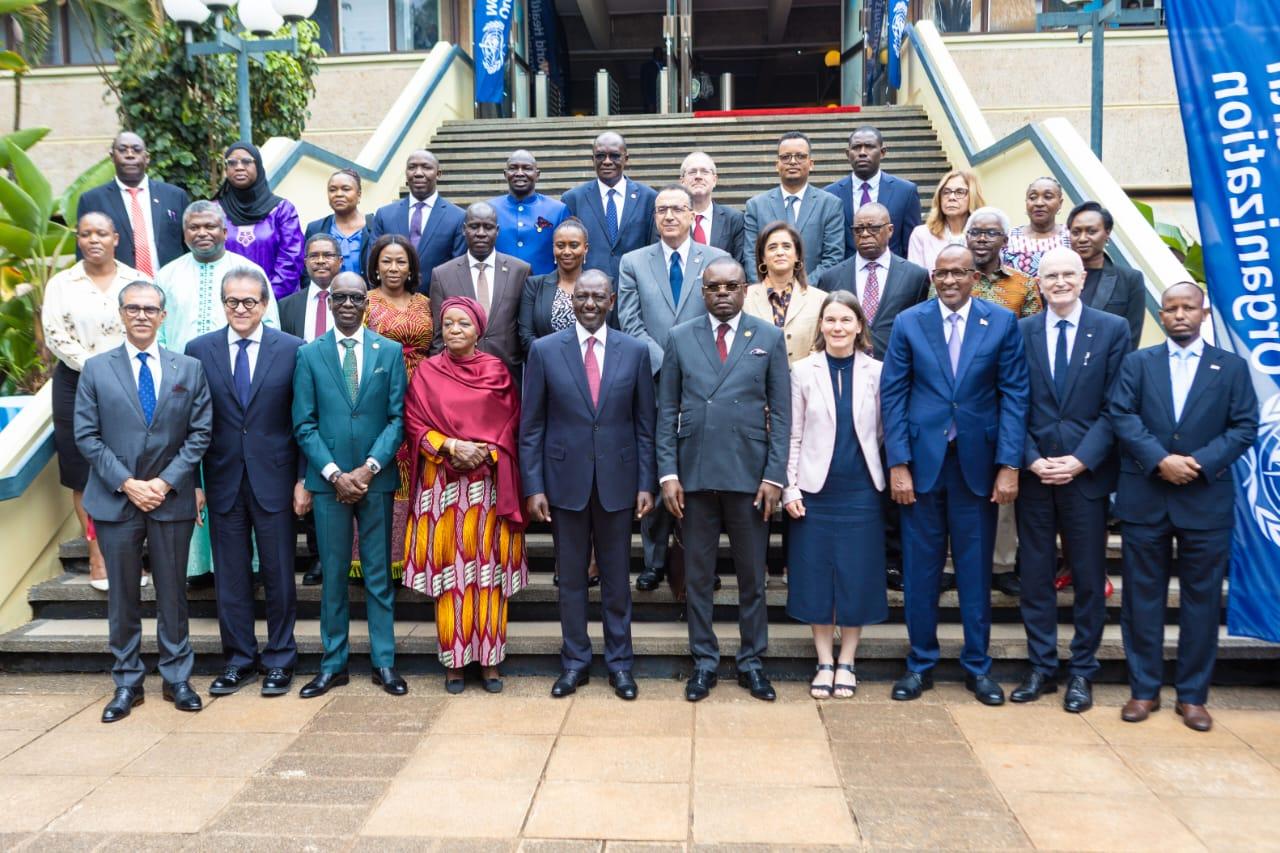
The World Health Summit Regional Meeting 2026 has opened in Nairobi, Kenya, with a strong call for urgent and coordinated action to build resilient health systems across Africa.
- +Africa pushes health system reset at Nairobi Summit
The high-level meeting, hosted by Aga Khan University in partnership with the World Health Organization, Kenya’s Ministry of Health, and the Africa Centres for Disease Control and Prevention, has brought together over 2,000 global health leaders, policymakers, and researchers from more than 50 countries.
The high-level meeting, hosted by Aga Khan University in partnership with the World Health Organization, Kenya’s Ministry of Health, and the Africa Centres for Disease Control and Prevention, has brought together over 2,000 global health leaders, policymakers, and researchers from more than 50 countries.
Opening the summit, William Ruto, Kenya’s president, said Africa must move away from fragmented health interventions toward a more coordinated, system-wide approach driven by strong governance, local investment, and accountability.
“This imbalance is neither sustainable nor tenable. It calls for a decisive and deliberate shift, from fragmented, piecemeal interventions to comprehensive, system-wide transformation anchored in coherent strategy, financed through both domestic and international capital, and sustained by strong governance and accountable institutions. At the same time, Africa possesses unique advantages that must be fully harnessed… which together position the continent as a source of scalable solutions rather than a repository of persistent challenges,” Ruto stated.
The meeting, themed “Reimagining Africa’s Health Systems: Innovation, Integration and Interdependence,” will feature over 80 sessions focusing on universal health coverage, digital health, workforce development, and climate-related health risks.
Speaking at the opening, Axel Pries, president of the World Health Summit, said the gathering reflects Africa’s rising influence in shaping the global health agenda, adding that the goal is to move beyond discussions to practical implementation.
“The World Health Summit Regional Meeting in Nairobi reflects the growing importance of Africa in shaping the global health agenda. Our role is to convene leaders from across sectors and regions, and the goal is clear: to translate dialogue into practical action that strengthens health systems regionally worldwide,” Pries added.
Similarly, Lukoye Atwoli, dean, Medical College East Africa, at AKU, said the summit marks a shift in global health dynamics, with African institutions now playing a central role in designing and implementing policies rather than just adopting them.
“For too long, Africa has been the subject of global health discussions held elsewhere, by others. Today, with delegates from more than 50 countries gathered on African soil, we are asserting something fundamental: that African institutions, African researchers, and African policymakers are not consumers of global health policy, we are its co-authors. This Summit will move us from the language of intention to the architecture of implementation,” Atwoli stated.
Leaders also highlighted persistent challenges including climate change, chronic diseases, limited funding, and the digital divide, while expressing optimism about Africa’s growing capacity to integrate health systems and adopt technology-driven solutions.
Sulaiman Shahabuddin, president and vice chancellor, Aga Khan University, said the continent is better positioned than ever to train healthcare professionals and deliver quality care, despite ongoing structural challenges.
“Challenges do remain … — climate change, chronic diseases, lack of financial resources, the digital divide, inequity and others that we will have to overcome – but I see a sector [in Africa] more capable than ever: better positioned to integrate systems, harness technology, and train the workforce needed for quality care and ethical leadership,” Shahabuddin stated.
From the World Health Organization, Mohamed Yakub Janabi, WHO regional director for Africa, described the summit as a historic platform for building a more coordinated and effective health ecosystem across the continent. “This Summit marks a historic first and offers the kind of collaboration required to meet the challenges of the moment,. The themes being discussed are deeply interconnected and will result in a blueprint for a new Africa that reflects a shift from addressing individual challenges to building a coherent health ecosystem,” Janabi affirmed.
Kenya also used the platform to stress the importance of preparedness, with Mary Muthoni, principal secretary public health & professional standards, the Africa Centres for Disease Control and Prevention, noting that global health security is critical for national stability and must be driven by proactive planning rather than crisis response.
“Global health security is not a luxury; it is a prerequisite for national stability. We must move from reactive crisis management to proactive pandemic preparedness,” said Muthoni, emphasizing the growing role of African institutions in shaping the continent’s health security agenda.
Meanwhile, Jean Kaseya, director general of the Africa Centres for Disease Control and Prevention, called for stronger domestic financing and African-led solutions to reduce reliance on external support and expand access to quality healthcare. “Africa’s health security and sovereignty depend on our ability to finance and build resilient systems at scale,” said Kaseya.
As discussions continue in Nairobi, stakeholders are expected to focus on actionable strategies to improve health financing, strengthen primary healthcare systems, and accelerate innovation.
The summit is seen as a key moment for Africa to redefine its role in global health, shifting from a passive participant to an active driver of solutions.