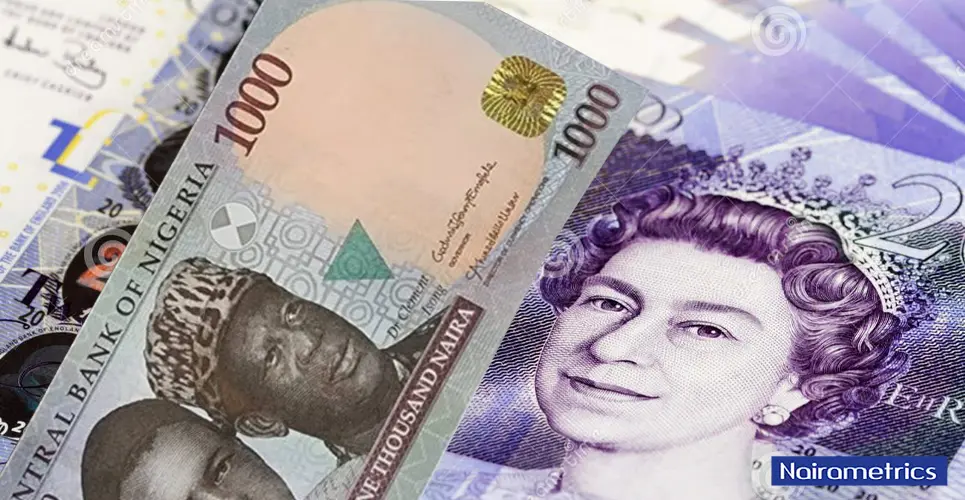
The naira showed some weakness against the British currency at the first trading session of the week.
- +Naira falls against British Pound, opens trade at N1,886/£1
The naira settled below the N1890/£1 mark, as it settled at N1885.8/£1 on Monday in the Nigerian foreign exchange market
The naira settled below the N1890/£1 mark, as it settled at N1885.8/£1 on Monday in the Nigerian foreign exchange market
The naira has remained in the N1825–N1950/£1 price range amid the optics in the UK economy and the Central Bank of Nigeria’s liquidity management strategies, particularly as currency traders reacted to the Bank of England’s latest interest rate projections.
The Central Bank of Nigeria (CBN) monetary policy rate remains a startling 26.5%. This high yield is creating a “carry trade” floor, preventing the naira from declining as sharply as the pound. The ongoing efforts to reduce the gap between the official NAFEM rate and the parallel market are seen as a crucial first step toward long-term transparency, even though it still causes volatility.
Foreign exchange dealers are keeping a careful eye on the UK inflation data. If inflation proves to be “sticky,” the BoE may maintain higher interest rates than other major central banks, which typically strengthens the pound.
The pair frequently retreats to the N1850/£1 support level before any further uptrend. If resistance at N1850/£1 is not broken, CBN interventions may result in a stronger Naira and testing of the level N1,900/£1. Strong backlog-clearing efforts and subsequent tightening measures significantly reduced the naira’s high volatility.
The RSI (Relative Strength Index) is currently neutral on the GBP/NGN daily chart. This suggests a “neutral” zone, where neither bulls nor bears have total control at this time. The pair is marginally below its 15-day moving average, indicating a short-term bearish signal. Nonetheless, because it exceeds the 200-day average, the long-term trend of the pound being significantly more expensive than the naira remains in effect.
The British pound sterling continues to be under pressure below 1.36 as it loses steam against the greenback. The American dollar was supported by Trump’s rejection of Iran’s peace proposal, which revived risk-off sentiment.
The British pound is being impacted by pressure on UK Prime Minister Starmer following significant election defeats. The US CPI data is still the focus of attention.
Iran’s proposal to reopen the vital waterway and end the war has been awaiting a response from the Trump administration. Growing optimism about a possible peace agreement between the US and Iran could cause the USD to decline and serve as a short-term tailwind for the major pair. Traders await the much-awaited Nonfarm Payrolls (NFP) report
According to market consensus, there will be 62,000 new jobs in April. Compared to the 178,000 new jobs created in March, this would be a significant decline. Furthermore, it is anticipated that the unemployment rate will stay at 4.3 percent.
The Bank of England (BoE) chose to maintain the bank rate at 3.75 percent. Instead of making any pre-commitments, the BoE presented a scenario framework that suggests rate hikes might be appropriate.
Governor Andrew Bailey of the Bank of England issued a warning about “forceful tightening” if energy price shocks continue to fuel inflation.
UK Prime Minister Keir Starmer is facing mounting pressure to announce a departure date after his ruling Labour Party suffered severe defeats in elections across much of the country.
British Sterling has also been under localized pressure due to rising UK gilt yields and the political “noise” that followed, despite Starmer’s announcement that he will not resign.