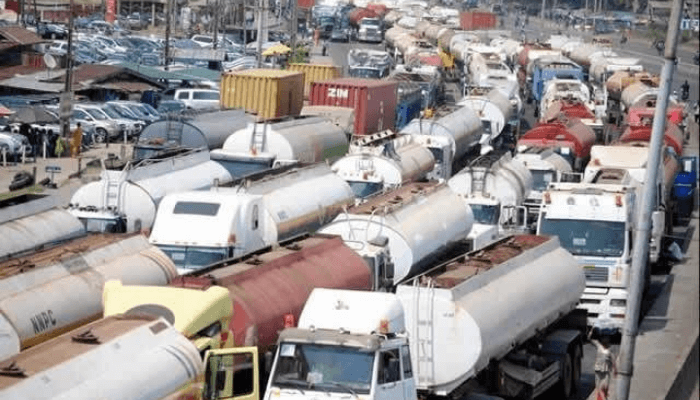
Nigerian fuel marketers are increasingly importing refined petroleum products originally produced by the Dangote Petroleum Refinery through the offshore ship-to-ship (STS) trading hub in Lomé, Togo, in a growing trade pattern that highlights the refinery’s expanding influence on regional fuel markets.
- +Nigeria imports its own fuel as Dangote-Lomé trade surges
The development was disclosed by Matthew Tracey-Cook, an official of S&P Global Energy, during a webinar organised by the Major Energies Marketers Association of Nigeria (MEMAN) on Thursday.
The development was disclosed by Matthew Tracey-Cook, an official of S&P Global Energy, during a webinar organised by the Major Energies Marketers Association of Nigeria (MEMAN) on Thursday. The webinar, themed “West Africa Pricing and Flows in the Context of the War,” examined shifting fuel supply routes and pricing dynamics across the region.
According to Tracey-Cook, products refined at the Dangote Refinery are being exported on a coastal basis to Lomé before finding their way back into Nigeria, highlighting what he described as an increasingly interconnected relationship between the refinery and the offshore trading hub.
He noted that while Dangote has significantly increased domestic supply, marketers continue to source products through Lomé, a trend that could point to pricing differentials between local and international markets.
“Dangote volumes on a coastal basis do arrive back in Lagos from Lomé,” he said, adding that the refinery’s products have become increasingly dominant in Nigeria’s waterborne fuel imports.
Data presented by S&P Global showed that over the last six months, Dangote-origin products have accounted for the majority of petroleum products imported by sea into Nigeria. Between March and May 2026, more than 70 to 80 percent of the fuel volumes imported into the country originated from the refinery before being re-imported.
“For several months, from March until May, we saw well over 70 to 80 per cent of the volumes that were imported into Nigeria actually originated from Dangote; from their coastal Dangote volumes which were re-imported,” Tracey-Cook said.
He added that similar trends were evident in the diesel market, where Dangote-origin products are increasingly shaping supply patterns.
“The increasing importance of the Dangote refinery in terms of product that’s flowing into Nigeria is really evident,” he said.
Despite Dangote’s growing role as a direct supplier to the Nigerian market, Tracey-Cook stressed that Lomé remains a critical trading and logistics hub for the wider West African region.
According to him, the offshore hub has continued to handle substantial fuel volumes and remains slightly larger than it was in 2024. In some months, particularly November and December 2025, volumes handled through Lomé significantly exceeded those moving through other regional routes.
He explained that the hub’s importance lies in its ability to receive large medium-range tankers and redistribute cargoes onto smaller vessels capable of serving ports across West Africa that lack the infrastructure to accommodate larger ships.
“Lomé has become an increasingly important transshipment hub for filling regional shortages across the region,” Tracey-Cook said. “It serves an important purpose, given that many ports in West Africa don’t have the capacity to take a fully laden MR-sized vessel.”
Charts presented during the webinar showed significant exports of petrol, diesel, jet fuel and other clean petroleum products from Dangote to offshore Lomé, where they are blended into regional supply chains alongside cargoes from other sources.
The S&P Global official also pointed to notable changes in fuel pricing patterns since the outbreak of the Middle East conflict, describing current market conditions as unusual.
“This is really an unusual seasonal trend where gasoline in West Africa is significantly more expensive than it is in Europe right now,” he said.
He noted that Dangote’s petrol pricing remains closely linked to benchmark prices established at the STS Lomé market, with the differential between the two locations creating opportunities for traders to manage risks and optimise supply chains.
Tracey-Cook described the Dangote export market and the Lomé trading hub as the two most important supply centres for refined products in West Africa.
“These two locations, the FOB Dangote market and also the STS Lomé market, are the two largest and most important regional hubs of supply in the region as a whole,” he said.
Drawing a comparison with the Mediterranean fuel market, he suggested that West Africa is gradually developing a more sophisticated and interconnected regional trading structure supported by multiple supply sources and trading routes.
The growing strategic importance of the Dangote Refinery has also been amplified by disruptions to global fuel flows following the conflict involving the United States and Iran.
Tracey-Cook said the refinery has emerged as a key supplier not only to West Africa but also to Europe, particularly in the jet fuel market.
Before the conflict, Europe sourced more than half of its jet fuel imports from producers in the Persian Gulf. Supply disruptions pushed benchmark jet fuel prices above $1,800 per metric tonne, creating opportunities for alternative suppliers.
“What we saw in the months after the war broke out was an increasing flow of product from the US, but also a large flow of product from Dangote,” he said.
“We actually saw in May Dangote being the largest single exporter of jet fuel globally in terms of refined product capacity.”
Data presented at the webinar showed record Dangote exports to destinations outside West Africa between April and June 2026, with significant volumes shipped to the United Kingdom, the Netherlands, South Africa and other international markets.