Lagos’ food supply stands firm, but insecurity exposes deeper risks that threaten foundation
Lagos’ crowded food markets remain the beating heart of Nigeria’s urban economy.
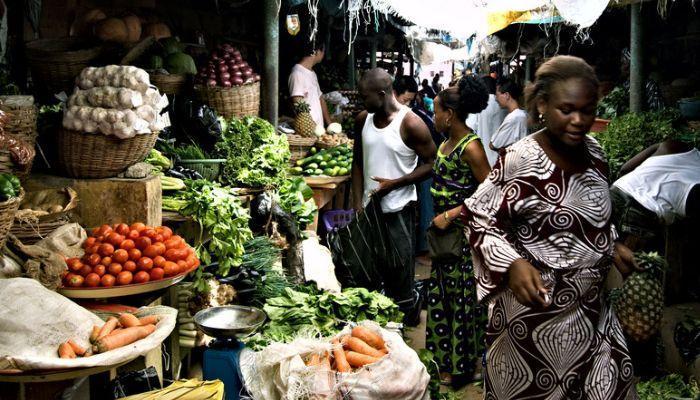
Lagos’ crowded food markets remain the beating heart of Nigeria’s urban economy. Trucks roll in each dawn, laden with fruit, grain, fish, and livestock from across the country, ensuring the city’s 20 million residents rarely face empty stalls. Yet, behind this appearance of abundance lies a deeper unease: the very traders sustaining Lagos’ food system are increasingly unsure of their right to stay where they work.
A new report by Nigeria-based research firm SBM Intelligence reveals that 81 per cent of Lagos traders have been directly affected by land disputes, the highest level of personal exposure recorded in any of the nine surveyed cities.
The findings from the report titled “The Price of a parcel: An analysis of land disputes and their impact on food security in Nigeria” paint a portrait of a metropolis where supply chains stand firm, but ground-level commerce is threatened by the absence of land security.
Unlike many agricultural regions where banditry or rural conflict routinely break supply links, Lagos’ vulnerabilities are structural and urban. The city posted a low supply chain disruption score of 1.38, with more than half of traders reporting they “rarely” experience delays or shortages due to land disputes. Just under five per cent said such disruptions occur “often”.
That limited impact owes much to Lagos’ status as Nigeria’s pre-eminent port and commercial hub. Its diversified logistics route, from Apapa’s sprawling docks to the network of regional highways feeding in staple goods, help buffer the city from shocks that cripple markets elsewhere.
But this stability conceals a deeper fragility. Asked about their confidence in retaining their trading spaces, a third of respondents said they were “not confident at all”, while nearly a quarter said they were “not very confident.” No respondent expressed strong confidence in their tenure security—the lowest result nationally, with an average land security score of 1.54.
For many Lagos traders, threats to tenure are not abstract. More than a third have been personally involved in a land dispute, often linked to contested ownership, market demolitions, or revoked allocations. Documentation of property rights in many of the city’s markets remains weak or outdated, leaving small traders vulnerable to eviction with little recourse.
“Today you have a shop, tomorrow you could be standing on rubble,” said one respondent quoted in the report.
The instability, according to analysts, discourages long-term investment in market infrastructure—limiting traders’ willingness to expand storage capacity, build permanent structures, or formalise their businesses.
The economic costs ripple outward. A trader uncertain of tenure is less likely to access credit, invest in refrigeration or inventory, or commit to partnerships that underpin efficient food distribution. Over time, that caution chips away at the resilience of Lagos’ informal food supply network.
At the same time, Lagos is absorbing traders fleeing insecurity in other states. Nearly 48 per cent of respondents said they have seen a significant influx of new market entrants displaced from other regions—a trend transforming Lagos into both refuge and pressure point.
With space scarce and rents rising, competition has intensified, straining relationships between market leaders, local authorities, and community landowners. As one market association official told SBM researchers, “Every day someone new arrives, and every day, someone else is forced out.”
Despite relatively higher confidence in government performance compared with other states, these efforts have yet to translate into stronger land tenure protections. Lagos scored 2.53 on authority effectiveness, with nearly half of respondents describing officials as “somewhat effective” or better.
“The visibility of interventions is not in question. What is lacking is sustained protection of occupancy rights for small-scale traders” the report concluded.
For now, Lagos’ role as Nigeria’s import and trade hub shields it from the immediate food shortages plaguing other regions. But the market system depends on continuity—relationships, trust, and predictable access to space. Repeated displacement of traders can fracture those networks, raising transaction costs and eroding the efficiency that keeps food flowing.
The danger, SBM analysts warn, is that a crisis of space could evolve into a crisis of supply. The traders on whom Lagos’ food economy depends may be pushed out faster than the system can sustain them. The Lagos state government may need to do more to sustain the commercial viability of the state, ensuring land security to support the commercial structure.