Stakeholders in Africa’s technology, finance and infrastructure sectors have warned that the continent risks remaining a supplier of raw inputs in the global artificial intelligence economy unless it urgently builds ownership across data, talent, compute infrastructure and financing systems.
- +Experts warn Africa risks becoming mere raw data supplier
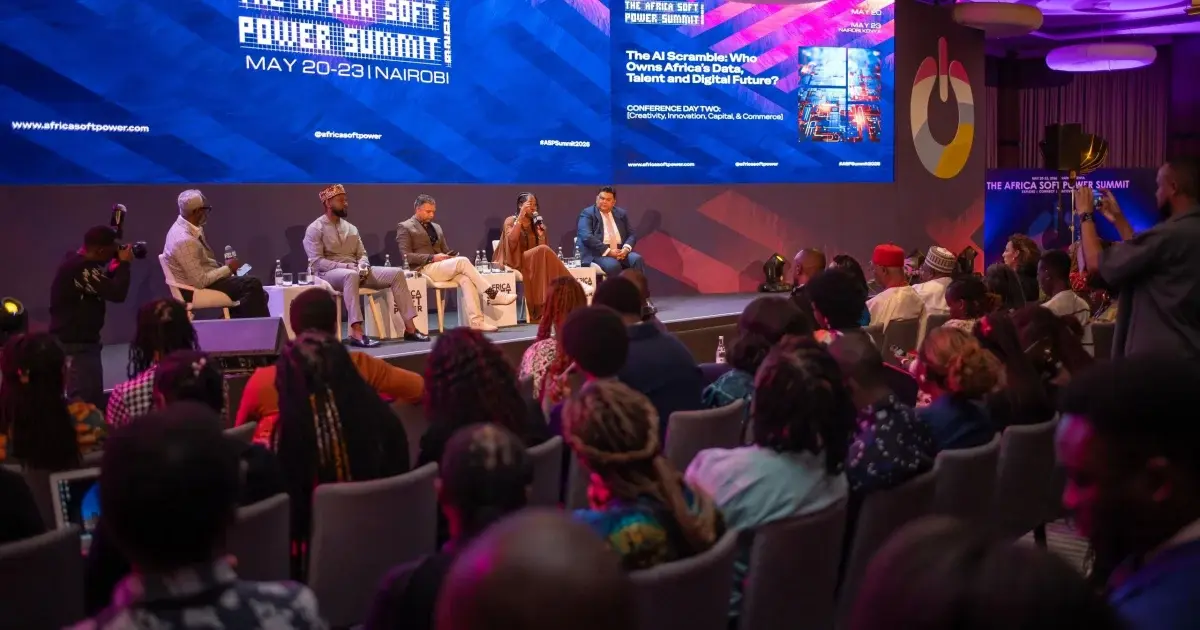
The warning was the central focus of a high-level session titled ‘The AI Scramble: Who Owns Africa’s Data, Talent and Digital Future?’ at the Africa Soft Power Summit 2026, held over the weekend.
The warning was the central focus of a high-level session titled ‘The AI Scramble: Who Owns Africa’s Data, Talent and Digital Future?’ at the Africa Soft Power Summit 2026, held over the weekend.
In a statement made available by the organisers on Monday, the session, held on the second day of the summit under the theme, Creativity, Innovation, Capital & Commerce, featured the Managing Director, Africa, Google, Alex Okosi; Chief Executive Officer of iXAfrica Data Centres, Snehar Shah.
Others were the founder and CEO of Amini, Kate Kallot; and the CEO and Head of Coverage, Corporate and Investment Banking, Standard Chartered Bank Kenya, Birju Sanghrajka.
The discussion was moderated by the Founder and CEO of Nairametrics, Ugodre Obi-Chukwu.
Speaking during the panel, Okosi said Africa could not afford to approach the AI era merely as a consumer of products developed and controlled outside the continent.
“If we miss this AI era in Africa, then I think that we are doomed.
“It is critical that Africa not only consumes AI, but participates in its underlying architecture. Unless AI recognises African languages, speech patterns and dialects, the technology will not be positioned to solve African problems,” he said.
He warned that the continent risked repeating patterns seen in the digital media era, where African creators drove global culture while ownership of distribution and monetisation platforms remained largely outside the continent.
“Power consolidates real quickly. Unless African operators are present at the foundational level, the economics of the AI era will accrue elsewhere,” he added.
In his remark, Kallot argued that Africa faced the danger of reproducing the extractive economic model that historically defined its role in global commodity markets, only this time with data replacing physical raw materials.
“What has long been described as raw material from Africa is now being mirrored in how the continent’s data is treated. The continent risks supplying the inputs without owning the system,” she said.
She identified data, compute infrastructure and talent as the three foundational pillars Africa must strengthen to secure meaningful participation in the AI economy.
Kallot further stressed the need for stronger local systems for data collection, governance and ownership, alongside sustained investment in infrastructure and education.
Without such systems, she noted, African data would continue to train models that the continent neither owns nor commercially benefits from at scale.
On the infrastructure side, Shah said Africa still accounted for only a small fraction of global digital infrastructure despite its large and youthful population.
He said, “The more pragmatic path involves selectively leveraging global technology while building genuine local capacity in the layers that determine data sovereignty, compute access and long-term value capture.
He, however, pointed to growing opportunities across renewable energy, technical talent and submarine cable connectivity as indicators that the continent could still position itself competitively.
Shah cited Kenya’s geothermal energy resources and iXAfrica’s data centre projects as examples of efforts to build the foundational infrastructure needed for Africa’s AI future.
Speaking on financing, Sanghrajka said banks and institutional investors would require clearer commercial models and stronger risk assessment frameworks before committing large-scale funding to AI ventures.
He stressed, “Financing Africa’s AI participation will require both bankable use cases and a clearer assessment framework on the part of financiers. Infrastructure assets such as data centres and power projects, he noted, are relatively familiar territory for banks because the underlying economics are well understood.
“AI products themselves, however, still require clearer demand signals, defined monetisation pathways and stronger risk frameworks before institutional capital can move at scale.”
Sanghrajka noted that the financing question runs in both directions, while acknowledging that banks would need to develop greater fluency in evaluating AI businesses, and African AI operators will need to present commercial models structured in ways that financiers can credibly assess, price, and support.
Other sessions held during the second conference day included From Remittances to Power: How the African Diaspora is Rewiring Global Influence; Soft Power & Capital: Who Shapes Africa’s Investment Agenda?; and Creators as Economic Power.
The discussions collectively reinforced the summit’s broader argument that Africa’s long-term growth would depend not only on its talent and cultural influence but on building systems capable of converting those assets into sustainable economic value.
The Africa Soft Power Summit 2026 was held under the theme, Africa’s Compound Interest: Aligning Ecosystems of Finance, Creativity and Human Capital for Growth.
The summit is organised by the Africa Soft Power Group, an umbrella platform comprising The Africa Soft Power Project, ASP Global and African Women on Board, with a mission to amplify African perspectives in global conversations across business, culture and policy.