Nigeria’s power sector at a crossroads: Why AI, market reforms and political will must power our industrial future
- +AI can transform Nigeria’s power sector
Few sectors have shaped Nigeria’s economic fortunes as profoundly as the electric power sector. Yet, few have also generated as much disappointment.
Few sectors have shaped Nigeria’s economic fortunes as profoundly as the electric power sector.
Having served as Executive Director (Finance & Accounts) of the Transmission Company of Nigeria (TCN) between 2013 and 2017, following my appointment by the federal government during the landmark power sector reforms, I had a front-row seat to the opportunities and constraints of Nigeria’s electricity market. Since leaving office, I have continued to write extensively, grant television interviews, and engage policymakers on practical solutions to the challenges confronting the sector. My articles, including The Solutions to Nigeria’s Electric Power Challenge (2019), Preventive Fire Outbreaks in the Transmission Company of Nigeria (2023), The Need to Concede or Privatise the Transmission Company of Nigeria (2023), and A Decade After Power Sector Privatisation: Lessons for Nigeria’s Electricity Market (2025), have consistently argued that Nigeria’s power crisis is fundamentally a governance, investment and technology challenge rather than merely an engineering problem.
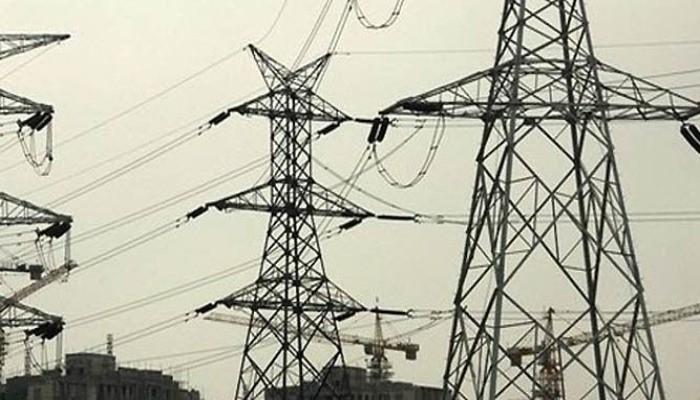
More than a decade after the privatisation of the Generation Companies (GenCos) and Distribution Companies (DisCos) in 2013, one critical component of the electricity value chain remains entirely under federal government control: the Transmission Company of Nigeria (TCN). This reality has significant implications for the efficiency and reliability of the Nigerian electricity supply industry.
The 2013 reforms were intended to create a competitive electricity market capable of attracting private investment, improving operational efficiency and delivering reliable electricity to consumers. While ownership of the GenCos and DisCos changed hands, the transmission network remained a government-owned monopoly. Today, TCN continues to serve as the sole transmission backbone linking electricity generators to distributors. Any weakness within this critical infrastructure reverberates across the entire electricity value chain.
The stark reality is sobering.
Nigeria, with a population exceeding 230 million people, struggles to deliver between approximately 5,000 and 6,000 megawatts of available electricity on many days. By comparison, South Africa, with roughly one-quarter of Nigeria’s population, has an installed generation capacity exceeding 50,000 MW, despite facing its own operational challenges in recent years. China and India have expanded their electricity systems dramatically over the past three decades, supporting rapid industrialisation, urbanisation and technological innovation. Reliable electricity has been one of the principal foundations of their economic transformation.
Electricity is no longer simply a social service. It is the fuel of modern economies.
Nigeria’s electricity challenges are multidimensional.
The first is inadequate investment. Transmission infrastructure has not expanded at the pace required to accommodate increased generation capacity. Transmission lines, substations and transformers require continuous upgrading and expansion.
The second is the persistent liquidity crisis across the Nigerian electricity supply industry. Cost-reflective tariffs remain politically difficult, leaving the sector underfunded. Revenue leakages cascade through the market, with DisCos struggling to recover costs, GenCos facing delayed payments, gas suppliers remaining unpaid, and TCN operating under financial constraints.
Third is ageing infrastructure. Significant portions of the national grid were designed decades ago and were never intended to support today’s population and level of electricity demand.
Fourth is vandalism and sabotage. The deliberate destruction of transmission towers and theft of conductors, transformer oil, cables and other strategic equipment have become economic crimes against the Nigerian people. Every act of vandalism delays industrial growth, discourages investment and imposes enormous replacement costs on taxpayers.
Fifth is corruption and entrenched vested interests. The electricity market cannot thrive where contractual obligations are ignored, procurement lacks transparency, or reform is subordinated to political patronage.
Finally, implementation has often been our weakest link. Nigeria has produced numerous excellent policy documents, but implementation has consistently lagged behind policy formulation.
The presidential power initiative must succeed.
The Presidential Power Initiative (PPI), launched in partnership with Siemens Energy, represents one of the most important opportunities to modernise Nigeria’s transmission and distribution infrastructure. If implemented with discipline, transparency and continuity, it can significantly improve grid reliability, reduce technical losses and increase transmission capacity.
However, no infrastructure programme succeeds without sustained political commitment, predictable funding and professional project execution.
AI can transform Nigeria’s power sector
As someone deeply involved in artificial intelligence research today, I believe AI offers Nigeria its greatest opportunity to leapfrog decades of underinvestment.
Artificial intelligence can modernise virtually every component of the electricity value chain.
Smart sensors can continuously monitor transmission equipment, detecting faults before they result in outages. Machine learning models can predict equipment failures weeks in advance. AI-powered digital twins can simulate grid performance before infrastructure investments are made. Computer vision can identify vegetation encroachment and monitor transmission corridors. Drones equipped with AI can inspect hundreds of kilometres of transmission lines far more efficiently than manual inspections.
AI can also optimise electricity dispatch, forecast demand with remarkable accuracy, improve maintenance scheduling, reduce technical losses and strengthen cybersecurity against increasingly sophisticated attacks.
The grid of the future will not merely transmit electricity; it will become an intelligent, self-monitoring and self-healing digital infrastructure.
There are lessons from other countries.
Several countries demonstrate that electricity transformation is possible.
India embarked upon extensive reforms involving generation expansion, competitive markets, transmission strengthening and nationwide electrification. Today, it has become one of the world’s largest electricity producers.
China invested massively in ultra-high-voltage transmission networks, integrating generation from distant regions while supporting rapid industrial growth.
Turkey liberalised significant portions of its electricity market, encouraged private investment and dramatically improved supply reliability.