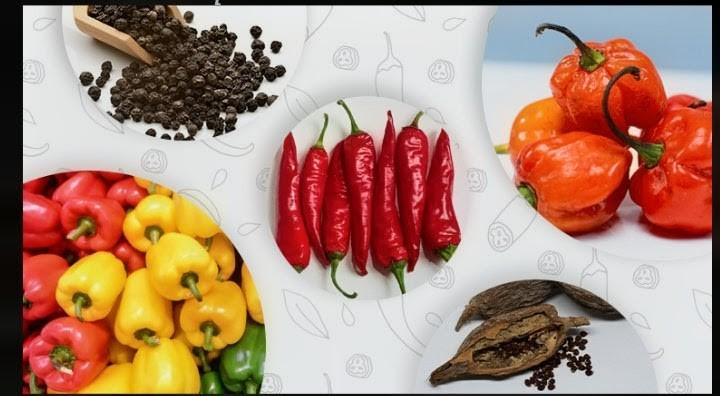
Pepper is one of the foundations of Nigerian cooking. Almost every savoury dish relies on it in some form. But not every pepper works the same way. Some deliver heat quickly and disappear. Others bring flavour before the heat arrives. A few add colour more than spice.
- +5 peppers that shape the taste of Nigerian cooking
Choosing the right pepper can change how a meal tastes.
Choosing the right pepper can change how a meal tastes. It can deepen a stew, brighten a soup or give grilled food the sharp finish it needs. Understanding which pepper suits which dish is part of what shapes the character of Nigerian food.
Here are some of the peppers most commonly used in Nigerian kitchens and the meals they suit best.
Tatashe is a bell pepper, but not quite the perfectly shaped specimen you see in supermarkets. The Nigerian market variety tends to be longer in length and thinner in width than the typical imported bell pepper, and is spicier with a more teeming flavour. On the Scoville scale, Tatashe scores 0 units which means it brings essentially no heat to a pot. What it brings instead is volume, natural sweetness, and the deep rust-red colour that defines Nigerian stew and jollof rice. With it, you get body. Blend it in generous quantities with your tomatoes and atarodo, fry it low and slow, and you get that characteristic thick, deep-red stew base. It is important in stew, and ofada sauce, and was historically the only bell pepper variety widely available in Nigerian markets.
Known as Atarodo in Yoruba and Ose Oyinbo in Igbo, the Scotch bonnet is one of the most widely used peppers in Nigerian cooking. It is closely related to the habanero, and the two are often used interchangeably because they share a similar level of heat, typically ranging between 100,000 and 350,000 Scoville heat units. Both peppers are small and brightly coloured, usually appearing in shades of red, yellow, orange, or green. Despite their cheerful appearance, they pack a serious punch. However, beyond the heat, Scotch bonnets are also known for their distinct fruity flavour, which adds depth to many traditional dishes. Because of this combination of heat and subtle sweetness, these peppers play a key role in building the flavour base of many Nigerian soups, stews, and sauces. Whether blended into pepper mixes or added whole during cooking, Scotch bonnet or habanero peppers are commonly used in dishes such as egusi, banga soup, ofe onugbu, and pepper soup, helping to create the bold, layered flavours that define Nigerian cuisine.
Long, slender, and moderately hot, Shombo, also called Bawa or Ata Ijosi in Nigeria, is a staple in many kitchens. With a Scoville heat rating of around 25,000 to 50,000 SHU, it delivers noticeable spice without overwhelming a dish, making it incredibly versatile. Shombo has a smoky, earthy aroma and a straightforward heat that blends beautifully with other ingredients. In Nigerian cooking, it is often combined with tatashe (red bell pepper) and tomatoes to make rich stews, or used to season meats and fish, giving them depth and warmth. Its mild-to-moderate heat allows it to shine as a primary pepper in dishes, offering spice without the intense fruity punch of ata rodo (Scotch bonnet). When dried and ground, shombo becomes a key component of yaji, the spice mix used for suya. Its steady, lingering heat provides the signature warmth and subtle smokiness that makes suya so addictive.
This one deserves more attention than it usually gets outside of Eastern Nigeria. Ose Nsukka is the only yellow pepper in tropical Africa, growing in the Nsukka area of Enugu State. It is aromatic in a way that atarodo simply is not — bright, almost floral, with a heat that is notable but not punishing. Many believe the species can only grow on Nsukka soil, which is why it attracts buyers from across the country and internationally. Its uses are specific and intentional. Ose Nsukka is popularly used in Igbo native soups like ofe oha, ofe onugbu, ofe Owerri, and ofe akwu, as well as in ugba, and achicha. It also excels in okro soup, where its aroma carries through the grated okro base in a way dried pepper cannot replicate. It is a seasonal pepper, commonly found in the rainy season from April through to September, so buy it when you see it. Dried and ground, it becomes what the market sells as Cameroon pepper — smoke and air dried, delivering exceptional heat and a slightly woody, aromatic flavour used in sauces, pepper soup, and for marinating meat.
Uziza is not a Capsicum pepper at all, but any article about Nigerian pepper that leaves it out is incomplete. West African black pepper, or Piper guineense, is used widely in Eastern Nigeria. Its spiciness comes from the alkaloid piperine, not capsaicin, and it has a peppery scent with a woody, clove-like flavour. It adds depth and a specific aromatic bitterness that no other spice replicates. You will find uziza seeds in ofe akwu, pepper soup, and certain varieties of ofe onugbu. The leaves are used separately as a vegetable. Both are available dried in most markets, often sold alongside ehuru and ogiri as part of the native soup spice bundle. A little goes a long way, it is a supporting actor, not a lead, but its absence in the right dish is immediately felt.