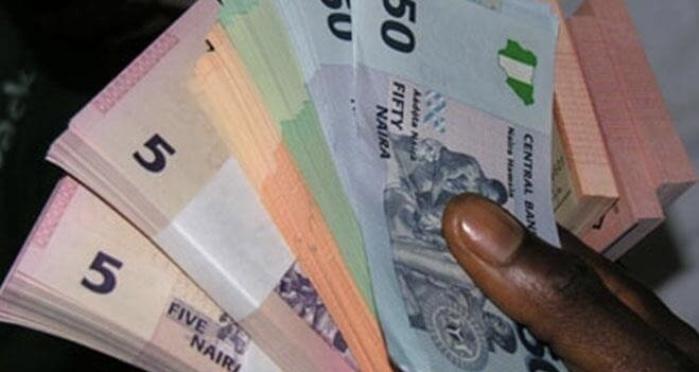
There has been no proclamation by the Central Bank of Nigeria, no parliamentary debate, and no introduction of a new monetary unit. Across markets, transport routes and neighbourhood shops, the naira has effectively undergone a silent redenomination. The smallest denominations (N5, N10, N20 and N50) have largely disappeared from everyday transactions, pushed out not by law but by inflation and behaviour.
- +Nigeria’s silent currency redenomination
Walk through busy commercial centres such as Balogun Market or Agege Market in Lagos or smaller neighbourhood markets across states and attempt to pay with a N10 note.
Walk through busy commercial centres such as Balogun Market or Agege Market in Lagos or smaller neighbourhood markets across states and attempt to pay with a N10 note. Legally, it remains valid currency, but practically, it has become irrelevant. In effect, the economy has quietly recalibrated the unit of money upward.
“Small denominations have simply lost their usefulness. A N10 note that once purchased a loaf of bread or paid part of a transport fare now buys virtually nothing. Even N50, which once carried modest value, struggles to buy the cheapest items in most markets.”
This phenomenon reflects a deeper economic problem many Nigerians have long complained about but which policymakers are often reluctant to admit: that inflation has fundamentally eroded the purchasing power of the naira.
According to inflation statistics by the National Bureau of Statistics, Nigeria has endured persistent double-digit inflation for much of the past decade. Prices accelerated sharply in recent years, frequently rising above 20 percent yearly. For households whose wages have not kept pace, the impact has been devastating.
Small denominations have simply lost their usefulness. A N10 note that once purchased a loaf of bread or paid part of a transport fare now buys virtually nothing. Even N50, which once carried modest value, struggles to buy the cheapest items in most markets.
Economists describe this process as behavioural redenomination. Unlike formal redenomination, behavioural redenomination occurs when inflation gradually shifts the functional value of money. The currency technically remains unchanged, but people begin to think and transact in larger units.
Evidence of this shift is everywhere. Street traders routinely round prices to the nearest hundred naira. Transport fares that once involved small change are now set in larger blocks, N200, N500, or N1,000, depending on the route. Even minor purchases like snacks, water or airtime are now priced in multiples of N100.
Digital payments have accelerated the transition. Mobile transfers and e-payments eliminate the need for physical change, allowing prices to be rounded up without friction. What inflation started, digital finance has quietly completed.
The problem goes beyond inconvenience. Money performs three critical economic functions – it serves as a medium of exchange, a store of value and a unit of account. When smaller denominations disappear from daily transactions, the latter two functions begin to weaken.
First, the disappearance of small notes distorts price perception. When all prices start in the hundreds or thousands of naira, the psychological threshold for spending shifts. A N10,000 purchase may feel routine today in ways that would have seemed extravagant a decade ago.
Second, rounding practices can quietly accelerate inflation itself. If traders routinely round prices upward because small denominations are unavailable, the cumulative effect across thousands of transactions pushes overall price levels higher.
Third, the burden of these adjustments falls disproportionately on low-income households. For wealthier Nigerians who transact digitally or purchase goods in larger volumes, rounding may seem trivial. But for poorer citizens who rely on micro-transactions (daily food purchases, transport fares or small retail items), even small price increases matter.
This widening gap between official statistics and lived reality fuels public distrust of economic policy. While inflation data may show gradual moderation, ordinary Nigerians often feel that prices are rising much faster than the numbers suggest.
Other nations that experienced prolonged inflation eventually addressed this issue through formal currency redenomination. The most cited examples are Turkey and Brazil.
Turkey removed six zeros from its currency in 2005 after decades of high inflation. The reform introduced the ‘new Turkish lira’, simplifying pricing and restoring the usefulness of smaller denominations. Importantly, the redenomination occurred only after inflation had been brought under control.
Brazil’s experience was even more dramatic. After years of hyperinflation in the early 1990s, the government introduced the Real Plan of 1994, accompanied by sweeping fiscal and monetary reforms. The currency reform helped restore public confidence and stabilise prices.
Nigeria’s situation is less extreme but still troubling. The nation is not facing hyperinflation, but nearly a decade of persistent inflation has steadily eroded purchasing power and weakened confidence in the naira.
For policymakers, formally redenominating the currency is politically sensitive. It can be interpreted as an admission that inflation has severely damaged the currency. It also involves logistical challenges, printing new notes, recalibrating accounting systems and adjusting contracts.
But ignoring the issue does not solve the underlying problem.
The real challenge lies in restoring price stability. Inflation in Nigeria is driven by a combination of structural factors: currency depreciation, high transportation costs, insecurity affecting food production, energy price shocks and persistent fiscal deficits.
Addressing these pressures requires coordinated economic policy. Monetary tightening alone, through interest rate increases by the CBN, cannot resolve supply-side constraints in agriculture, logistics and energy.
The ideal situation would involve a comprehensive strategy to stabilise the naira and reduce inflation sustainably. Fiscal discipline, improved domestic production, stable exchange rate management and investment in infrastructure would help reduce the structural cost pressures driving price increases.