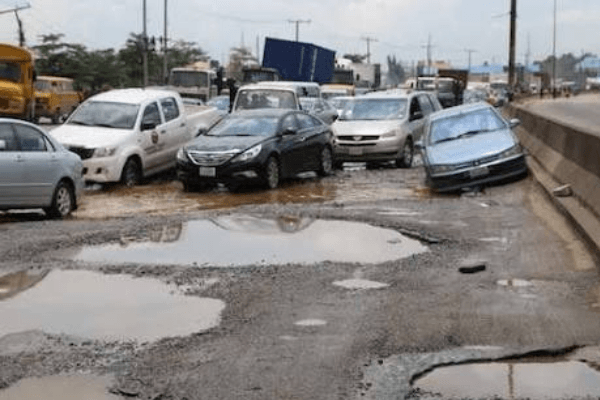
Business owners across Northern Nigeria are grappling with severe setbacks as deteriorating highways continue to cripple the movement of goods and services along major commercial routes linking the North Central, North East and North West regions.
- +Poor road network piles losses for businesses across Northern Nigeria
From Akwanga in Nasarawa State to Jos in Plateau State, transporters now describe the journey as a “nightmare” due to failed road portions, deep potholes and frequent gridlock.
From Akwanga in Nasarawa State to Jos in Plateau State, transporters now describe the journey as a “nightmare” due to failed road portions, deep potholes and frequent gridlock.
The same situation plays out along the Jos–Bauchi–Gombe corridor, a vital economic route connecting the North Central states of Plateau and Nasarawa with the North Eastern states of Bauchi, Gombe, Adamawa and Taraba.
Beyond connecting the North Central to the North East, the Akwanga–Jos highway also serves as a key route linking Plateau State to Kaduna in the North West. From Jos, transporters move goods through Kaduna to other North Western states such as Kano, Katsina and Sokoto, making the corridor an important trade channel for the movement of agricultural produce, livestock and manufactured goods across northern Nigeria.
Traders say the poor state of these roads has inflated transport fares, delayed deliveries and increased operational risks for businesses already battling economic pressures.
Ibrahim Musa, a truck driver who conveys grains from Bauchi to Jos, said the Akwanga–Jos road has become unbearable.
“From Akwanga to Jos is a nightmare. What should be a few hours’ journey takes the whole night because of bad portions and heavy trucks struggling to pass,” Musa said.
“We spend more on repairs than we save. Tyres burst regularly and sometimes we sleep on the road waiting for mechanics. It is affecting our income seriously,” he added.
Another truck driver, Daniel Yakubu, who transports goods from Jos to Gombe and onward to Adamawa, echoed similar frustrations.
“For the past years, travelling to Gombe is a nightmare. We avoid certain sections at night because of breakdowns and accidents,” Yakubu said.
“When the road is bad, transport cost increases. When transport cost increases, goods become expensive in the market. Everybody feels the impact,” he lamented.
Business owners say the consequences have been devastating for commerce across the region.
Grace Danjuma, a foodstuff trader in Jos who sources beans and maize from Bauchi and Gombe, said her profit margin has shrunk drastically.
“Transporters have increased their charges because of the bad roads. Sometimes my goods arrive late or damaged and customers refuse to buy,” Danjuma said.
“I have reduced the volume of goods I bring in because the risk is too high. These roads are affecting small businesses like ours,” she added.
In Bauchi, Musa Adamu, a building materials dealer said delays in supply have slowed construction activities.
“When trucks are trapped for hours on the road, it affects delivery schedules. Customers get frustrated and sometimes cancel orders,” Adamu told BusinessDay in Jos.
“The Jos–Bauchi corridor links the North Central to several North Eastern states. When that road becomes impassable, it disrupts trade far beyond just one state,” he stressed.
Amid the growing concerns, the Federal Government recently announced the award of a multi-billion naira contract for the construction of a 420-kilometre dual carriageway from Akwanga in Nasarawa State through Plateau and Bauchi states to Gombe, aimed at improving connectivity between the North Central and North East regions.
The disclosure was made by Mohammed Ahmed Abdullahi, director of Information at the Federal Ministry of Works, during an inspection of the ongoing rehabilitation of a section of the Bauchi–Gombe Federal Highway.
“What we are doing is the stationisation project carried out by the government to gauge the pulse of Nigerians as far as what government is doing in the provision of road infrastructure,” he said.
“As you are aware, the enhancement of infrastructure and transportation as an engine of growth is one of the eight priority areas of the strategic agenda of His Excellency, President Bola Ahmed Tinubu’s administration.”
He explained that the Bauchi–Gombe road rehabilitation project covers 35.4 kilometres, with substantial progress already recorded.
“So far, we have completed about 21.8 kilometres up to the binder course and we are approaching the final stage of wearing course on about 11 kilometres,” he said.
“If you remember, this road was a nightmare for travellers heading to Gombe about two years ago,” he added, noting that accidents have reduced significantly following the rehabilitation work.
If fully rehabilitated, the Akwanga–Jos–Bauchi–Gombe corridor could become a critical economic lifeline for Northern Nigeria, significantly improving the movement of goods and services across the North Central, North East and North West regions. Reduced travel time, lower vehicle maintenance costs and fewer delays would ease the burden on transporters and traders, enabling faster delivery of agricultural produce, livestock and manufactured goods.
This would not only stabilise supply chains but also help moderate rising prices of goods in markets across the region.
Beyond immediate business relief, a functional road network would stimulate broader economic growth by attracting investment, boosting inter-state trade and enhancing regional integration. Small and medium-scale enterprises would regain confidence to expand operations, while farmers and producers would have better access to markets, reducing post-harvest losses.
Ultimately, fixing the road would transform a major bottleneck into a driver of commerce, improving livelihoods and strengthening economic resilience across Northern Nigeria.