Airtel Kenya is seeking regulatory approval to launch a SpaceX-powered mobile service that would allow customers to remain connected even in areas without traditional cell towers, marking a significant shift in how mobile operators extend network coverage across Africa.
- +Airtel seeks Kenya approval for SpaceX-powered mobile service
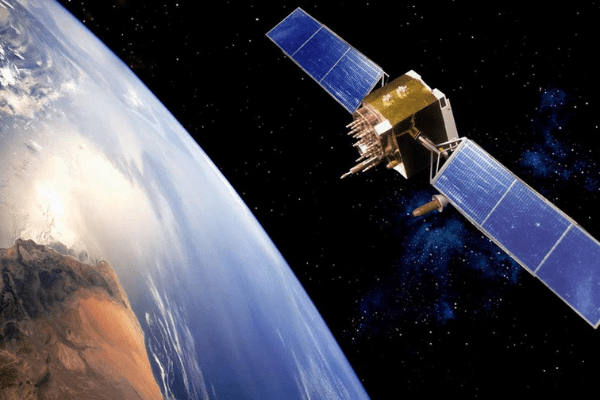
The proposed Direct-to-Cell (DTC) service, which has already completed a successful pilot, will enable compatible smartphones to connect directly to SpaceX’s low-Earth orbit satellites whenever users move beyond the reach of Airtel’s terrestrial network.
The proposed Direct-to-Cell (DTC) service, which has already completed a successful pilot, will enable compatible smartphones to connect directly to SpaceX’s low-Earth orbit satellites whenever users move beyond the reach of Airtel’s terrestrial network. If approved by the Communications Authority of Kenya, Airtel would become the country’s first operator to offer direct satellite-to-phone connectivity.
The development signals the beginning of a new era in mobile communications, where satellites complement, rather than replace, conventional telecom infrastructure. It also positions Airtel at the forefront of a global race among operators to eliminate network blind spots without the enormous capital costs of building additional cell towers.
“We have already carried out a very successful pilot. As soon as we get approval from the regulator, we will be able to offer this product to Kenyans,” Airtel Kenya managing director DJibril Tobe said.
Unlike conventional satellite services that require dedicated handsets, Airtel’s solution works with compatible 4G and 5G smartphones. Subscribers will not need to purchase additional equipment or switch SIM cards, and the company says customers will not pay extra to use the satellite connection.
“The moment you leave the traditional Airtel network, you will be connected through the SpaceX satellite network while still seeing Airtel on your phone,” Tobe said.
The technology effectively transforms SpaceX satellites into mobile base stations in space, allowing ordinary smartphones to connect directly whenever terrestrial coverage disappears. Customers travelling through remote counties, border communities or sparsely populated regions would be able to continue making calls, sending messages and accessing mobile data with minimal disruption.
The move reflects a growing recognition across the telecom industry that building conventional infrastructure alone may no longer be enough to achieve universal mobile coverage. In many rural parts of Africa, operators face weak commercial returns from constructing towers because of low population density, challenging terrain and high energy costs.
For Airtel, the initiative also represents a competitive play in Kenya’s telecom market, where network quality has become an increasingly important differentiator. Instead of relying solely on additional towers, the operator is betting that satellite integration can deliver broader coverage faster and at lower cost.
The satellite service forms part of Airtel Kenya’s broader investment programme, which includes expanding fibre infrastructure, improving indoor mobile coverage in dense urban areas and building a large data centre at Tatu City to strengthen cloud and enterprise services.
Industry analysts say the commercial significance extends beyond Kenya.
A successful rollout would provide Airtel Africa with a working model that could be replicated across its operations in 14 African countries, including Nigeria, where the operator has already signalled plans to introduce direct satellite-to-phone connectivity as part of its long-term network expansion strategy.
Nigeria presents one of the continent’s strongest cases for the technology. Despite years of investment in fibre networks and thousands of mobile base stations, significant portions of the country remain underserved because the economics of tower deployment in remote communities remain challenging.
Satellite-backed mobile coverage could help operators extend services into those locations without the heavy capital expenditure associated with building and maintaining terrestrial infrastructure.
The race to integrate satellite technology into mainstream mobile networks is gathering pace globally as telecom operators increasingly partner with satellite providers to improve resilience and eliminate coverage gaps. Rather than competing with terrestrial networks, direct-to-cell technology is emerging as an extension of existing infrastructure, ensuring customers remain connected wherever mobile towers cannot economically reach.
If Kenya’s regulator grants approval, Airtel would secure a first-mover advantage in one of the telecommunications industry’s most closely watched innovations, one that could redefine network expansion strategies across Africa and accelerate the continent’s push toward universal digital connectivity.