Ultimate Health Management Services is seeking deeper collaboration with corporate leaders and governance institutions to expand access to affordable health insurance across Nigeria’s largely uninsured informal sector, as part of a renewed push to reduce the country’s heavy reliance on out-of-pocket healthcare spending.
- +Ultimate Health pushes affordable insurance for informal workers
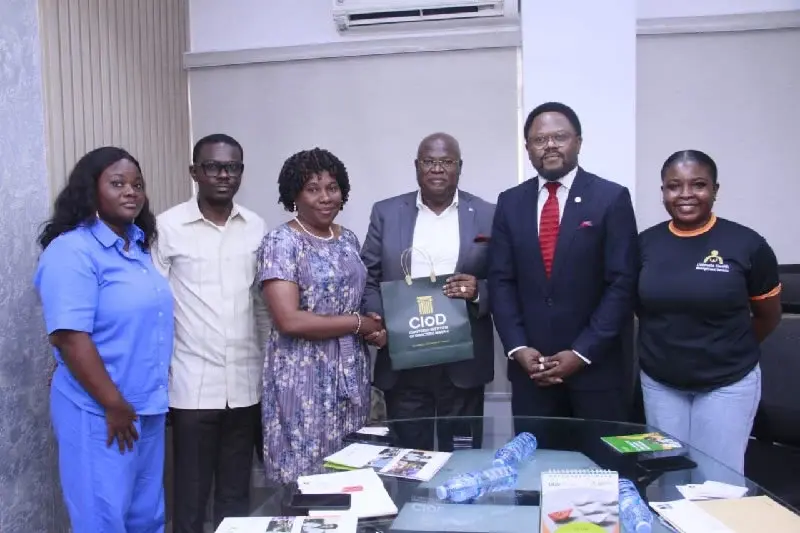
The initiative was highlighted on Thursday in Lagos when a delegation from the Chartered Institute of Directors Nigeria, led by Assistant Director Adekemi Parker, visited the health maintenance organisation for discussions on partnership opportunities aimed at strengthening health insurance penetration and improving governance standards in the sector.
The initiative was highlighted on Thursday in Lagos when a delegation from the Chartered Institute of Directors Nigeria, led by Assistant Director Adekemi Parker, visited the health maintenance organisation for discussions on partnership opportunities aimed at strengthening health insurance penetration and improving governance standards in the sector.
At the centre of the engagement was Ultimate Health’s drive to scale up enrolment into its newly introduced benefit package. The scheme is designed to provide affordable medical coverage for Nigerians in the informal economy, including artisans, traders, transport operators, ICT clusters and small business owners.
The Managing Director of Ultimate Health Management Services, Lekan Ewenla, said the programme targets groups that make up the bulk of Nigeria’s workforce but remain outside formal employment-based health insurance structures.
According to him, the plan costs N38,000 per person annually and has been structured to align with existing service frameworks already familiar to healthcare providers under Nigeria’s health insurance system.
“We are creating a dedicated platform for the informal sector because they represent the majority of the population and are often excluded from structured healthcare financing systems,” Ewenla said.
He explained that while many informal sector operators are economically active, they are disproportionately exposed to financial hardship during medical emergencies due to limited insurance coverage and reliance on direct payments at the point of care.
Meanwhile, official data shows that the number of Nigerians with health insurance increased from 19.2 million in 2024 to 21.7 million in 2025, representing about 13 per cent of the national population. This is according to the 2025 State of Health of the Nation Report, which highlights gradual progress in expanding health coverage across the country.
The report, produced by the Federal Ministry of Health and Social Welfare in line with the National Health Act of 2014, provides a comprehensive assessment of Nigeria’s health sector performance under the Nigeria Health Sector Renewal Investment Initiative and the Sector-Wide Approach framework, both designed to coordinate health investments and reform efforts across federal and state levels.
Ewenla added that low health insurance uptake in Nigeria is driven not only by affordability concerns but also by weak awareness and information gaps, which prevent many Nigerians from understanding available coverage options.
“Lack of adequate information is a major challenge. That is why we continue to engage the media and seek institutional partnerships. If people do not know what is available, they cannot access it,” he said.
He said Ultimate Health is currently intensifying sensitisation campaigns among organised informal sector groups and is recording increasing acceptance of its insurance offerings.
The executive noted that partnerships with corporate institutions such as CIoD are critical to expanding outreach, given their access to networks of business leaders and organised associations across the country.
“We are engaging with associations that represent large populations of Nigerians, including artisans, transport operators and other clusters. The goal is to scale awareness and drive enrolment through trusted networks,” he said.
Ewenla also raised concerns about delayed healthcare access among Nigerians, noting that many patients seek medical attention only when conditions become severe, often resulting in emergency cases that are financially and clinically more difficult to manage.
He cited instances where patients are brought into hospitals in critical condition without clear identification of caregivers, reflecting broader challenges linked to affordability and preparedness for healthcare costs.
According to him, stronger insurance coverage would reduce such occurrences by ensuring that individuals can access timely care without fear of immediate financial burden.
Ewenla further linked health insurance penetration to broader national development, noting that countries with strong mandatory insurance systems are able to sustain better-funded healthcare systems and retain medical professionals.
“In countries where health insurance is well established, the system generates the financial depth needed to support healthcare delivery. Nigeria can achieve the same with sustained collaboration and commitment,” he said.
He added that Ultimate Health’s strategy is anchored on awareness creation, stakeholder collaboration and innovative product design aimed at closing the gap between insured and uninsured populations.
“We believe that a healthy nation is a wealthy nation, and we are committed to driving that change,” he said.
On its part, the Chartered Institute of Directors said the visit formed part of its strategic focus on implementation, collaboration and execution across key sectors of the economy.
Parker said the institute is working to extend corporate governance principles beyond private organisations into critical public-facing sectors such as healthcare, where service delivery standards directly impact citizens’ wellbeing.
She described Ultimate Health as a key stakeholder within the institute’s health sector group, noting that the engagement provided an opportunity to deepen collaboration on governance frameworks and service improvement.
“One of our priorities is to strengthen collaboration with institutions driving innovation in key sectors. Healthcare is central to this, and today’s engagement reflects that objective,” she said.
She added that discussions also focused on promoting adherence to governance codes and professional standards within Nigeria’s health insurance industry, with the aim of improving accountability and service quality.
According to her, the collaboration will support efforts to establish minimum expectations for healthcare delivery and strengthen trust in health insurance systems across the country.