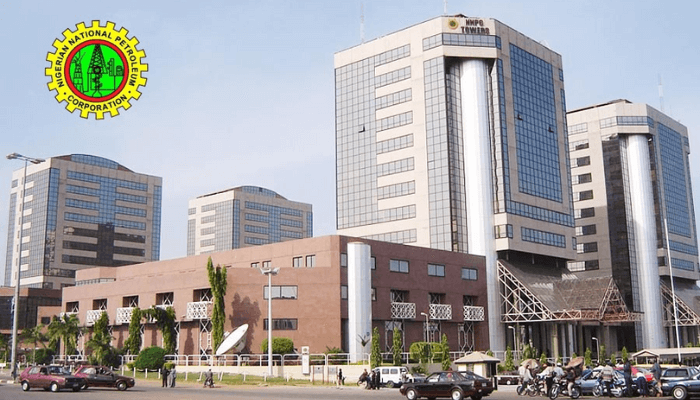
In the Biblical story of Esau and Jacob, Esau surrendered his birthright for a mere plate of porridge. It was a tragic exchange of destiny for temporary satisfaction. Today, Nigeria appears to be replaying a similar tragedy in its oil sector. For decades, the nation entrusted its economic birthright (its vast petroleum wealth) to the Nigerian National Petroleum Company (NNPC) Limited, only to watch the institution become a symbol of inefficiency, waste, opacity, and broken promises.
- +Esau’s porridge and NNPC’s burden on Nigeria
Now, in a remarkable twist, the same institution whose refineries have consumed billions of dollars without meaningful productivity is crying ‘monopoly’ against a privately owned Dangote Petroleum Refinery, a refinery that is not only operational but already supplying a substantial portion for Nigerians.
Now, in a remarkable twist, the same institution whose refineries have consumed billions of dollars without meaningful productivity is crying ‘monopoly’ against a privately owned Dangote Petroleum Refinery, a refinery that is not only operational but already supplying a substantial portion for Nigerians.
The question Nigerians must ask is simple. Who truly represents monopoly and inefficiency in the downstream sector, the state-owned corporation that failed to refine fuel for decades despite endless public funding, or a private investor who risked capital to solve a national problem the government could not solve?
For years, Nigeria endured the embarrassment of being Africa’s largest crude oil producer while importing refined petroleum products. Successive governments poured staggering sums into the rehabilitation of the Port Harcourt, Warri, and Kaduna refineries. Yet these facilities remained little more than monuments to administrative waste and corruption.
So far, over $1.5 billion was approved for the rehabilitation of the Port Harcourt refinery. Warri received nearly $900 million, while Kaduna attracted over $700 million in planned rehabilitation funding. In total, over $3 billion in public resources have either been spent or committed to reviving facilities that continue to underperform or remain idle. Yet Nigerians still queue for fuel, pay exorbitant prices, and endure economic hardship tied to energy instability.
If this were a private company operating in a competitive economy, shareholders would have long demanded liquidation, restructuring, or outright sale. But because it is government-owned, inefficiency has been normalised and repeatedly rewarded with more public funds.
NNPC’s failures have weakened Nigeria’s industrial growth, worsened inflation, depleted foreign exchange reserves through fuel imports, and entrenched a culture of dependency. For decades, trillions of naira that could have gone into education, healthcare, infrastructure, and power supply disappeared into endless refinery turnaround maintenance projects that produced little or nothing in return.
Yet instead of accepting responsibility, the corporation now argues in court that allowing Dangote Refinery greater market influence could create monopoly risks, in arguments that ring hollow.
A monopoly exists when competition is suppressed by artificial barriers, state protection, or regulatory manipulation. The Dangote Refinery did not inherit functioning assets from the government. It was built through private risk, private capital, and industrial vision. The refinery emerged because the state failed repeatedly to do its job. Punishing efficiency to protect inefficiency is the very opposite of economic reform.
Indeed, Nigeria should be asking a more difficult question. Why should taxpayers continue funding institutions that consistently fail?
This is where the case for scrapping or fully privatising NNPC Limited becomes compelling. Around the world, nations that succeeded in energy management reduced excessive state control and opened the sector to competitive private investment. Nations like India, Brazil, and even Saudi Arabia restructured their national oil entities to become commercially driven and accountable. In many advanced economies, governments regulate the sector but do not directly dominate refining and distribution operations with inefficient bureaucracies.
Nigeria, however, remains trapped in an outdated model where political patronage often overrides competence and profitability.
The private sector is naturally driven by efficiency, innovation, accountability, and profit sustainability. Unlike government agencies, private firms cannot endlessly survive on public bailouts. Investors demand results, as markets punish waste. That discipline is what Nigeria’s refining sector desperately needs.
Allowing greater private participation would likely improve refining capacity, stabilise fuel supply, create jobs, attract foreign investment, and reduce corruption associated with outdated subsidy and import regimes. Competition among private refiners would ultimately protect consumers more effectively than a state monopoly disguised as public interest.
Dangote Refinery’s emergence has already reduced pressure on foreign exchange demand linked to fuel importation. Local refining conserves scarce dollars, strengthens the naira, and improves energy security. If additional private investors are encouraged rather than frustrated, Nigeria could eventually become a net exporter of refined petroleum products across West Africa.
The benefits to manufacturing, transportation, agriculture, and electricity generation would be enormous.
However, privatisation or scrapping the NNPC must not simply transfer public assets into the hands of politically connected individuals. Nigeria has suffered before from flawed privatisation exercises where state assets were sold cheaply to cronies without improving service delivery. Any restructuring must therefore be transparent, competitive, and guided by strong regulatory institutions. The government’s role should shift from being an operator to a regulator.
The ideal situation for Nigeria is not replacing one monopoly with another. Rather, it is building a competitive downstream sector where multiple private refiners operate under fair rules, transparent pricing mechanisms, and effective consumer protection. In such a system, efficiency thrives, innovation expands, and consumers benefit from price stability and reliable supply.
Equally important is institutional accountability. Those responsible for wasting billions on failed refinery rehabilitation projects should not simply walk away without scrutiny. Nigerians deserve answers regarding how vast public resources produced so little value.
The Biblical Esau lost his birthright because he lacked foresight and discipline. Nigeria must avoid repeating the same mistake by continuing to sacrifice its economic future to institutions that have repeatedly failed the nation.
The time has come to accept a difficult truth that sentiment cannot replace performance. If the NNPC cannot refine efficiently, compete fairly, or justify its enormous public cost, then Nigeria must courageously embrace reform.