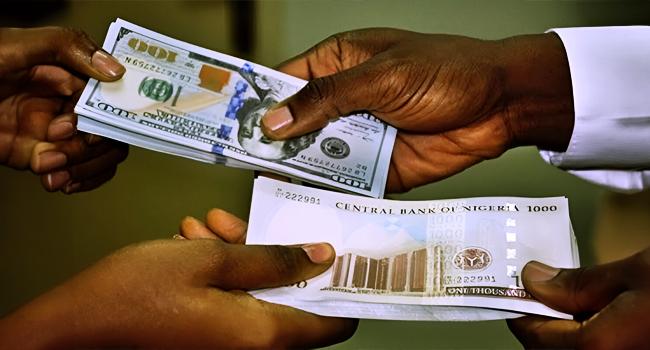
The Nigerian foreign exchange market is seeing a unique combination of very defensive macroeconomic structures and technical behavior, with USD/NGN trading within a 20-pip range.
- +Naira grips US Dollar at N1375/$ in Nigerian foreign exchange market
Latest price action at the Nigerian foreign exchange market showed the Naira strengthened to N1375/$.
Latest price action at the Nigerian foreign exchange market showed the Naira strengthened to N1375/$.
From a technical standpoint, the Nigerian currency must contend with automated supply interventions, localized commercial bank selling, and a crucial psychological and technical boundary toward the N1,350/$ level.
Long upper wicks signify aggressive dollar exhaustion, and price action regularly stalls here.
The key fundamental driver for the Naira currently is a shift from aggressive tightening to a hard, data-driven “hold” stance by the CBN.
The CBN voted at the 305th MPC meeting to keep the benchmark Monetary Policy Rate (MPR) at 26.5%.
Headline inflation rose slightly in April for two consecutive months after an early disinflation period, increasing to 15.69% (April), mainly due to global energy shocks and supply chain spillovers from Middle East tensions, compelling the MPC to hold off on further rate cuts to maintain anchored inflation expectations.
Strong external reserves, which increased to about $49 billion, provide the Nigerian Naira with a solid foundation. This provides almost nine months’ worth of import coverage, giving the CBN ample power to protect the currency window and reduce speculative volatility.
The Cash Reserve Ratio (CRR) is restricted to 45% to tighten naira liquidity. Excess Naira that could be used to speculate against the dollar is directly choked off by keeping this much liquidity locked out of the financial system.
The US Dollar Index, which gauges the US dollar strength against six major currencies, surged after recording slight losses the day before. It last traded at 99.1 during the London session.
The Greenback gains on growing demand for safe havens as the US-Iran peace deal remains uncertain.
Tensions erupted following a Fox News report that US forces carried out self-defense strikes in southern Iran on Monday. A spokesman for the US Central Command claimed that the attacks were directed at Iranian vessels trying to plant mines and missile launch sites.
The US military insisted that it was still exercising restraint during the ceasefire, despite emphasizing its dedication to safeguarding its forces.
Negotiations to resolve the conflict and reopen the Strait of Hormuz are “proceeding nicely,” according to US President Donald Trump.
Markets are once again betting that the US and Iran are getting closer to one, despite Tehran’s denial that a peace agreement is imminent. While some social media platforms promote the typical “fake news” from the MSM, others assert that Iran is asking China for help in removing its highly enriched uranium from its territory. The sharp decline in crude oil prices is undoubtedly encouraging.
But until the US, Iran, and Israel formally declare the conflict over, we’ve seen enough false starts. Markets continue to regard these headlines as optimistic rumors because no such confirmation has yet been received.
Iran is thought to be willing, at least initially, to support a major opening of the Strait of Hormuz, through which more than 20 percent of the world’s oil trade passes, even though there are still unfulfilled demands, such as the release of billions of dollars in frozen funds held in foreign banks.
Oil prices have experienced significant corrections because of this event. A portion of the uncertainty surrounding global inflation and the geopolitical premium has decreased as Brent dropped below the $100 mark, its lowest level in two weeks.