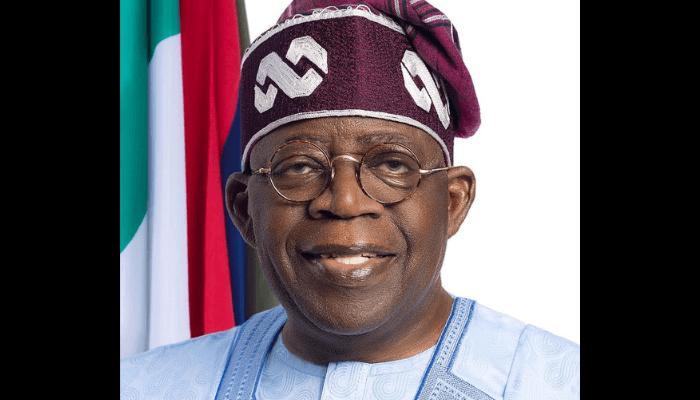
President Bola Tinubu, on Tuesday, in Kenya, called on global investors to take advantage of the ongoing reforms in Nigeria’s blue economy.
- +Tinubu unveils potentials of Nigeria’s blue economy to investors in Kenya
The Nigerian leader also advocated for stronger economic integration that prioritises Africa’s growth and prosperity.
The Nigerian leader also advocated for stronger economic integration that prioritises Africa’s growth and prosperity.
Tinubu made the call at the just concluded Africa/France summit, co-hosted by Presidents Emmanuel Macron of France and William Ruto of Kenya, which brought together leaders and top officials from more than 30 countries across the continent.
Ruto and Macron, Antonio Guterres, Secretary-General of the United Nations, and Mahamoud Ali Youssouf, Chairman of the African Union Commission, in their separate statements, also called for Africa’s greater access to credits
Bayo Onanuga, the President’s Spokesman, said Tinubu also held a bilateral meeting with Madagascar’s President, Michael Randrianirina, on the sidelines of the summit
He also met with the President of the Confederation of African Football, Patrice Motsepe and expressed Nigeria’s readiness to host the 2026 CAF awards.
At the summit, the French government advocated restructuring economic and political relations on the basis of equality and fairness. At the same time, African leaders emphasised the need for greater access to credit to fund major investments and stimulate economic growth.
President Tinubu highlighted Nigeria’s potential in the blue economy as one of the cornerstones of Africa’s development. Governments and the business community had long neglected this potential due to insecurity and uncertainty.
“Today, I make an explicit commitment: Nigeria will intensify regional coordination by offering our Deep Blue Project’s maritime intelligence infrastructure as a shared data hub for willing Gulf of Guinea states. Interoperable systems, harmonised laws, and seamless joint enforcement must become the daily reality, not an aspiration on paper.
“Let no one misunderstand: maritime sovereignty does not repel investment — it attracts it. Secure sea lanes, predictable regulation, and functional courts are the preconditions that unlock private capital. Governance has de-risked Nigeria’s maritime proposition. We now invite partners to build on these gains as we advance climate-aligned port modernisation and the digital transformation of our maritime sector.
“As we endorse the Nairobi Declaration, Nigeria affirms that maritime sovereignty and ocean governance are the non-negotiable foundations of Africa’s Blue Economy transformation. We will continue to earn that sovereignty — through institutions, through assets, through law, and through iron-clad regional solidarity that turns our waters from a theatre of risk into a story of shared resilience.
“The oceans have no duplicate as a common heritage of mankind. For Africa, moving from sea blindness to ocean sovereignty is not a choice — it is a generational duty. Nigeria is ready, and we invite all present to join us in that duty,’’ the President stated.
On the reform of the international financial architecture, the President stated Nigeria’s position:
The President stated that immigration issues must be addressed by expanding safe, orderly, and legal pathways to improve security.
“First, cooperation must address root causes in countries of origin. People who have jobs, security, and hope at home do not typically risk their lives in the back of a smuggler’s truck. That is why Nigeria has embedded migration management within our broader economic transformation agenda—removing fuel subsidies to invest in infrastructure, recapitalising banks to fund enterprise, and modernising agriculture to create rural livelihoods, among other initiatives.
“But we cannot do it alone. International partners must move beyond rhetoric and match words with investments that make staying at home a genuine choice—investments in climate adaptation, energy access, digital skills, and the productive sectors that employ young people. As we intensify the implementation of these domestic measures, I therefore call on our development partners to ring-fence a portion of Official Development Assistance (ODA) for programmes that demonstrably reduce the desperation that fuels irregular migration,’’ he stated.
On Nigeria’s position on peace and security, President Tinubu urged African countries to work together in building a global migration governance architecture that is fit for purpose.
“The Global Compact for Safe, Orderly and Regular Migration was a start, but it remains non-binding and underfunded. Nigeria supports the African Union’s Migration Policy Framework and the Khartoum Process, but we need a more coherent link between these regional efforts and global institutions”.
President Tinubu was accompanied by the Minister of Foreign Affairs, Bianca Odumegwu-Ojukwu, Minister of Finance and Coordinating Minister of the Economy, Taiwo Oyedele, Minister of Agriculture and Food Security, Sen. Abubakar Kyari, Minister of Marine and Blue Economy, Adegboyega Oyetola, Minister of Environment, Balarabe Abbas Lawal, Minister of Industry, Trade and Investment, Dr Jumoke Oduwole and Minister of Communications, Innovation and Digital Economy, Bosun Tijani.
Chairman of the Dangote Group, Aliko Dangote; Chairman of BUA, Abdulsamad Rabiu; Chairman of the UBA Group, Tony Elumelu; and Chairman of Access Holdings Plc, Aigboje Aig-Imoukhuede, attended the summit.
Others were the Chief Executive Officer of the Nigerian Investment Promotion Council (NIPCO), Aisha Rimi; the Minister of State designate for Foreign Affairs, Ambassador Sola Enikanolaiye; the Director General of the National Council on Climate Change (NCCC), Mrs Omotenioye Majekodunmi; and the Nigerian Ambassador to France, Amb. Ayodele Oke and Director General of the National Intelligence Agency (NIA), Amb. Mohammed Mohammed.
The ministers had bilateral meetings with their counterparts from Kenya, France and other African countries. Also, they participated in plenaries at the Nairobi University and the KICC, with a focus on engagement, entrepreneurship and Africa’s demographic dividend.
The ministers also brainstormed on dynamic CEO and business leadership, AI and digitalisation as drivers of business, investment opportunities, innovation, agro-industry, cultural and creative industries, trade and innovation, and the creation of frameworks for moving from political rhetoric to concrete industrialisation, competitive, supporting agro-industries, AFCTA, healthcare and climate change as a collective effort.